Archive

Archive for the ‘IT Management’ Category

Transforming the IT Customer Experience: Helpdesk and Field Support (a story…)

November 3, 2010 3 comments

Imagine crashing your PC after having a virus issue. You need to call the IT helpdesk. You pick up the phone and call the 1-800 hotline number. Your expectations of the quality of IT’s response time is so low that you’ll settle for a day or two without a workstation. You imagine that perhaps you lost all your files and important documents in your computer. Service? Forget it.  Your previous experiences with the IT helpdesk were terrible, if a service agent answers your call after 5 minutes waiting on call queue, it would be a small miracle. 

IT Helpdesk

Instead— you must be dreaming— your call gets picked up after two rings and a friendly service agent greets you with, “Good morning ,sir.  My name is Kyra, how are you? How can I be of service to you today?” You are surprised but refreshed with the friendliness of the agent’s greeting. It’s unusual and has never been the case before – even during the last time you called them a month ago. You reply, “I’m good, thank you. I have a problem with my desktop. When I started it this morning, I got a blue screen after a couple of minutes. I don’t know what’s wrong. I think it might be a virus or something. It was working last Friday when I left.”  The agent quickly and confidently replies, “Actually sir, we have a virus alert this morning that affected several users. We already sent a notice by email, and of course you didn’t receive it. We were about to call you but you beat us to that. We know the root cause of the problem for certain because of the new proactive monitoring tool that we recently implemented. Your desktop is one of those affected because you run one of our old desktop models with an older OS version on it. That made your computer more vulnerable to this new virus attack.” You are astonished with the level of information the service agent has already but still you have reservations as to whether this will impact the resolution time. Sure, she is friendly and she knows what’s going on but can she solve it?

Then you ask, “Then what should we do? It sounds like I won’t be able to use my computer today or for a couple of days perhaps?”  Kyra replies confidently, “No sir, definitely not. We won’t allow that. As a matter of fact, our field-support team members are on their way to the offices of the users affected. They are making rounds as we speak.  The person assigned to assist you is scheduled to arrive at 10:00 am. I think he’ll be there in minutes.”

Communication of the Service Deal

Kyra continues, “In the meantime, if you have a minute of your time to spare, I would be glad to tell you our new service mission statement. Do you have some time, sir?” You don’t have a workstation anyway so surely you have time and this wonderful service agent deserves a few extra minutes. You reply willingly, “Yes of course. I noticed a big difference in your over-all service today so far and I am pleasantly surprised. I’d be glad to hear about your new mission statement.” Kyra continued, “Thank you, sir. I am proud to say that our management and the whole IT organization came up with a common objective of improving our overall service delivery. Particularly, our technical support department which includes first level support agents, field-support service personnel and second level specialists, have the objective of providing our customers the fastest, high quality, friendly and effective IT support.”

“Sir, do you have any questions about our new mission?”  You decide that it is good for IT to communicate its service offer and you feel special to be treated an important customer. You say, “No questions, Kyra, and congratulations. I’m really happy about your service.  This is not what I expected. You guys really improved your service in such a short time. I’m impressed. Oh wait, I think the field support is here already. I have to go.” Kyra concludes, “Okay, sir, I will call you back after the service call to check if everything is fine. I know JB will take good care of you. Thank you and please don’t hesitate to call us again if you need anything.”

IT Field Support

Then as the field support agent comes into you office, he greets you warmly, “Good morning, sir. My name is John Bryan but you can call me JB. I am here to help you with your Desktop and I want to tell you about the two choices.” “Choices?”, you wonder incredulously. Now he is going to tell you the bad news that he needs to pull out your desktop for one day. Or maybe you get a loaner – something you’ve experienced before. At that time, you were given an incredibly old PC that was so slow you couldn’t even use it. You brace yourself for the bad news but instead he says.” I brought you a new computer. It’s a laptop. I need two hours to set it up fully with all your programs and files in it, or I can try fixing your virus problem for 30 minutes so you can work and then I can set up your new laptop for delivery next week.  What do you think? ” Already impressed with the customer experience so far, you think that two hours doesn’t seem so bad. Plus, you are getting a new laptop when you were expecting at least a day of no computer.  You reply, “OK, get on with the setup of the new one. I’ll wait here.” John Bryan says, “Good choice, sir. I’m sure you’ll be pleased with this new one. And finally sir, I can give you a general overview of the many capabilities of your new laptop and programs while we wait for the installations and file transfer to finish, or I could keep my mouth shut. What would you prefer?” 

After everything was done, you realize that not only has the IT support services improved but you also just had a transforming experience. Talk about exceeding expectations! 

I believe IT leaders have the power to embed a strong customer service culture through their influence…but culture embedding is not easy…organizations don’t create culture, it is an outcome of consistent behavior (demanded or influenced by leadership). If you provide the best customer service always, it becomes your culture. We try to make positive stories like these everyday… not always the case of course, what I am painting is the perfect world of IT support services, but this is what we aspire for.

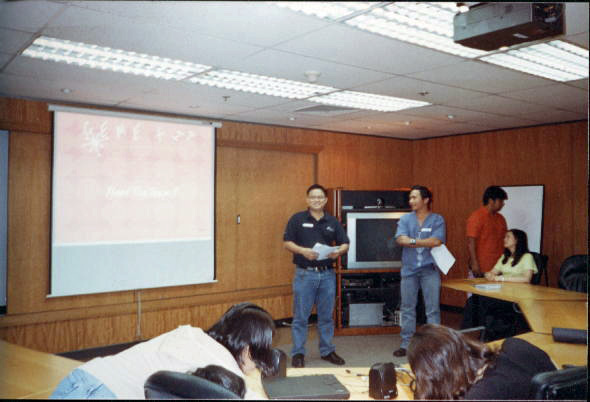
Photo courtesy of Ivy Remoreras Photography.

Follow Glenn Remoreras on Twitter.

How IT Leaders Transmit and Embed Culture

August 28, 2010 3 comments

The group’s culture provides structure and meaning to its members—in many ways it controls members’ interactions with one another and with external parties.  In this post, this concept is applied in the Information Technology (IT) group setting. The IT group culture can influence the success of the IT organization. Culture is socially constructed through leaders that embed their beliefs, values and assumptions upon the group that it leads. The culture of any IT organization is formulated and impacted by several variables. The strongest and the most obvious is the influence of its leader. According to E. H. Schein, leader’s primary embedding mechanism is seen in how they pay attention to, measure and control aspects of organization’s operations and decision making. They initiate great conversations that tie cultural norms to the organization’s goals. If the current culture is not aligned with the new realities, leaders need to be the catalyst to create new understanding and help individuals select new behaviors and, eventually, beliefs. Leaders must also define, clarify and reinforce understanding of the actions and beliefs that build the desired culture. 

To examine how IT leaders influence the IT organizational culture and IT branding let’s use some of E. H. Schein primary embedding mechanisms and apply it in the IT perspective. Each one comes with a set of questions you can use to assess the impact of such embedding mechanism in your IT organization right now: 

What Leaders Pay Attention To, Measure, and Control on a Regular Basis  

Although performance measures presented in the leader’s reporting dashboard change from time to time, most of the leaders that I know only pay attention to a small set of key performance indicators. IT leaders rely on a subset of key measures that they believe is the best indicator of the overall performance of the organization. As an IT manager, you know what your CIO is looking at and controlling most of time. Your CIO gets your attention and tracks certain aspects of operations based on these key performance indicators. In some instances, the CIO will try to drill down and find more information about a perceived problem and base his request for action on this. The performance measures that IT leaders pay attention to, measure, and control on a regular basis dictate the importance given by the organization to a service, a problem or a project. 

It is but a natural tendency for managers, staff and different groups within IT to keep track of the performance measures that IT leaders are more attentive to. More likely, these people discuss these controls in daily IT operations meetings. Some will even set alarms so as to act swiftly on incidents before they become major problems. Performance measures and controls are powerful mechanisms that IT leaders use to forge a working culture based on what they think is important. How current are your departmental metrics? Do they measure against your current organizational objectives? Do they reflect the coming changes and help prepare your team for new ways of working? 

How Leaders React to Critical Incidents and Organizational Crises  

Companies in this day and age rely on an integrated set of digitized platforms and infrastructure to run and manage its business operations. When a critical IT incident occurs, it often impacts mission-critical systems and processes that affect business operations. These days, it is not hard to imagine how something like this can directly impair the ability of the company to serve its customers. These kinds of problems could unfavorably hurt the company’s profits and reputation in the short term. When a major IT incident disrupts most critical processes of the company, the credibility and reputation of the IT organization is heavily dependent on their perceived preparedness and responses during the situation. The CIO is at the forefront of disaster recovery measures and business continuity management and continues to work hand-in-hand with business managers. For mature IT groups, the planning, work and infrastructure that that is used to run disaster and business continuity situations are completed way before major incidents occur. 

Business continuity and disaster recovery is part of an organizational learning process. In the wake of a crisis, IT leaders adopt a learning orientation and use prior experience to develop new routines and behaviors that ultimately change the way the organization prepares and responds to crisis. The best leaders recognize this and are purposeful and skillful in finding the learning opportunities inherent in every crisis situation. Is your organization proactive about problem management, disaster recovery, and business continuity preparedness? What can you do to better build your team’s capabilities to manage critical incidents and crisis situations?   

How Leaders Allocate Resources

IT leaders have control on the allocation of resources in the organization. This applies to operational and projects resource assignments. The CIO controls the budget allocation to key projects, resource assignment to operations areas, and the time IT members spend on certain initiatives. On the other hand, the CIO also controls how and where to slash resources during budget optimization. How leaders allocate the resources of the organization creates a natural signal to its members about their priorities and what they think creates more value to the company. His or her interpretation of the business strategy and the expectations of the company’s shareholders impact the leader’s decision making process. Resources mean money and time. Therefore, when the CIO decides on the operating and capital budget portfolio allotment, this provides managers an indication of where in the organization best efforts and priorities are expected.

Another strong indication of the CIO’s priorities can be observed on how he spends time. To better understand the job of the CIO, Peter Weill, MIT profession and co-author of the book IT Savvy, examined how CIOs allocate their time. CIOs allocate time in four major areas: managing IT Services, working with non-IT colleagues, working with customers, and managing enterprise processes. Time allocation varies a lot because of individual management style but in most cases, where the CIO spends the most time sends a strong message. As an IT leader, examine how you spend your time. How do you think it impacts the desired cultural values of your organization? In what ways should you change your managerial regimens to better present, explain, and reinforce the desired culture?

Deliberate Role Modeling, Teaching, and Coaching

We all naturally know that leading by example is one of the most powerful ways of leadership, but ironically it’s often the most overlooked. As Mahatma Gandhi once said, “You must be the change you wish to see in the world.” The best way to create culture is to transmit culture. I think the most obvious ways to transmit culture is through teaching and coaching. IT managers and staff look up to their senior leaders for directions.  Leaders should be engaged with IT operations but their engagement in it should not be limited to supervising and running operations but also guiding, teaching and coaching managers.

Information Technology needs future-oriented leaders. Arguably, it is the most unpredictable and fast innovating area of the company. If the CIO is not forward looking, it can’t provide the business with a platform to continue to be competitive and at par with competitors who are relentlessly pursuing innovation. IT leaders are fascinated about the future. They are relentless about change and impatient for progress. CIOs are always looking forward to new technology and practices that are developing, looking for ways of plotting a course of new processes, tools and methodologies and experimenting how it will make sense in business in the future. How many types of developmental conversations occur in your organization? How can you create a culture of learning that goes beyond traditional classroom training? In what ways do your communication tools and practices help build your team’s skills for participating in conversations about goals, changes, and barriers they face? What can you do to better build your team’s capabilities for participating in transformative conversations? Is learning embraced at all levels?

The values and priorities of the IT leader- may it be the CIO, CTO, IT VP or IT Director— are reflected in the culture of the information technology (IT) organization. This is true also for other organizations, big or small, that has its members working together for some time. A positive organizational culture reinforces the core beliefs and behaviors that a leader desires while weakening the values and actions the leader rejects (Kaufman 2002). A negative culture becomes toxic, poisoning the life of the organization and hindering any future potential for growth. Obviously, there is an inevitable bridge joining organizational culture and the level of success it enjoys (Peters and Waterman 1982).

Photo courtesy of Ivy Remoreras Photography.

Understanding IT’s Value in Organizational Transformation

July 18, 2010 7 comments

Do you spend a significant amount of time measuring performance and looking for ways to improve your service? When you delve into that process of evaluating your effectiveness and efficiency of service, you are, in fact, evaluating your value. Typically, big companies invest one percent to four percent of revenue in IT. This investment is usually spent on integrated digitized platform implementations, continuous innovations, and day-to-day IT operations. Businesses must see the value and return of these investments; otherwise, they won’t put their money in it. What are businesses doing with all that hardware and software IT is providing?

Andrew McAfee is a principal research scientist at the Center for Digital Business in the MIT Sloan School of Management. In one of his articles for the Harvard Business Review entitled IT’s Three Key Organizational Transformations, he outlined what he thinks are main organizational transformations that IT provides the businesses. He wrote that companies in all industries are using Information Technology to accomplish three broad and deep transformations: they’re becoming more scientific, more orchestrated, and more self-organizing.

Run Scientific Methods 

Andrew McAfee mentioned the need for making the company more scientific. He meant that companies are able to use advanced scientific methods using new technology. “Computers, of course, are amazing tools for science” he wrote, “they can gather huge amounts of data, conduct sophisticated analyses of it in the blink of an eye, run elaborate simulations, and serve as experimental testbeds.”

I attended the most recent SAPPHIRE conference hosted by the German software giant SAP in Orlando, Florida. SAP presented its newest innovation on In-Memory computing. Co-founder of SAP, Hasso Plattner, declared that by using In-Memory Computing technology, companies can now store data of the whole enterprise in memory. This technology will increase the computing and processing speed of enterprise applications and will give rise to next generation business analytics. You can just imagine the type of scientific analysis companies can run with such high speed databases.

Orchestrating End-to-End Business Processes 

In this article, McAfee defined orchestration as designing how work will be done, and then assuring that it is actually executed as designed. Once re-engineered processes gets embedded in ERP and other enterprise systems it becomes much easier to ensure compliance. He gave an example to illustrate his point saying that applications like— CRM, sales force automation, supply chain management, procurement, and so on have brought tight orchestration to every part of the company, and pushed it down to almost microscopic levels.

One of IT’s major roles in most big firms is to implement and run digitized platforms. It is usually anchored on a major piece of purchased enterprise resource planning software- such as SAP and Oracle. Software companies are moving quickly on innovating applications to keep up with business demands. The unforgiving global economy brokers no excuse. Business expects IT to provide solutions that help them to stay competitive and in position for growth.

Enable Self-Organization 

“Self-organization, the most recent IT-fueled transformation”, McAfee wrote, “is the exact opposite of orchestration. It is employing technology to let people interact as they wish, with few or no workflows, rules, or hierarchy, and then harvesting the good results that emerge.” The paradigm of self organization has exploded in this part of the decade. In some ways, it started outside the confines of enterprises. There are over a billion users of social media sites on the Internet. Between Facebook and Twitter alone there are more than to 500 million unique user accounts. Companies, with the help of IT organization, have stepped up to leverage these new social tools to enable self organization teams in the business with the objective of encouraging more collaboration, information sharing and innovation.

How does your IT contribute to these key organizational transformations in your company? Does the business you serve view you as a value creator and partner? What’s your value proposition?

Three Reasons Why You Need a Project Management Office (PMO)

A lot of technology and application specialists who used to spearhead management of IT projects from beginning to end see project managers as competition. This becomes a source of disempowerment – the single biggest hurdle, in terms of organizational transformation in IT – when IT leaders start to introduce a Project Management Office (PMO) group. My point of view is completely the opposite. If there are enough project management resources, I would rather have PMO support all my projects. Here are the top three reasons why IT needs a PMO group: 

Bring More Bang for Your Buck 

A number of IT professionals are seeing increased budget and head-count reductions as more large business decision-makers turn to cost-cutting measures. Because of this, projects are watched very intimately by IT leaders – reining in projects more closely than ever. This challenge has lead IT to turn to project management offices (PMOs) as an approach to boost IT efficiency, optimize cost, and deliver projects on time and in full. We have to bear in mind, however, that establishing a PMO team is not a short term strategy for lowering costs. Numerous studies have indicated that the longer companies have been operating PMO, the better the results in terms of accomplishing project goals.

Standardize Project Management Practices 

For large corporations, scores of projects happen at the same time and more often, it is just too hard for the CIO to keep track of them. This is where PMO provides its biggest contribution to IT. PMO introduces economies of repetition in the execution of projects and makes it easier for the CIO to track progress and results. It is the job of the project management office to make sure that the projects follow the established project management standards. The PMO group is responsible for defining and maintaining the standards of processes related to project management. It is the source of documentation, guidance and metrics on the practice of project management and execution.

Facilitate IT Portfolio Management 

The implementation of a PMO group is a stepping stone to IT portfolio management. I have reiterated this several times but I think it is important to note that progression from project management to portfolio management is intertwined with the maturity of the IT organization. If the organization doesn’t have a strong project management discipline and Project Management Office, it is difficult to even imagine how IT portfolio management can be achieved. PMO should have a staff of program managers who can manage multiple projects that are related – such as infrastructure technologies, desktop applications, processes, business model implementation and so on – and allocate investments and resources accordingly. IT Portfolio Management is focused on investments and business results as compared to the focal point of Project Management which is project deliverables. This will bring IT (and the business) double bang for its buck!

Someone who has experienced working with an effective project management office surely can give more than measly three reasons – but to me the three that I have just mentioned are the most essential. There is no uniform recipe to success when establishing a Project Management Office (PMO). PMO is not a quick-fix solution only created to deliver immediate savings. It is an important component of the organizational maturity of an IT organization. It is important that the PMO structure is closely aligned to the team’s culture. A final note:  Projects exist in virtually all areas of the company – the  PMO practice can also be implemented there. In some companies, IT’s project management office provides support and internal consulting to other departments.

Follow Glenn Remoreras on Twitter.

Promise, Practice, People and Performance- Four Key Components of IT Branding (Branding IT Organizations Part 4)

IT branding is the process of building and improving the IT brand identity. This identity is shared by employees and groups that control the way they interact with each other, with stakeholders and with internal customers. It is a powerful tool in transforming the IT group into people who perform calculated, yet seemingly spontaneous, service delivery in the best interests of its internal customers. 

This is part four of my series on IT branding. We have covered several perspectives on IT branding in the first three articles of this series. Part 1 talked about branding in general and how IT branding is linked to the Process Culture Maturity. In part two, the concept of IT branding was defined and how it was related to IT team culture. Part three talked about high quality IT service delivery as the best brand identity. 

This post will delve more into the subject of IT branding, understand its key components and examine how it shapes the IT organization. The four key components of the IT brand, the four Ps — Promise, Practice, People and Performance, will be defined. These can be seen in the diagram below: 

Promise 

One establishes the IT brand by building trust in a promise about what the company does, what it stands for, what its vision is, and what added business value it can provide the internal customers and stakeholders. This is represented through the established IT vision and mission statement, customer value proposition and service offers. This promise must be developed by IT top management and its sponsors through extensive analysis of internal and external environment, interviews, and research. The Promise component of the IT branding process is achieved through vital scoping, visioning and strategic planning.   

Practice 

After writing the organization’s promise, the next step is to build the engine that will enable service delivery. This is the IT Practice – comprised of IT operating model, mode of service delivery and various other methodologies. It ensures that IT teams achieve optimum results and performance. It will define the discipline in which IT systems, operations, projects and evolution will be managed. However, this discipline should not be constrained to a particular use of a vendor’s product; rather, it should focus on providing a framework to structure IT related activities and the interaction of IT personnel with business customers and users. 

People 

The most important element of the IT brand is the People component. Everyone in IT must be in sync. For new team members, this is achieved through an adequate on-boarding process. For existing employees, ongoing organizational development and engagement initiatives will work. Communication is critical in this aspect. Top management must fully engage employees. It starts by communicating the Promise (IT mission and vision, strategy) and Practice (IT operating model and methodologies).  Each team member must know his role and value in the overall service delivery system. It is important to note that the internal perception of the IT brand are affected by the IT team members’ behavior, and that one must therefore shape the IT team culture in ways that encourage IT brand-committed actions on the part of all IT employees. 

Performance 

As discussed in part three of my articles on IT branding—what is central to IT branding is the relentless pursuit of quality IT services. Organizations build its IT brand by living up to its promise. IT teams strengthen its IT brand by relentlessly improving its IT brand promise. The surest way to do this is improving performance. IT managers must define key performance indicators to monitor performance against objectives. Measuring the success of IT branding initiatives is challenging; however, it is essential that every effort be made to measure results versus targets set forth. 

A Final Note: 

One’s perception of the IT service is often reduced to a phone conversation with a helpdesk service agent. IT branding depends on each and every individual working in the IT organization—the “People”—from the top, the CIO to middle IT managers then to the frontline helpdesk service agents. It is important that all IT personnel are in sync because the service brand is all about them. It is strengthened by the established “Promise” and “Practices” that enables IT organization to deliver with high “Performance”.

Facets of High Quality IT Services (Branding IT Organization Part 3)

In Part 1 of this series I talked about branding in general and how IT branding is linked to the Process Culture maturity of an IT organization. In Part 2, I listed the different rewards IT organizations can derive directly or indirectly from having a strong IT brand. I also defined the concept of IT Brand Identity and IT Branding. 

  • IT Brand Identity marks the tangible representation of your IT brand. This representation can be in different forms – your mission and vision, your service offers, culture and style.
  • IT Branding is the process of building and improving IT brand identity.  This identity or culture is shared by employees and groups that control the way you interact with each other and with stakeholders outside of t he company.  

I derived the idea of associating quality of IT service delivery and IT branding from the opinion shared to me by William Gearhart. Bill is the VP of Information Technology of the organization I work with. Bill’s comment was as follows: 

“Critical to the success of any company or its branding is the business model and the success of delivering it hourly, daily, weekly, etc. You can brand any identity but it is the delivery and focus of the team that moves you up the ladder of respect within an organization.” 

Bill goes on to say: 

“I believe you establish the partnership and respect, apply your brand and then focus on assuring your service delivery and processes move forward with the organization(s) you are supporting and enabling.” 

The relentless pursuit of high quality IT services is central to IT branding. It is the factory that creates meaningful stories in the hearts and minds of our internal customers. These stories ultimately shape the perception of your internal customers – thus, strengthening your IT brand identity. High quality IT service is the best IT brand identity. For a service organization like IT, the surest way to create trust is consistency in the delivery of services. 

Facets of Quality in IT Services 

Quality is the best problem solver. IT organizations that consciously pursue quality in all its services take a proactive approach in problem management. This pursuit guides IT organizations on which problems to solve first and which opportunity to seize. Problem management practices are essential in this effort. First of all, problem management should be proactive. It should be focused on studying trends in order to reduce recurring issues and ensure long-term solutions by addressing root causes. Reducing IT incidents directly helps in improving customer or end-user experience in using IT services.   

Quality is the best customer relationship. High quality in IT services is the silent salesman. Consistency in IT service delivery will create good perceptions and a positive experience for internal customers. I think that a high level of quality enables IT to function as a business partner of its customers. Somehow it is the same as selling a product in the market. No matter how much you spend in advertising and promotions, if the product is questionable and does not have good quality, it will be difficult to sell. It is important for IT to focus on delivering high quality products and services right the first time. This is done through effective change management and high quality implementations. 

Quality is your best identity. IT branding and quality of IT services delivery are two sides of the same coin, in that high quality IT services creates a good IT brand identity. The level of quality in your company’s IT services determines how your organization is perceived by your partners and internal customers. It is important for IT managers to understand that the organization establishes its brand by building trust. The best way to create trust is consistency in providing high quality services.   

A Final Note: 

One can define quality in many different ways depending on the point of view. However, quality in the perspective of a service organization such as IT is defined entirely by the customers. The customers’ perception is reality. Quality is based on the customer’s assessment of his or her entire customer experience which is the consolidated evaluation of the organization’s different touch points. Again, I believe that the persistent pursuit of high quality IT services is central to IT branding. High quality IT service is the best IT brand identity. For a service organization like IT, the surest way to create trust is consistency in the delivery of services.

Photo courtesy of  www.zebratranslations.co.uk

IT Team Culture and Branding (Branding IT Organization Part II)

April 25, 2010 8 comments

Branding IT Organization Part I talked about branding in general and how IT branding is linked to the Process Culture maturity of an IT organization. This time, I will further define the concept of IT branding and how it relates to team culture. Jose Rivas, a colleague of mine, posted this as a comment in my last article:


“Branding is something that everyone in IT does every day– it is how the user community perceives you. I believe that branding is a reflection of the culture that drives the IT organization, or any other group for that matter. Purposely branding IT takes a lot of thought and effort. It requires a clear vision, effective communications within as well as outside IT, strong executive sponsorship and a well-motivated organization.” 

I couldn’t agree more with this opinion of Jose Rivas on IT branding as a reflection of the team’s culture. Branding has a lot to do with human perspective and the forces that are created in social and organizational interactions. It has a lot to do with your group’s identity and culture.

IT Brand Identity and IT Branding

IT Brand Identity marks the tangible representation of your IT brand. This representation can be in different forms – your mission and vision, your service offers, culture and style. It is what you stand for. IT brand identify is the set of values that exists in your customers and employees’ mind as a result of interaction and associations with your IT organization.

IT Branding is the process of building and improving IT brand identity.  This identity or culture is shared by employees and groups that control the way you interact with each other and with stakeholders outside of t he company. It is the value you create that gets reinforced every time your internal customers interact with anyone in your team and any facet of your service.

Improving your IT brand: Why bother?

Below are just some of the rewards IT organizations can derive directly or indirectly from having a strong IT brand.

  • IT will run more efficient operations because they align all decisions with the mission, vision and values that underpin their promise.
  • Internal customers (business) are willing to invest more in IT because they believe it will deliver outstanding benefits.
  • Quality of IT services concretes internal customer loyalty.
  • Business supports IT projects because they know that IT creates value in the company.  
  • It is easier for IT to communicate new service offers.
  • IT will find it easier to attract and retain good employees because applicants believe in the quality of the workplace based on the advance knowledge of the caliber of the brand.
  • IT will increase its value and management support

The bottom line for IT managers and employees is that if they do not become conscious of the team culture in which they are embedded – those cultures will control them. This process is complex and multifaceted. Every IT team must learn how to become a team. They have to find their identity and use it to their advantage. 

Photo courtesy of advanceweb.com.

Branding IT Organizations

March 25, 2010 6 comments

Recently, I was involved with the redesign of a newsletter for our organization. I have always believed that communication is an integral part of any service organization – including IT. What we communicate is our story and our promise. This creates a perception to our internal customer about who we are and what we are about. At first glance, IT organizations and branding seem to be mutually exclusive.  However, I disagree. 

Branding in General

First, let’s talk about branding in general. Many professionals confuse the term “branding” as synonymous to “advertising”, “communications”, and “marketing”. They use it interchangeably. This confusion is costing companies a lot of money. Companies that market their products or services without first establishing their brand identities are not likely to achieve their objectives. Branding is about the customer’s perception of your product. It is the image of your products and services in relation to your organization.

Now how about branding in an IT perspective? This goes in line with the general concept of branding. IT branding is finding and knowing your IT organization’s identity. In many small- to medium-sized companies, internal customers only interact with IT when they have computer and IT application issues. This shapes their understanding and perception of the kind of IT organization they have. Branding for these IT organizations is getting their users to think that they are the sole solution to their IT-related problems. Once your IT is perceived as “only”, there is no place else to call.

How to Grow your IT Brand

The IT organization’s brand grows as the company expands. The IT organization’s brand evolves as the enterprise matures through the different levels of Process Culture maturity. Take time to revisit the article that I posted last year on Process Culture. As your organization’s Process Culture evolves and IT takes on a more important role, your IT brand grows with it. The IT organization’s identity is linked to this Process Culture maturity. 

Just like the most popular ones in the market today—Apple, Coke, Marlboro, Google, the business has to strive to grow and improve its IT organization’s brand. It is important that the IT organization must have a good understanding of the internal customer segments in order to position its services appropriately. In small IT organizations, this means positioning support so as to solve more IT computer issues and improve internal customer service. In more mature organizations, IT can position services to create more business value. IT branding will help your organization become the partner of choice internally.

I like the article Russ Aebig wrote about branding for IT organizations, entitled “Attraction of Identity”. He started with some very good questions and I am sharing it here because I want to end this article with the same questions: “As an organization, who are you? What is your internal and external story? If you cannot crisply define yourself in a few words you likely have a problem on your hands.”

Photo courtesy of ignitionblog.

Climate Change— is your IT Department going Green to help the environment?

January 14, 2010 1 comment

I had the opportunity to meet with some good friends and colleagues while vacationing in the Philippines last month. A colleague of mine, Roland Vera Cruz, who leads Alternative Fuel projects in CEMEX Philippines, encouraged me to write about Green IT Initiatives. We talked extensively about his enthusiasm for energy efficiency and green initiatives. Is your IT department going green? Desktops, laptops, printers and all other IT equipment account for 9 percent of all energy consumed by businesses. Did you know that a typical computer (CPU and Monitor) sends 1,000 pounds of CO2 into the atmosphere every year? To put that into perspective, 20 computers will equal CO2 emission of a midsize car.  There are a lot of opportunity areas for IT to contribute in Green initiatives, starting with improving energy efficiency of the IT infrastructure. 

Based on a McKinsey report, 60 percent of global executives view climate change as important to consider within their companies’ overall strategy and nearly 70 percent see it as an important consideration in managing corporate reputation and brands. No wonder there is a lot of buzz about green strategy. I hope this translates to the importance company leaders place on the environment and not merely a gimmick for corporate image building. 

Climate Change 

In nearly all the places I have been this past 5 years, I have personally experienced serious evidences of the shifting global climate. While in Germany during the winter of 2005, I remember Germans being anxious about a particularly unusual winter. The temperature wasn’t going down like previous years. They worried that insects that normally perish during the long winter chill will survive and propagate, impacting ecological balance. Another example is the great flood in Manila just last year — I talked about it in one of my articles. The rainfall was unprecedented and some low-lying areas were reclaimed by growing lakes. Lastly, just arriving in Florida this month, I was greeted by an unusual winter chill (which turned out to be record low temperatures across the state and, in some areas, it even snowed in sunny Florida). It troubled farmers that the famous Florida orange crops might be freezing. The signs are obvious everywhere. What can we do to help in each of our industries? 

Challenge for IT 

CIOs and IT managers in many multinational companies now face growing pressures to become more sensitive to their companies’ energy consumption and environmental impact. It is evident with the rising trend. More major companies are implementing comprehensive plans for green IT practices and technologies. According to the new study by Forrester Research Inc., about 28 percent of companies are into Green IT initiatives. That’s up from 20 percent in April of 2008. 

One of the primary ways to pursue IT Green initiatives is through energy efficiency. The challenge for IT innovators and industry leaders is to continue to come up with ways to support the constant need for increasing computing performance without increasing power consumption.  I think a thorough understanding of IT energy consumption and operations is the groundwork of this initiative. From this foundation, IT leaders can work out strategies to help them improve IT efficiency, address emissions and reduce energy costs. Results of these initiatives must be measured against business goals. Many organizations have demonstrated that significant return on investment can be achieved from pursuing green initiatives through energy savings.

IT can also take advantage of business process initiatives. Some business process projects can be Green initiatives if some specific objectives are integrated into the overall vision— whether the goal is reducing the company’s carbon footprint, decreasing overall transportation and distribution costs, finding alternative fuels, improving operational efficiency and optimizing supply chain.

The following are questions that IT leaders must consider in their quest for Green initiatives: 

  • Are we looking for ways to improve IT operations and generate more computing performance without increasing power consumption? 
  • Are we looking to assist the business in transforming processes so as to reduce environmental impact for operations end-to-end? 
  • Do we have a strategy to educate our employees, contractors and partners about means to contribute to green initiatives and help the environment?

These questions summarize the challenges for IT managers to develop IT practices, policies and technologies that are both good for the planet and good for business. Going green is really about using IT and industry best practices to create more efficient processes which benefit both the company and the environment.

Keep it Simple- Build a Little, Benefit a Lot

September 11, 2009 2 comments

Typically, big companies invest one percent to four percent of revenue in IT. This investment is usually spent on integrated business model implementations, continuous innovations, and day-to-day IT operations. There must be a way to assess and take full advantage on the return of these investments; otherwise, IT organizations cannot move from being cost centers to value centers. Optimizing the value of IT is a top priority in today’s tough economy. Companies rush to reduce IT operating cost and IT capital expenditures mainly because of falling revenue sources. 

Many companies are so focused on evolution in order to always be steps ahead of competitors. They, at times, push themselves hard through IT implementations and afterwards, fail to take advantage of the benefits. They resort to old habits, making change process difficult to achieve. 

Keep it simpleOnce you implement new systems and processes, you need to aggressively drive value creation from it. Peter Weill, in his book IT Savvy wrote, “The firms that are best at this start driving value early. If you start driving value early as you take the first small steps towards building it, you will reduce the disruptions of major transformation. The goal should be—build a little, benefit a lot; build some more, benefit some more; and so on.” 1 In other words, keep it simple! Now is probably the best time to resort to this time-tested principle where investment is placed only on IT solutions that are cost effective and that deliver better value and greater performance for the business. Below are just some key initiatives that can help organizations maximize value of IT in a company. 

Define Clear Strategic Vision 

The first step is to have clarity of strategic vision for each of your IT portfolios. Executive managers in Steering Committees have the responsibility to clearly define the main business objectives of projects and portfolio of projects. They are the ultimate architects for the organizational transformation that will happen. The objectives that they define will guide IT project leaders in their decision making and will help them prioritize business requirements. 

Maximize ERP systems 

Most big firms implement a digitized platform anchored on a major piece of purchased enterprise resource planning software such as SAP and Oracle. Implementation should be kept within the standard configuration as much as possible. This is a difficult challenge though. Of course, some business requirements cannot be addressed by standard functionalities. They will have to be developed or coded to change standard functionalities of the application to suit business needs. The challenge is to keep the balance between benefits and costs of these developments. Keeping solution within the platform configuration standards will reduce consulting cost, configuration and development effort. In the long run it will reduce cost of IT operation and application support. Additionally, companies can leverage on continuous evolution of those ERP platforms whenever new releases and versions become available. They can change to the new version without lengthy and costly upgrade process. 

IT Infrastructure Consolidation 

Data center consolidation is a major focus of many organizations today. According to Computer Economics, in 2008, 76% of organizations had some level of activity in the area of data center consolidation.  It is one of the most essential ways to lower the cost of IT operations. Bigger data centers are simply more cost-effective on a per unit basis. Therefore, for many organizations, consolidating multiple data centers into a single facility should be a primary strategy for cutting cost. Additionally, this consolidation effort can also result to mitigating risk and improving service levels. Concentrating computing resources into one or a small number of physical locations can boost the productivity of IT assets and personnel. It will also simplify IT operations management. Most organizations will realize quantifiable returns from such efforts. 

1 Weill, Peter. IT Savvy: What Top Executives Must Know to Go from Pain to Gain. 2009.

 Simple Processes

Follow

Get every new post delivered to your Inbox.

Join 1,137 other followers