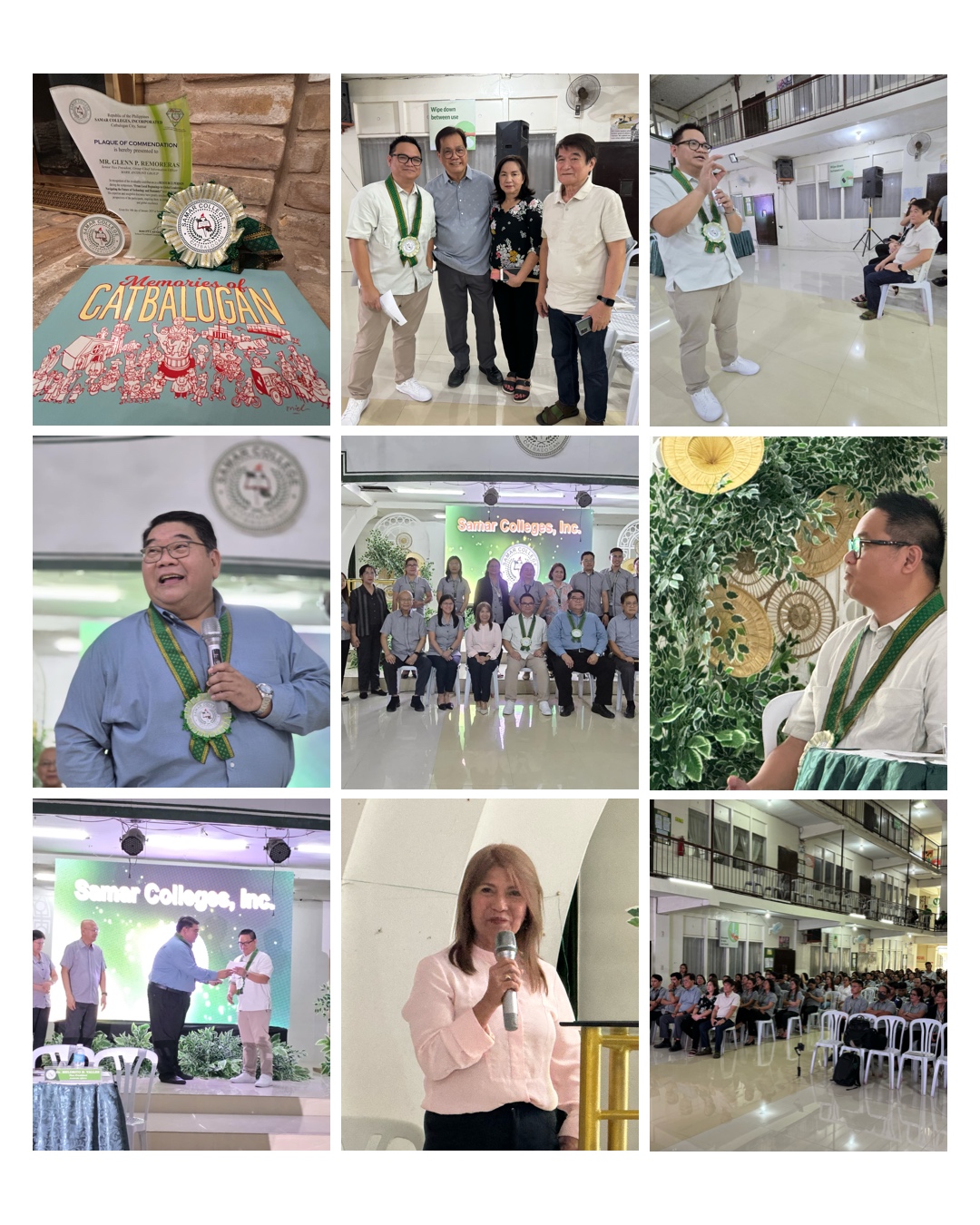
It was a privilege to speak at the Samar College symposium in my hometown of Catbalogan, Philippines, where I shared insights from my journey, perspectives on the future of work, and reflections on leadership in an era of rapid technological change. As someone who proudly traces my roots to Samar College, where I began my early education, this opportunity to give back to the community that shaped me was deeply meaningful. Below is a summary of my talk, which I hope will inspire those who dream of breaking barriers and leaving their mark on the world.
Breaking Barriers: My Journey from Samar to Leading Global Technology Transformations
Growing up in Samar taught me resilience, adaptability, and the value of community. Helping at my parents’ store instilled hard work, humility, malasakit (genuine care), and perseverance—principles that shaped my leadership style and aspirations.
My career path to becoming a global CIO was anything but straightforward. An unexpected turn led me to technology, proving that sometimes careers choose you—and those paths often bring the most fulfillment. Early in my journey, I learned the value of embracing change and stepping out of my comfort zone, whether it meant moving to a new city, taking on unfamiliar roles, or navigating uncharted technological landscapes. These steps, though challenging, defined my career.
I highlighted key moments, such as transitioning from leading local teams to managing global operations. Beyond technical expertise, success required connecting with people from diverse backgrounds—a skill rooted in the relationship-building and empathy I developed in Samar.
I emphasized that careers are not ladders but lattices. Growth isn’t just about climbing upward but also about lateral moves that broaden perspectives and skills. Flexibility and adaptability are crucial in technology, where careers rarely follow a linear path.
The Future of Work: AI, Automation, and Human Potential
I explored the exciting and sometimes daunting future of work, drawing on Gartner Maverick research. I invited the audience to envision 2045—a world shaped by Artificial Intelligence (AI), automation, and groundbreaking innovations. We discussed the rise of generative AI and its transformative impact, bringing AI to the mainstream.
The future will see remarkable advancements in biotechnology, renewable energy, and space exploration, alongside workforce changes. Routine jobs will be automated, and entirely new roles will emerge, such as “cyber-physical systems architects” and “AI ethicists.” By 2045, collaboration with AI agents, humanoid robots, and digital humans may be commonplace.
Thriving in this future requires adaptability, creativity, and emotional intelligence. While technical skills remain essential, uniquely human qualities—empathy, collaboration, and critical thinking—will set individuals apart. I encouraged students to embrace digital literacy and see AI as a partner to augment human potential, solving complex problems and amplifying their impact.
Leadership in the Age of AI: Balancing Technology and Human-Centered Leadership
Leadership in the AI era demands balancing technological innovation with a people-first approach. Effective leaders today require empathy, ethics, and a commitment to building trust. Technology should empower people, not replace them. For example, in my role as a global CIO, AI has streamlined processes and uncovered insights, enabling teams to focus on creative, higher-value work.
I discussed future-ready leadership behaviors critical for the AI era:
- Humble: Embracing feedback and acknowledging others’ expertise.
- Adaptable: Accepting change as constant and adjusting based on new information.
- Visionary: Inspiring others with a clear, forward-thinking vision while anticipating future opportunities and challenges..
- Engaged: Staying curious and actively interacting with stakeholders and trends.
Purpose-driven leadership is increasingly vital as employees and stakeholders expect leaders to prioritize social impact, diversity, and sustainability. Inspired by frameworks like Simon Sinek’s Golden Circle and the Japanese concept of Ikigai, I shared a purpose reflection framework and urged students to discover their “why.” Leaders who understand their purpose inspire trust and create meaningful impact.
Key Takeaways and Reflections
I concluded my talk with the following key messages:
- AI will revolutionize industries and redefine work and the human experience.
- Your roots make you unique, grounding you in who you are and who you’re meant to be.
- Purpose is the foundation of a meaningful life and career.
- Thriving in the AI era requires a balance of smart and heart, blending technical expertise with human-centered values.
- Discover your “why”, as understanding and leading with purpose inspires yourself and others.
Returning to Samar was a full-circle moment, reminding me that success isn’t just about individual achievements but also about giving back and inspiring others. I encouraged students to uplift their communities, no matter where their journeys take them.
Bright Future Ahead
During the Q&A, the audience’s focus on AI reflected its significance as a symbol of progress and optimism. Samar College, under the leadership of President Rhett Piczon, is well-positioned for growth, and I’m inspired by its transformation.
I hope my story encourages others to believe in their potential. The world is waiting for your ideas, talents, and leadership. As you step forward, remember: the values you learned in Samar will guide you, no matter how far you go. Thank you, Samar College, for the opportunity to connect with the next generation of leaders. Together, we can create a brighter future for our community and the world.

 #Perspectives