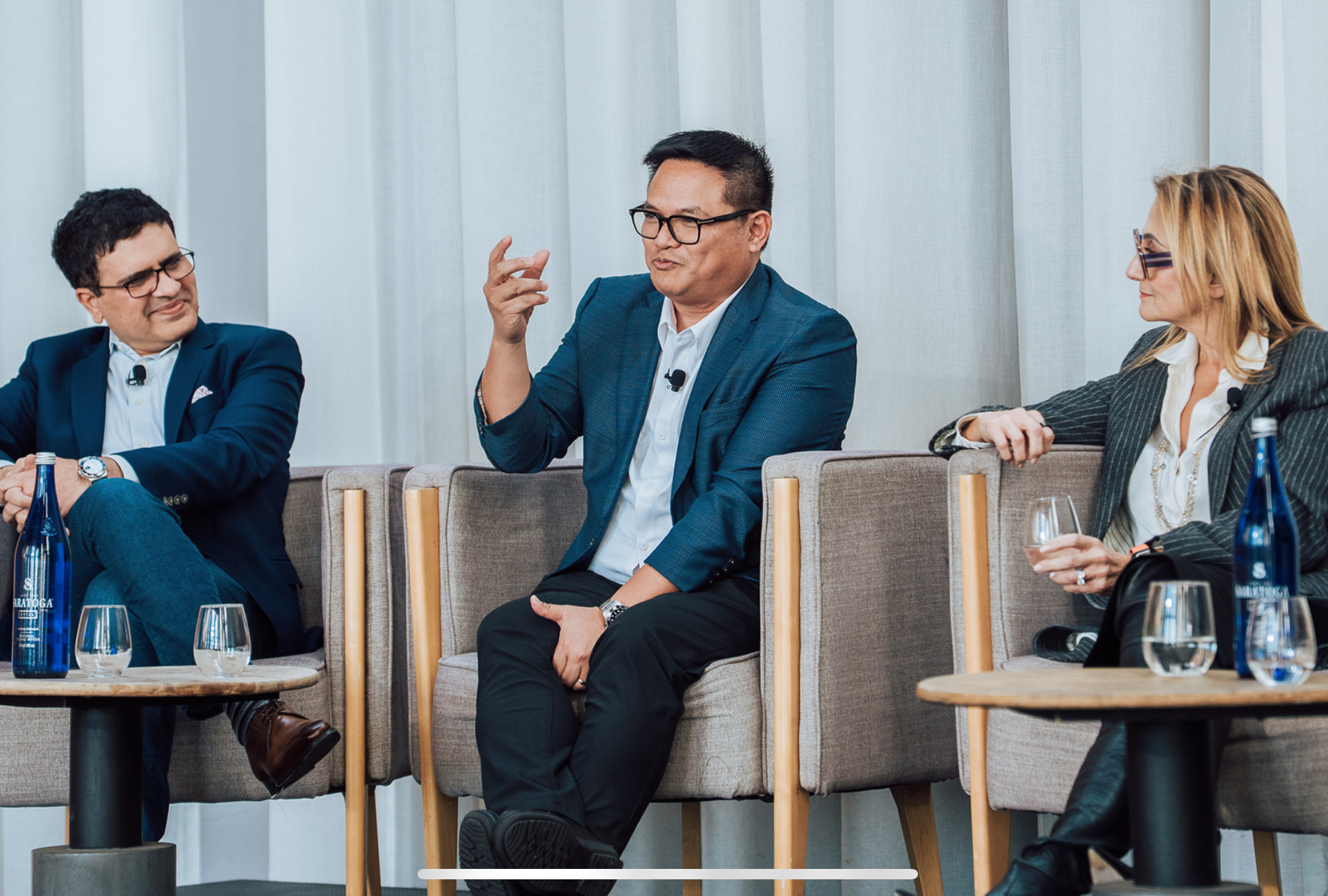
AI is no longer simply a technology agenda. It is reshaping how technology leaders show up — not as operators behind the scenes, but as educators, strategists, and catalysts for enterprise-wide change. This shift was on full display at the Metis Strategy Summit in New York, where I joined fellow CIOs for a conversation about how AI is redefining our role. What became clear is that the CIO is now expected to help the organization learn, adapt, and navigate ambiguity, all while shaping business strategy at the highest level.
Mojgan Lefebvre Chief Technology and Operations Officer of Travelers shared something that resonated deeply: the biggest barrier to AI adoption wasn’t technology, it was mindset. At Travelers, AI is no longer treated as a technology strategy; it is the business strategy. Once their leadership team fully embraced that perspective, acceleration followed. Their platform, TRAVAI, didn’t become successful because it was a tool; it became successful because leaders believed in it. She reminded us that readiness for AI begins with alignment at the top, and belief unlocks behavior.
Pawan Verma Chief Data and Information Officer of Cencora added a perspective that every CIO should internalize. He said our role now includes separating hype from truth — helping leaders distinguish between what is exciting and what is truly transformational. In his world, experimentation is encouraged, but experimentation for its own sake is not the goal. AI initiatives must tie back to clear business outcomes, measurable impact, and sustained value. His discipline around ensuring that enthusiasm never outweighs accountability was a grounding reminder that real transformation requires focus.
Listening to them, I reflected on where we are at Breakthru. I am early in my journey as CIO, but we are already building the foundation for AI — we want it to be an enabler to transformation. Early in my tenure, we held an AI summit with our executive team to build understanding, shared language, and curiosity. But AI literacy cannot stop at the C-suite. Jennifer Charters, CIO of Lincoln Financial, shared a framework introduced by Professor Ethan Mollick at Wharton: Leadership, Lab, Crowd. You begin with leadership, move into experimentation, and ultimately scale to the entire organization. That is exactly the path we are following. We started with leadership. We are now deep in the lab — testing and learning through tangible use cases. And soon, we will turn toward the crowd by launching a broader AI education program in partnership with our learning and development teams, because AI capability is only as strong as the workforce that can wield it.
Steven Norton our panel moderator closed with a personal question: what leadership muscle are you building right now? I reflected with my answer centered around purpose. In a time when AI can automate, accelerate, and optimize almost anything, purpose anchors us. Richard Leider says that purpose is not about what we do, but who we bring to what we do. That distinction matters. In the age of AI, my focus is not only on enabling transformation, but on ensuring we bring people with us. I think about my teams, my peers, my community — and my children who will inherit the world we are shaping.
AI is the most significant transformation driver of our time. And because of that, I think deeply about leadership that concerns itself not only with deploying AI, but with building the capability to educate on AI at scale in our society. Technology may accelerate progress, but leadership determines whether others are empowered to move forward with it. Our legacy will not be measured by how much AI we introduced — but by how many people we helped bring along.

 #Perspectives