Advanced Relationship Leadership

Grateful to be with the global BRM community in Kansas City for World BRMConnect. I introduced PATH, a four-part framework—Purpose, Agility, Trust, Humanity—to elevate leadership in the age of AI.

P – Purpose | Lead with Purpose

 A – Agility | Practice Leadership Agility

 T – Trust | Make Trust Your Operating System

 H – Humanity | Champion Innovation Rooted in Humanity

When people sense you are driven by PURPOSE—that what you’re doing truly matters—they lean in. Purpose inspires commitment. It unites people around a shared vision.

When they see you practice AGILITY—being flexible, adaptive, and open—they trust you can guide them through uncertainty. Agility isn’t about controlling every note; it’s about setting the rhythm, empowering others, and adjusting as the tempo shifts.

When people can count on your honesty, clarity, courage, and authenticity, trust flows. TRUST is our greatest currency in the age of AI—the safety net that allows people to explore boldly. Without it, everything falls apart.

And when people sense you value technology more than people, they disengage. But when they see you anchor innovation in HUMANITY—ethics, empathy, and fairness—they follow with confidence. Humanity keeps leadership grounded and ensures progress benefits all, not just a few.

When all four are strong, leadership will sustain meaningful change and creates lasting impact with purpose in the AI era.

Inspiring the Next Generation: Lessons from Samar, Philippines to the Global Stage

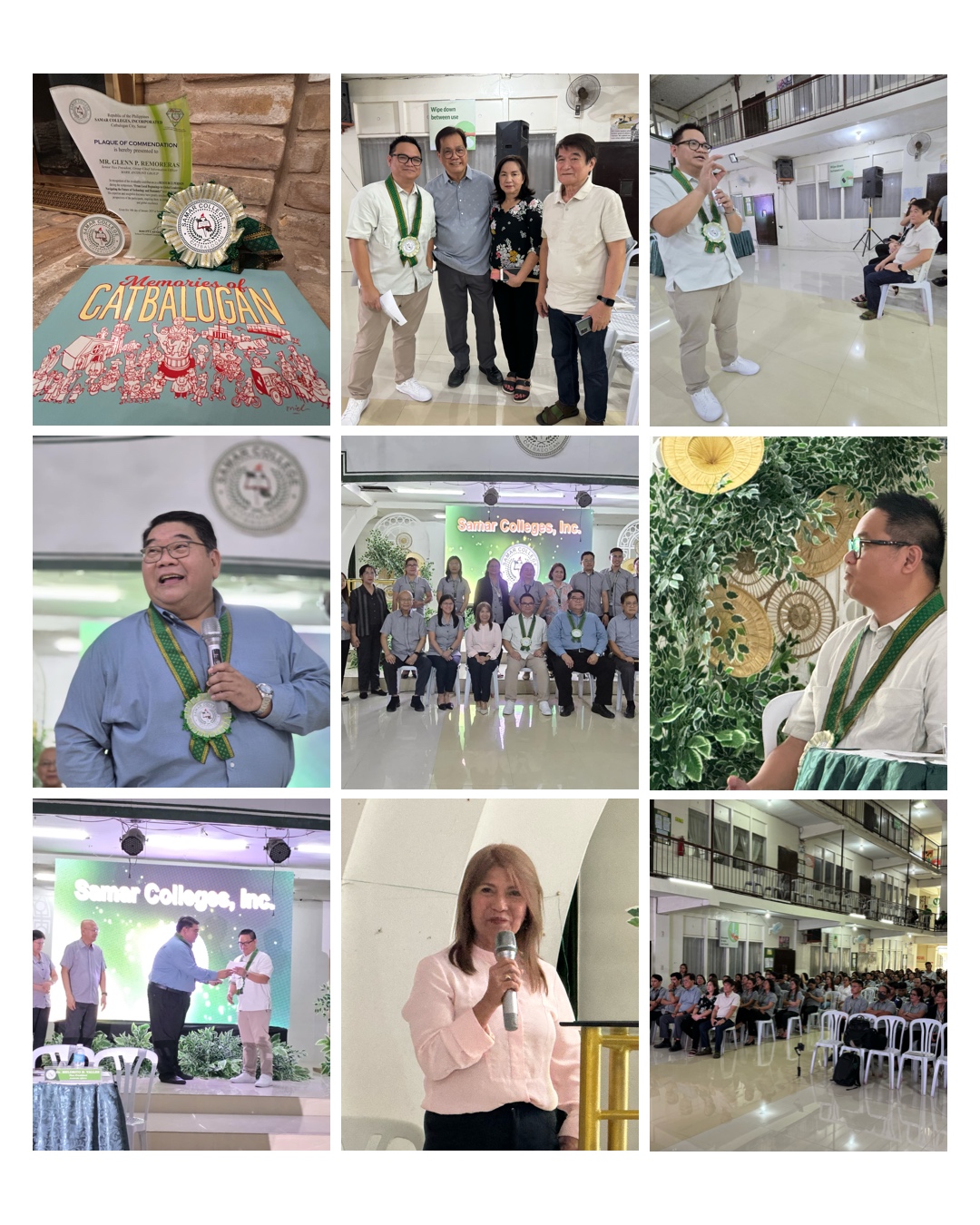
It was a privilege to speak at the Samar College symposium in my hometown of Catbalogan, Philippines, where I shared insights from my journey, perspectives on the future of work, and reflections on leadership in an era of rapid technological change. As someone who proudly traces my roots to Samar College, where I began my early education, this opportunity to give back to the community that shaped me was deeply meaningful. Below is a summary of my talk, which I hope will inspire those who dream of breaking barriers and leaving their mark on the world.


Breaking Barriers: My Journey from Samar to Leading Global Technology Transformations

Growing up in Samar taught me resilience, adaptability, and the value of community. Helping at my parents’ store instilled hard work, humility, malasakit (genuine care), and perseverance—principles that shaped my leadership style and aspirations.

My career path to becoming a global CIO was anything but straightforward. An unexpected turn led me to technology, proving that sometimes careers choose you—and those paths often bring the most fulfillment. Early in my journey, I learned the value of embracing change and stepping out of my comfort zone, whether it meant moving to a new city, taking on unfamiliar roles, or navigating uncharted technological landscapes. These steps, though challenging, defined my career.

I highlighted key moments, such as transitioning from leading local teams to managing global operations. Beyond technical expertise, success required connecting with people from diverse backgrounds—a skill rooted in the relationship-building and empathy I developed in Samar.

I emphasized that careers are not ladders but lattices. Growth isn’t just about climbing upward but also about lateral moves that broaden perspectives and skills. Flexibility and adaptability are crucial in technology, where careers rarely follow a linear path.


The Future of Work: AI, Automation, and Human Potential

I explored the exciting and sometimes daunting future of work, drawing on Gartner Maverick research. I invited the audience to envision 2045—a world shaped by Artificial Intelligence (AI), automation, and groundbreaking innovations. We discussed the rise of generative AI and its transformative impact, bringing AI to the mainstream.

The future will see remarkable advancements in biotechnology, renewable energy, and space exploration, alongside workforce changes. Routine jobs will be automated, and entirely new roles will emerge, such as “cyber-physical systems architects” and “AI ethicists.” By 2045, collaboration with AI agents, humanoid robots, and digital humans may be commonplace.

Thriving in this future requires adaptability, creativity, and emotional intelligence. While technical skills remain essential, uniquely human qualities—empathy, collaboration, and critical thinking—will set individuals apart. I encouraged students to embrace digital literacy and see AI as a partner to augment human potential, solving complex problems and amplifying their impact.


Leadership in the Age of AI: Balancing Technology and Human-Centered Leadership

Leadership in the AI era demands balancing technological innovation with a people-first approach. Effective leaders today require empathy, ethics, and a commitment to building trust. Technology should empower people, not replace them. For example, in my role as a global CIO, AI has streamlined processes and uncovered insights, enabling teams to focus on creative, higher-value work.

I discussed future-ready leadership behaviors critical for the AI era:

  • Humble: Embracing feedback and acknowledging others’ expertise.
  • Adaptable: Accepting change as constant and adjusting based on new information.
  • Visionary: Inspiring others with a clear, forward-thinking vision while anticipating future opportunities and challenges..
  • Engaged: Staying curious and actively interacting with stakeholders and trends.

Purpose-driven leadership is increasingly vital as employees and stakeholders expect leaders to prioritize social impact, diversity, and sustainability. Inspired by frameworks like Simon Sinek’s Golden Circle and the Japanese concept of Ikigai, I shared a purpose reflection framework and urged students to discover their “why.” Leaders who understand their purpose inspire trust and create meaningful impact.


Key Takeaways and Reflections

I concluded my talk with the following key messages:

  • AI will revolutionize industries and redefine work and the human experience.
  • Your roots make you unique, grounding you in who you are and who you’re meant to be.
  • Purpose is the foundation of a meaningful life and career.
  • Thriving in the AI era requires a balance of smart and heart, blending technical expertise with human-centered values.
  • Discover your “why”, as understanding and leading with purpose inspires yourself and others.

Returning to Samar was a full-circle moment, reminding me that success isn’t just about individual achievements but also about giving back and inspiring others. I encouraged students to uplift their communities, no matter where their journeys take them.


Bright Future Ahead

During the Q&A, the audience’s focus on AI reflected its significance as a symbol of progress and optimism. Samar College, under the leadership of President Rhett Piczon, is well-positioned for growth, and I’m inspired by its transformation.

I hope my story encourages others to believe in their potential. The world is waiting for your ideas, talents, and leadership. As you step forward, remember: the values you learned in Samar will guide you, no matter how far you go. Thank you, Samar College, for the opportunity to connect with the next generation of leaders. Together, we can create a brighter future for our community and the world.

Reskilling for the AI Era: Thriving Amid Disruption

“AI will be the most transformative technology of the 21st century. It will affect every industry and aspect of our lives.”Jensen Huang, CEO of NVIDIA

As 2025 draws near, employees are grappling with anxiety-inducing challenges on multiple fronts, with AI disruption being a prominent concern. The approach of a new year often brings reflection on what lies ahead, and for the third consecutive year, anxiety about AI’s disruptive potential feels even more pronounced. Yet, many have embraced a futurist mindset, envisioning a world where, by 2045, “50% of the population will have robots for household chores, avatars will gain real human status, and the average adult will have 12 hours of free time per day, up from 5 hours today,” according to Gartner Maverick research. Preparing for this future demands a shift in mindset—one that embraces new opportunities—and it all begins with reskilling.

The Reskilling Imperative

Today, the need for reskilling is paramount as a growing majority of workers recognize the disruptions AI advancements are bringing to their fields. Many are eager to reskill to stay competitive. For those of us in technical fields, this is not the first time we’ve faced the need to adapt. However, the pace and scale of today’s changes—and the resulting magnitude of disruption—are unprecedented. In the coming years, millions of workers will need to reskill to prepare for the complex societal and industrial transformations ahead. Major organizations like BCG, Infosys, Vodafone, CVS, SAP, and others are heavily investing in reskilling initiatives to navigate these changes effectively.

My Reskilling Journey

As someone who has worked in technology for over 25 years, I’ve witnessed firsthand the necessity of reskilling to keep up with leaps in technology. When I studied computer science in the early 1990s, I learned assembly language programming, COBOL, and VAX computing architectures. By the time I graduated, object-oriented programming was in full swing, and the internet was transforming businesses in unprecedented ways.

Interestingly, almost none of the coding languages I learned in college applied directly to the real world. Shortly after graduating, I taught myself FoxPro, Visual Basic, SAP’s ABAP, .NET, and more.

Digital Natives and the Next Generation

What I quickly realized was that while much of what I learned in school became “obsolete,” my education gave me something far more valuable: the ability to understand computers, architectures, and their implications for business. This foundation enabled me to continually evolve and reskill throughout my career. My computer science background didn’t just make me tech-savvy; it equipped me with the mindset to adapt to technological leaps over the years.

By the time my twin boys were six, I introduced them to object-oriented programming using MIT’s Scratch. They soon discovered the code behind the objects and, by age 12, taught themselves languages like Lua (Roblox Studio) and attended camps for C++ and JavaScript. They even administer virtual servers for their friend groups to host games in Minecraft and Roblox!

While digital natives like them have a head start in terms of comfort with technology, I found they still needed encouragement to embrace AI and understand its importance. Growing up in a digital world provides familiarity, but reskilling to stay ahead of disruptive trends requires a deliberate mindset and proactive effort.

The Role of Companies in Reskilling

Reskilling is not just an individual challenge; it is also a critical priority for organizations. Companies must recognize that their competitiveness in the AI-driven economy depends on the skills of their workforce. I’ve been fortunate to be part of a company like Mark Anthony Group, which invests in AI literacy through initiatives like use case development, AI masterclasses, and AI Day events. We also partner with vendors who are on similar journeys to jointly develop AI capabilities.

Here are some ways companies can support reskilling:

  1. Invest in Training Programs: Organizations should offer tailored training initiatives, from basic AI literacy courses to advanced machine learning certifications. Partnering with platforms like Coursera, Udemy, or universities can make these resources widely accessible.
  2. Encourage Lifelong Learning: Cultivate a culture where continuous learning is celebrated and supported. Offer incentives like tuition reimbursements or paid time off for skill development.
  3. Provide Hands-On Opportunities: Employees need real-world projects to practice new skills. Companies should integrate AI and emerging technologies into workflows and encourage cross-functional collaboration.
  4. Lead with Empathy: Change can be intimidating. Organizations must ensure employees feel supported during transitions and clearly communicate the long-term benefits of reskilling.

Advice for Employees

Staying competitive in the age of AI requires taking ownership of your learning journey. Here are some tips for making the most of reskilling opportunities:

  1. Stay Curious and Open-Minded: Embrace change as inevitable. Cultivate curiosity about new technologies and their potential to enhance your work.
  2. Leverage Company Resources: Take full advantage of training programs, workshops, and certifications offered by your employer. Show initiative by seeking opportunities to apply new skills.
  3. Invest in Self-Learning: Use online platforms like LinkedIn Learning, Khan Academy, or Codecademy to learn independently. Many high-quality resources are free or affordable.
  4. Collaborate and Network: Work with colleagues knowledgeable in new technologies or join communities focused on AI and reskilling to exchange ideas and experiences.
  5. Focus on Transferable Skills: Skills like problem-solving, critical thinking, and adaptability are timeless. Strengthen these alongside technical skills to ensure long-term career resilience.

Reskilling is more than a necessity in the AI-driven era—it is an opportunity to grow, innovate, and thrive. Companies and employees must work together to navigate these changes effectively. Organizations can empower their workforce with the right tools and resources, while employees must embrace the chance to evolve and future-proof their careers.

As I reflect on my reskilling journey, I see that adaptability, curiosity, and a willingness to learn are the keys to success in times of disruption. Let us approach this era of change with optimism and a readiness to unlock its potential.

The Power of Career Lattices

In 2007, I was nearing the end of my post-merger integration assignment in Germany when the Head of EMEA IT asked me to return to the Philippines for a temporary role: Interim Regional Director of IT Asia for six months. The Head of IT Asia was heading to Australia for a long-term assignment, and I was asked to fill the gap.

As is often the case with these types of assignments, one of two things usually happens: 1) you complete the assignment and return to your previous role, or 2) the assignment becomes permanent, leading to the career progression you’ve been aiming for. I was hoping for the second option, thinking about my career ladder and wanting to move upward.

My six-month assignment went well, and as it ended, I was eagerly looking for my next step. What came next, however, wasn’t what I had envisioned as the next rung on my ladder. I was offered a position in Mexico as a Process Analyst/Consultant at the company’s corporate headquarters. At that time, it didn’t feel like the upward career move I was hoping for.

But then, my mentor-manager gave me some advice that changed my perspective. He said, “Think of where you are now as the minor leagues. We’re bringing you to the majors here at corporate. You might start on the bench, but you’ll be in the big leagues.” That advice convinced me to take a leap of faith.

That move to Mexico was a pivotal moment—it eventually led me to the U.S., into a new industry in consumer packaged goods, and ultimately, to becoming a Chief Information Officer.

I learned one important lesson: careers aren’t ladders—they’re lattices. Sometimes the most valuable experiences come from stepping sideways, not upwards. The journey is not just about climbing up; it’s about moving across, learning, and growing in all directions. What happens when that vertical path isn’t what you want? When your skills or interests shift? The truth is, most careers, especially in technology, are far from linear. We need flexibility, the opportunity to move laterally, to take on different challenges, and to develop new perspectives. That’s the lattice!

In a world that’s evolving as quickly as ours—especially with advancements like AI—the most successful leaders will be those who embrace the lattice approach, blend technical expertise with leadership, and commit to lifelong learning.

A Simple Lesson From My Father

I’m the eldest of 3 boys, and all of us now with families and kids. Still to this day, when we are with our father walking beside him, he would sometimes still hold our hands.

This thought brings me way back to 2005 in Paris. I was fortunate enough to get him there with my mom and brother. I remember strolling by Champ-Elysees when suddenly he brought our attention to a grand hotel with an open window. He described that scene as very fortunate people enjoying breakfast in one of the finest in the world. I sensed the grandeur of Paris, the moment, the smiles, and the happy people.

He paused, gave us time to internalize the scene, and then proceeded to say, “there are those people in our small hometown in the Philippines, having simple breakfast with their coffee, but just as happy.”

It’s a lesson. It is not about where you are; it’s the moment and who you are with that matters.

Simple Lesson on Servant Leadership

My 10-year-old son came to my home office. He saw two books about leadership on my desk and immediately shared a blunt observation that stunned me. He said, “You are reading leadership books and yet you are not a good leader.”

Surprised by what he said, I began to probe what he meant to say. My son, who is a prolific coder at his age, amused me with his explanation. He said, “Dad, if you are a good leader, as CIO you should be coding with your team, you are more of a boss, because you just tell them what to do.” I got a good reminder on servant leadership!

That’s right, since I don’t get to code anymore, I am merely overhead unless I bring out the best in my team and develop leadership qualities in them. Leaders must find ways to have meaningful engagements with their team. I believe that leaders that engage their people get to know what they think. They have a finger on the pulse of the organization and can lead effectively.

Power of Relationships: How the Power of Relationships Fuels Leadership and Culture

A few years ago, in an annual performance calibration meeting, our CIO explained why a Business Relationship Manager (BRM) from my team should get an “exceeds expectation” rating. To drive his point, he went on by saying, “If this person asks the pilot of our corporate plane to turn around while in mid-flight, the pilot will turn around.” He was probably more figurative in his argument, but what he really meant to say was that this BRM established such strong and trusted business relationships that he has gained power of influence.

I believe that Power of Relationships is one the greatest factors in determining an organization’s success. “If the results are not there, I go looking at what relationships are broken,” said Darrel Popowich as he opened 2021 World BRMConnect.  Relationships is “the state of connectedness between two or more people which dictates the manner in which they interact, communicate, and behave with each other in pursuit of a shared organizational purpose.”1

Smart vs. Heart

The breakout show of the pandemic has been Apple TV+’s “Ted Lasso,” and it has gotten an additional boost from its multiple Emmys this year. Ted Lasso is an American college football coach who improbably finds himself coaching the fictional English football club AFC Richmond. The premise is that the owner hired an unqualified coach to spite her ex-husband who loves the team. The owner assumed that Lasso didn’t have enough “smart”, meaning knowledge of the game, strategy, and tactics to succeed as coach. The owner underestimated the “heart” of Ted Lasso. He ended up building a stronger and more cohesive team that brought the best in everyone. Ted Lasso led with empathy by letting each person he interacted with feeling cared for. He stayed grounded and humble to accept feedback and let others fill in where they could. More importantly, he built powerful relationships with the owner, front office, coaching team, team captain, players fans, media, and community.

One of the best explanations for this comes from another comedy sitcom from the 50s, I Love Lucy. Ricky, Lucy’s husband, came home and found Lucy looking for one of her earrings in their living room. Ricky then asked Lucy if she lost it in the living room. She replied, “No, I lost it in the bedroom. But the lights out here is much better.” “Most leaders prefer to look for answers where the light is better, where they are more comfortable. And the lights are certainly better in the measurable, objective, data-driven world of organizational intelligence than the messier, more unpredictable work of organizational health.”2

“The power of relationships in an organization provides the groundwork for leadership and culture. In turn, leadership and culture provide the context for strategy, execution, and continuous development.

Begs the question: Why are there not enough leaders that embrace power of relationships?”

Leadership and Culture

Unlike management systems and processes that tend to be linear, “leadership requires a more nuanced view of the world because it involves people: what motivates them, what their interests are, and how engaged they become”.3 Leadership and culture involves deep understanding of the power of relationships that underlies the state of connectedness between people, their interaction, communication, and behavior in pursuit of a shared organizational purpose. It requires leaders to go out of their comfort zone (SMART) and embrace people leadership, and the power of relationships in pursuit or organizational health (HEART). 

There are few universal competencies and behaviors associated with leaders, such as integrity, judgement, resilience, decision-making capacity, analytical ability, charisma, and communication skills. These timeless leadership competencies still apply today. As I reflect on the shift in leadership that is needed in today’s world, I examined other leadership competencies needed in the light of major changes we are currently experiencing. Leadership competencies that leverage connectedness, as well as drive agility. Competencies that bring more focus to HEART side of the equation.

  • Humble: An ability to accept feedback and acknowledge that others know more than you.
  • Adaptable: An acceptance that change is constant and that changing your mind based on new information is a strength rather than a weakness.
  • Vulnerable: Being vulnerable doesn’t make leaders weak, it allows them to show people their authentic self.
  • Engaged: A willingness to listen, interact, and communicate with internal and external stakeholders combined with a strong sense of interest and curiosity in emerging trends.

Leadership is the ultimate lever to evolving culture. An organization’s culture doesn’t just materialize, and it isn’t random. It reflects human behavior, which is why it is often defined using human traits. More specifically, culture is an echo of all the interactions and relationships between any people having anything to do with the organization, past or present. Leadership and culture do not exist as independent things, they overlap or combine. Those unseen connections (relationships) are fundamental ingredients and key determinants of everything. Thus, the power of relationships in an organization provides the groundwork for leadership and culture.

This culture pyramid derived from the book, Change the Culture, Change the Game, is one of the best frameworks to define culture. “Leaders create experiences. Experiences foster beliefs. Beliefs drive actions and actions delivery results.” The combination of experiences, believes and actions is the culture of an organization.

Most initiatives that are heavily biased on the SMART side of the equation tends to focus on the top part of the pyramid: actions and results. This is when leaders take the short cut when trying to improve results. By just calling the team to action: “sell more to increase profit”, “streamline production process to increase throughput” or “standardize processes to improve economies of scale”. I am not saying these are bad initiatives. After all, these actions deliver results that are tangible, measurable, and more predictable. However, it more likely will result in short-term progress or quick wins.

As early as 1990s, few thought leaders and authors were starting to write more about leadership than management that ruled the “Peter Drucker business world”. Change was becoming normal, and life was moving faster. This translated even more so in the business world with advancement in technology; where cycles of innovation and transformation led to the disruption of industries, and the creation of new ones. Unprecedented events in human history, like the current COVID19 pandemic brought the complexity of our world come screaming into view. It is changing the way we live and work.

Leaders who balance SMART with HEART will consider all the elements on the pyramid – company experience, employee beliefs and ingrained practices – and then ensure that what you change is sustained. The right experiences and belief foster powerful relationships between different people in the organization, that in turn build commitment and lasting impact. The actions then initiated by change initiative delivers results that is sustainable and resilient. 

1 BRM Institute, The Relationship-Centered Organization: Accessing Infinite Value Through Relationships https://brm.institute/relationship-centered-organization-system/

2 Patrick Lencioni, The Advantage, Why Organizational Health Trumps Everything in Business, 2012

3 John C. Maxwell, Leader Shift, The 11 Essential Changes Every Leader Mush Embrace, 2019