Inspiring the Next Generation: Lessons from Samar, Philippines to the Global Stage

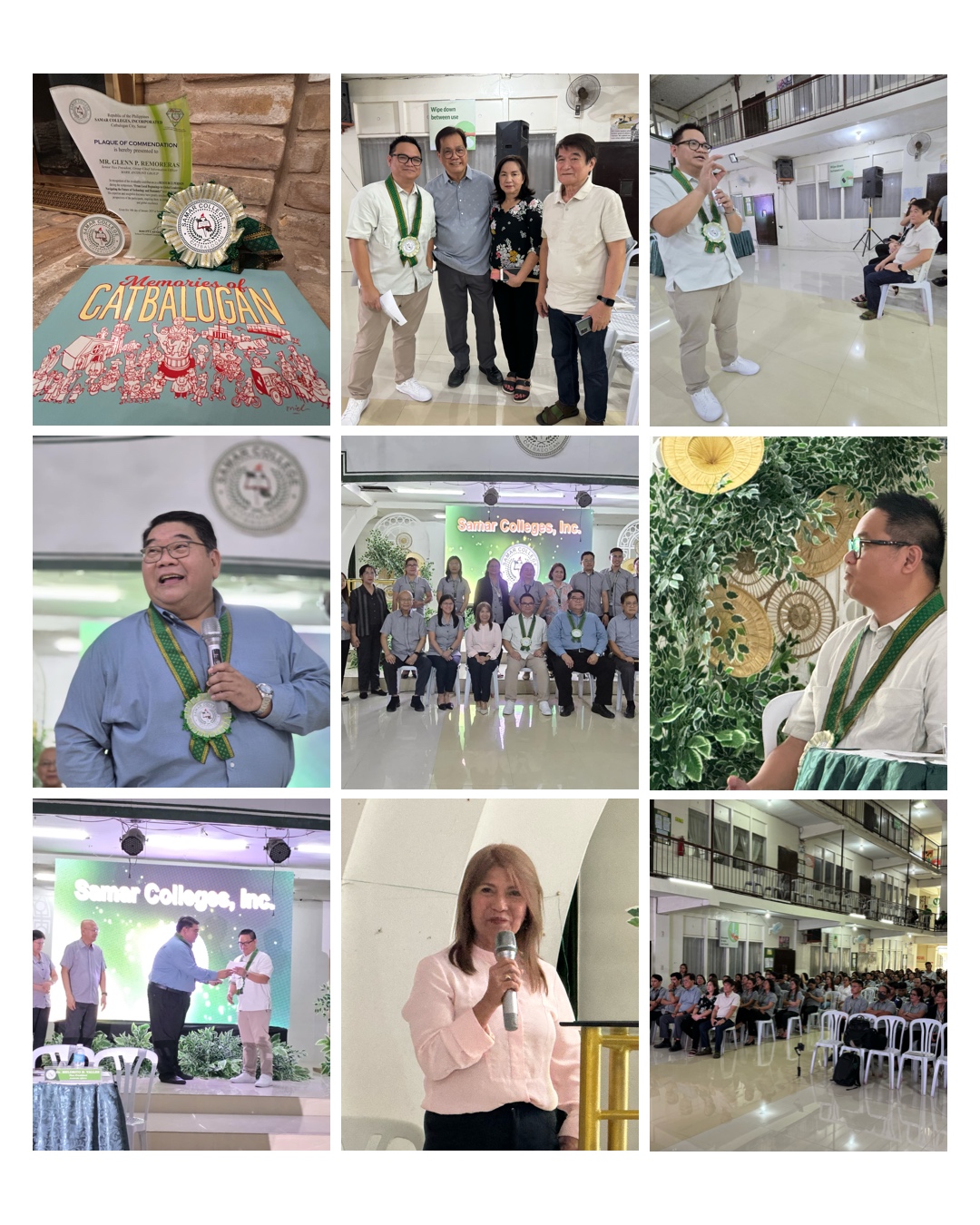
It was a privilege to speak at the Samar College symposium in my hometown of Catbalogan, Philippines, where I shared insights from my journey, perspectives on the future of work, and reflections on leadership in an era of rapid technological change. As someone who proudly traces my roots to Samar College, where I began my early education, this opportunity to give back to the community that shaped me was deeply meaningful. Below is a summary of my talk, which I hope will inspire those who dream of breaking barriers and leaving their mark on the world.


Breaking Barriers: My Journey from Samar to Leading Global Technology Transformations

Growing up in Samar taught me resilience, adaptability, and the value of community. Helping at my parents’ store instilled hard work, humility, malasakit (genuine care), and perseverance—principles that shaped my leadership style and aspirations.

My career path to becoming a global CIO was anything but straightforward. An unexpected turn led me to technology, proving that sometimes careers choose you—and those paths often bring the most fulfillment. Early in my journey, I learned the value of embracing change and stepping out of my comfort zone, whether it meant moving to a new city, taking on unfamiliar roles, or navigating uncharted technological landscapes. These steps, though challenging, defined my career.

I highlighted key moments, such as transitioning from leading local teams to managing global operations. Beyond technical expertise, success required connecting with people from diverse backgrounds—a skill rooted in the relationship-building and empathy I developed in Samar.

I emphasized that careers are not ladders but lattices. Growth isn’t just about climbing upward but also about lateral moves that broaden perspectives and skills. Flexibility and adaptability are crucial in technology, where careers rarely follow a linear path.


The Future of Work: AI, Automation, and Human Potential

I explored the exciting and sometimes daunting future of work, drawing on Gartner Maverick research. I invited the audience to envision 2045—a world shaped by Artificial Intelligence (AI), automation, and groundbreaking innovations. We discussed the rise of generative AI and its transformative impact, bringing AI to the mainstream.

The future will see remarkable advancements in biotechnology, renewable energy, and space exploration, alongside workforce changes. Routine jobs will be automated, and entirely new roles will emerge, such as “cyber-physical systems architects” and “AI ethicists.” By 2045, collaboration with AI agents, humanoid robots, and digital humans may be commonplace.

Thriving in this future requires adaptability, creativity, and emotional intelligence. While technical skills remain essential, uniquely human qualities—empathy, collaboration, and critical thinking—will set individuals apart. I encouraged students to embrace digital literacy and see AI as a partner to augment human potential, solving complex problems and amplifying their impact.


Leadership in the Age of AI: Balancing Technology and Human-Centered Leadership

Leadership in the AI era demands balancing technological innovation with a people-first approach. Effective leaders today require empathy, ethics, and a commitment to building trust. Technology should empower people, not replace them. For example, in my role as a global CIO, AI has streamlined processes and uncovered insights, enabling teams to focus on creative, higher-value work.

I discussed future-ready leadership behaviors critical for the AI era:

  • Humble: Embracing feedback and acknowledging others’ expertise.
  • Adaptable: Accepting change as constant and adjusting based on new information.
  • Visionary: Inspiring others with a clear, forward-thinking vision while anticipating future opportunities and challenges..
  • Engaged: Staying curious and actively interacting with stakeholders and trends.

Purpose-driven leadership is increasingly vital as employees and stakeholders expect leaders to prioritize social impact, diversity, and sustainability. Inspired by frameworks like Simon Sinek’s Golden Circle and the Japanese concept of Ikigai, I shared a purpose reflection framework and urged students to discover their “why.” Leaders who understand their purpose inspire trust and create meaningful impact.


Key Takeaways and Reflections

I concluded my talk with the following key messages:

  • AI will revolutionize industries and redefine work and the human experience.
  • Your roots make you unique, grounding you in who you are and who you’re meant to be.
  • Purpose is the foundation of a meaningful life and career.
  • Thriving in the AI era requires a balance of smart and heart, blending technical expertise with human-centered values.
  • Discover your “why”, as understanding and leading with purpose inspires yourself and others.

Returning to Samar was a full-circle moment, reminding me that success isn’t just about individual achievements but also about giving back and inspiring others. I encouraged students to uplift their communities, no matter where their journeys take them.


Bright Future Ahead

During the Q&A, the audience’s focus on AI reflected its significance as a symbol of progress and optimism. Samar College, under the leadership of President Rhett Piczon, is well-positioned for growth, and I’m inspired by its transformation.

I hope my story encourages others to believe in their potential. The world is waiting for your ideas, talents, and leadership. As you step forward, remember: the values you learned in Samar will guide you, no matter how far you go. Thank you, Samar College, for the opportunity to connect with the next generation of leaders. Together, we can create a brighter future for our community and the world.
Slowing Down for What Matters: A Reflection on Family and Time

As I sit at the airport, waiting for my flight back home to Texas, I find myself reflecting on the past two weeks spent in the Philippines. This trip was more than just a vacation—it was a deliberate decision to focus on what truly matters: family, and most especially, my Mama and Papa.

I planned this journey with a single goal in mind: to immerse myself in their daily lives, to walk alongside them, and to experience their world. From countless breakfasts shared over home-cooked meals to helping out at our Glenuel store, visiting my mother’s hometown in Tarangnan, and joining them on their twenty-hour drive from Samar to Manila, every moment felt meaningful. It was such a pleasure to have them seated in the front row at the Tech Symposium at Samar College. Watching a PBA game, accompanying them through Divisoria, and countless give-back opportunities were more than just activities—they were glimpses into the rhythm and beauty of their everyday lives. Being present in these seemingly ordinary moments felt grounding, as I knew they carried extraordinary significance.

As they grow older, so do I, and this time together served as a reminder of how fleeting these opportunities can be. Life often moves so quickly that we forget to pause and truly connect. But on this trip, I made a conscious choice to slow down, to deeply appreciate my parents, and to honor the love and sacrifices that have shaped my life.

This trip will always remind me of the importance of making time for those we love, especially our parents. It’s a reminder that life’s greatest treasures are found in the simple acts of being present, cherishing shared moments, and creating memories that will live in our hearts forever.

Until this upcoming spring break—let’s do it again, Mama and Papa, this time in the US!

Reskilling for the AI Era: Thriving Amid Disruption

“AI will be the most transformative technology of the 21st century. It will affect every industry and aspect of our lives.”Jensen Huang, CEO of NVIDIA

As 2025 draws near, employees are grappling with anxiety-inducing challenges on multiple fronts, with AI disruption being a prominent concern. The approach of a new year often brings reflection on what lies ahead, and for the third consecutive year, anxiety about AI’s disruptive potential feels even more pronounced. Yet, many have embraced a futurist mindset, envisioning a world where, by 2045, “50% of the population will have robots for household chores, avatars will gain real human status, and the average adult will have 12 hours of free time per day, up from 5 hours today,” according to Gartner Maverick research. Preparing for this future demands a shift in mindset—one that embraces new opportunities—and it all begins with reskilling.

The Reskilling Imperative

Today, the need for reskilling is paramount as a growing majority of workers recognize the disruptions AI advancements are bringing to their fields. Many are eager to reskill to stay competitive. For those of us in technical fields, this is not the first time we’ve faced the need to adapt. However, the pace and scale of today’s changes—and the resulting magnitude of disruption—are unprecedented. In the coming years, millions of workers will need to reskill to prepare for the complex societal and industrial transformations ahead. Major organizations like BCG, Infosys, Vodafone, CVS, SAP, and others are heavily investing in reskilling initiatives to navigate these changes effectively.

My Reskilling Journey

As someone who has worked in technology for over 25 years, I’ve witnessed firsthand the necessity of reskilling to keep up with leaps in technology. When I studied computer science in the early 1990s, I learned assembly language programming, COBOL, and VAX computing architectures. By the time I graduated, object-oriented programming was in full swing, and the internet was transforming businesses in unprecedented ways.

Interestingly, almost none of the coding languages I learned in college applied directly to the real world. Shortly after graduating, I taught myself FoxPro, Visual Basic, SAP’s ABAP, .NET, and more.

Digital Natives and the Next Generation

What I quickly realized was that while much of what I learned in school became “obsolete,” my education gave me something far more valuable: the ability to understand computers, architectures, and their implications for business. This foundation enabled me to continually evolve and reskill throughout my career. My computer science background didn’t just make me tech-savvy; it equipped me with the mindset to adapt to technological leaps over the years.

By the time my twin boys were six, I introduced them to object-oriented programming using MIT’s Scratch. They soon discovered the code behind the objects and, by age 12, taught themselves languages like Lua (Roblox Studio) and attended camps for C++ and JavaScript. They even administer virtual servers for their friend groups to host games in Minecraft and Roblox!

While digital natives like them have a head start in terms of comfort with technology, I found they still needed encouragement to embrace AI and understand its importance. Growing up in a digital world provides familiarity, but reskilling to stay ahead of disruptive trends requires a deliberate mindset and proactive effort.

The Role of Companies in Reskilling

Reskilling is not just an individual challenge; it is also a critical priority for organizations. Companies must recognize that their competitiveness in the AI-driven economy depends on the skills of their workforce. I’ve been fortunate to be part of a company like Mark Anthony Group, which invests in AI literacy through initiatives like use case development, AI masterclasses, and AI Day events. We also partner with vendors who are on similar journeys to jointly develop AI capabilities.

Here are some ways companies can support reskilling:

  1. Invest in Training Programs: Organizations should offer tailored training initiatives, from basic AI literacy courses to advanced machine learning certifications. Partnering with platforms like Coursera, Udemy, or universities can make these resources widely accessible.
  2. Encourage Lifelong Learning: Cultivate a culture where continuous learning is celebrated and supported. Offer incentives like tuition reimbursements or paid time off for skill development.
  3. Provide Hands-On Opportunities: Employees need real-world projects to practice new skills. Companies should integrate AI and emerging technologies into workflows and encourage cross-functional collaboration.
  4. Lead with Empathy: Change can be intimidating. Organizations must ensure employees feel supported during transitions and clearly communicate the long-term benefits of reskilling.

Advice for Employees

Staying competitive in the age of AI requires taking ownership of your learning journey. Here are some tips for making the most of reskilling opportunities:

  1. Stay Curious and Open-Minded: Embrace change as inevitable. Cultivate curiosity about new technologies and their potential to enhance your work.
  2. Leverage Company Resources: Take full advantage of training programs, workshops, and certifications offered by your employer. Show initiative by seeking opportunities to apply new skills.
  3. Invest in Self-Learning: Use online platforms like LinkedIn Learning, Khan Academy, or Codecademy to learn independently. Many high-quality resources are free or affordable.
  4. Collaborate and Network: Work with colleagues knowledgeable in new technologies or join communities focused on AI and reskilling to exchange ideas and experiences.
  5. Focus on Transferable Skills: Skills like problem-solving, critical thinking, and adaptability are timeless. Strengthen these alongside technical skills to ensure long-term career resilience.

Reskilling is more than a necessity in the AI-driven era—it is an opportunity to grow, innovate, and thrive. Companies and employees must work together to navigate these changes effectively. Organizations can empower their workforce with the right tools and resources, while employees must embrace the chance to evolve and future-proof their careers.

As I reflect on my reskilling journey, I see that adaptability, curiosity, and a willingness to learn are the keys to success in times of disruption. Let us approach this era of change with optimism and a readiness to unlock its potential.

AI Adoption in Mid-Sized Enterprises: Building on First-Mover Advantages

As AI adoption accelerates, the cost and volatility of AI investments are becoming significant challenges for organizations. Gartner estimates that GenAI costs could vary by as much as 500% to 1000%, with vendors raising prices by up to 30% as they integrate GenAI capabilities. This unpredictability is driven by factors such as data preparation, infrastructure needs, computational power, talent scarcity, token costs (price per NLP interaction), and regulatory requirements.

For those of us in mid-sized enterprises (MSE) who began exploring AI use cases a few years back, we may not yet be facing this level of cost volatility and cost spikes. While our models and applications haven’t fully scaled, our first-mover advantage lies in AI literacy and capability building. By diving in early, we engaged in hands-on, often scrappy AI projects, frequently co-innovating and co-investing with vendor partners. We built foundational machine learning models, applied large language models (LLMs) to generate human-readable results, and enabled interaction with existing models, all using platforms already familiar to our users. Successful use cases have generated financial benefits, with vendors offering additional resources to showcase our shared achievements.

My advice to MSEs:

  • Dive in NOW – Leverage existing platforms, data, and cloud capabilities.
  • Be Scrappy – Test and learn with vendor ecosystems; seek co-investment and co-innovation.
  • Invest in AI Literacy and Capability Building – Consider AI boot camps, AI leadership day, or AI executive retreat
  • Prepare to scale Enterprise-Wide – Establish governance, prioritize investment, and expand on successful use cases

Photo taken during AI Day with our vendor partners: Amazon Web Services (AWS), Salesforce, Microsoft, Softchoice, Adastra, NEORIS, Adobe, o9 Solutions and KPMG.

The Power of Career Lattices

In 2007, I was nearing the end of my post-merger integration assignment in Germany when the Head of EMEA IT asked me to return to the Philippines for a temporary role: Interim Regional Director of IT Asia for six months. The Head of IT Asia was heading to Australia for a long-term assignment, and I was asked to fill the gap.

As is often the case with these types of assignments, one of two things usually happens: 1) you complete the assignment and return to your previous role, or 2) the assignment becomes permanent, leading to the career progression you’ve been aiming for. I was hoping for the second option, thinking about my career ladder and wanting to move upward.

My six-month assignment went well, and as it ended, I was eagerly looking for my next step. What came next, however, wasn’t what I had envisioned as the next rung on my ladder. I was offered a position in Mexico as a Process Analyst/Consultant at the company’s corporate headquarters. At that time, it didn’t feel like the upward career move I was hoping for.

But then, my mentor-manager gave me some advice that changed my perspective. He said, “Think of where you are now as the minor leagues. We’re bringing you to the majors here at corporate. You might start on the bench, but you’ll be in the big leagues.” That advice convinced me to take a leap of faith.

That move to Mexico was a pivotal moment—it eventually led me to the U.S., into a new industry in consumer packaged goods, and ultimately, to becoming a Chief Information Officer.

I learned one important lesson: careers aren’t ladders—they’re lattices. Sometimes the most valuable experiences come from stepping sideways, not upwards. The journey is not just about climbing up; it’s about moving across, learning, and growing in all directions. What happens when that vertical path isn’t what you want? When your skills or interests shift? The truth is, most careers, especially in technology, are far from linear. We need flexibility, the opportunity to move laterally, to take on different challenges, and to develop new perspectives. That’s the lattice!

In a world that’s evolving as quickly as ours—especially with advancements like AI—the most successful leaders will be those who embrace the lattice approach, blend technical expertise with leadership, and commit to lifelong learning.

Critical Thinking and O-rings!

Somehow, almost every chat these days leads to the topic of AI. Last Tuesday, I was on a Zoom call with my tax advisor, Kevin, and we ended up having a passionate discussion about AI. He emphasized the importance of critical thinking, especially in the future of AI. Critical thinking enables humans to solve complex problems, make ethical decisions, and foster innovation. As AI systems tackle increasingly intricate tasks, the human ability to understand, interpret, and creatively solve problems will remain indispensable.

This brought me to a concept discussed in my MIT AI course regarding the O-ring principle. The O-ring principle originated from the Space Shuttle Challenger disaster in 1986. The catastrophic failure was caused by the malfunction of a small rubber O-ring in one of the shuttle’s solid rocket boosters, which led to the destruction of the shuttle and the loss of all seven crew members. This event highlighted the critical importance of even the smallest components in complex systems. The lesson is that in any complex enterprise, as you improve the reliability of all the pieces that go together, the reliability and function of the remaining components become even more central. In many of the things that we will do in the future of work, we will be the last piece that determines whether a particular mission or initiative will be successful. We will be the O-rings!

This ultimately brought me to my twin boys, who are 13 years old now and still passionate coders. They once asked me if they should continue coding, concerned about the future where coding might be fully AI-automated. I said, “Absolutely continue coding- first, you are good at it, and second, in the future, individuals like you who understand the inner workings of machines will have the know-how to critically challenge, prompt/ask questions, and improve missions, initiatives, and outcomes.” Talk about becoming the best of the O-rings!

Beyond Productivity: The Revolutionary Role of Generative AI in Business Transformation

The advent of tools like ChatGPT has significantly intensified the hype around AI, marking a pivotal moment for AI’s entry into the mainstream. Consequently, when discussing AI nowadays, it’s common to reference ChatGPT and other similar tools that have emerged. This sudden surge in attention has made everyone eager to share their thoughts, resulting in the term Generative AI (GenAI) being frequently overused and misapplied, which only adds to the confusion. 

What is Generative AI and Isn’t?

Before diving into the main topic, it’s important to clarify widespread misconceptions surrounding GenAI. What exactly is GenAI, and what is not? Many companies have been leveraging AI since the early 2000s, driven by big data, enhanced machine learning, deep learning for predictive analytics, scenario planning, and data analytics. GenAI stands apart. It denotes a subset of AI technologies capable of generating new content that mirrors human-created work. Typically manifesting as text, video, images, or code, it closely resembles human output.

How can companies embrace GenAI now?

As GenAI technology swiftly evolves, the key question shifts from “if” to “how”. Companies need to make the choice between developing in-house or buying, assessing the required investment, addressing potential risks, and recruiting the right talent and developing talent within, all while considering the distinct needs of the company. With GenAI, I would lean to diving in now with the following actions: 

1. Dive in with organizational exploration and learning approach

2. Explore use cases with business-driven mindset

3. Find partners from your ecosystem to learn and co-innovate together 

4. Invest in sustainable technology foundation and get your proprietary data ready

5. Level up your responsible AI and compliance 

The future of GenAI as the ultimate user interface

Many assume that the capabilities of GenAI to generate diverse outputs could lead to significant productivity gains, to the extent that numerous job categories might be phased out in the coming years, replaced by artificial intelligence. However, I would argue that productivity gains are not the ultimate value of GenAI. Such gains, facilitated by tools like GenAI chatbots, may be easily replicated, and therefore not a source of differentiation. They are difficult to quantify in economic terms or captured as tangible benefits in a business case. For instance, a 30% improvement in process throughput does not necessarily translate into enhanced customer retention, product quality, reduced unplanned operational downtime, or better patient treatment outcomes. 

Speed does not equate to quality. Superior outcomes are defined by greater accuracy, reliability, responsibility, relevance, and reduced risk. These improvements are almost always aligned with the business context and strategic goals rooted in the organization’s mission.

The ability of GenAI to mimic human dialogue in interfacing with complex systems, data and technologic features has given us AI’s first true infliction point in broader adoption. GenAI serves as the ultimate user interface (UI) to various technology capabilities, including AI, ERP, CRM, Data Analytics, etc.

In the wake of the GenAI hype, numerous technology companies have positioned themselves as leaders in this field, highlighting their current offerings and future plans that incorporate GenAI. As a technology leader, I’ve attended several presentations and demos showcasing the GenAI strategies of these companies. Interestingly, most of the new GenAI features focus on making the user interfacing more human-like and intuitive, which isn’t surprising given that language processing is one of GenAI’s greatest strengths.

O9 has significantly enhanced its industry-leading integrated planning platform by integrating GenAI capabilities. This includes a prompt feature that allows users to access trusted insights. By facilitating decision-making via natural language queries and conversational analytics, this solution speaks in the user’s preferred language and gain insights from already existing Digital Brain.

SAP AI Copilot Joule offers users the ability to complete tasks using natural language and provides relevant help within the application itself. It enables users to navigate SAP solutions more efficiently, streamline tasks, receive smart insights on demand, and access customized content to get started on their work promptly.

Salesforce EinsteinGPT brings personalized content to every Salesforce cloud using GenAI, thereby enhancing the productivity of all employees and improving every customer interaction. Salesforce’s GenAI CRM technology aims to provide AI-created content across every interaction within sales, service, marketing, commerce, and IT, on a massive scale. With Einstein GPT, Salesforce is set to redefine customer experiences through the power of generative AI.

As illustrated by these examples, there’s a noticeable enhancement in the utilization of existing digital and technological capabilities within current platforms through the use of GenAI as an intermediary. Envision a future where users interact with their systems in human-centric ways, rather than through the transactional, step-by-step processes that are common today. 

For instance, you could instruct your order fulfillment system with a command like: “Identify any orders from the past week that have not been fulfilled due to stock shortages. Provide a list of affected orders and suggest alternative fulfillment strategies, prioritizing as high urgency.” The system then executes all the necessary steps for you. Essentially, you are conversing with the system, and based on the results, responses, or recommendations, you can tailor your next steps accordingly.

GenAI’s sophisticated understanding of historical context from transactional data, next best action from predictive models, summarization capabilities, will bring a new era of hyper-efficiency in front and back office – taking business process autonomy to a new level. We are looking at a future where GenAI interfacing with technology ecosystems of the future for business agility enabling business transformation journeys. It is, quite frankly, on another level compared to some organizations that have demonstrated the ability to pivot customer journeys on the fly for differentiation.

In conclusion, the value of GenAI extends far beyond mere productivity enhancements; it brings a new era of business transformation where human-like interactions with technology redefine efficiency, decision-making, and strategic agility. As companies navigate the complexities of implementing GenAI, the focus should not just be on the immediate gains but on the long-term potential to revolutionize how we work, think, and innovate within our industries. The journey towards fully embracing GenAI is not without its challenges, but the promise it holds for creating more intuitive, responsive, and intelligent business ecosystems is undeniably compelling.

No Regret Moves

Architectural vision is critical when orchestrating a massive technology build and modernization initiative, especially when faced with significant technical debt. In the beginning, there was a lack of adequate information, and we were confronted with difficult technical questions, often with no easy answers.

It was time for “no regret moves.” Regardless of the situation, no regret moves are actions that carry no downside and often yield extreme value. We focused on what we could control —technology!

  • De-risking ERP with a Lift and Shift approach
  • Network Modernization with SDWAN
  • Cloud migration and decommissioning of our data centers
  • Introduction of new platforms: Data and Integration
  • IT Service Management with ServiceNow

Looking back, there were many anxiety-filled meetings where we had to make bold decisions and hoped for the best.

One by one, our calculated bets paid off, and as a team, we gained self-awareness and knowledge. We felt more confident, which enhanced our ability to meet challenges with creativity and proactivity. We grew as an organization ready to face our next steps from no regret moves, to bets, to big rocks!

Possibilities and Roadblocks

If your engagement feels like a reactive endeavor, it might be because you are getting involved at the tail end of the strategic decision cycle.

1. The first step is to imagine what the business you serve cares about and their long-term aspirations.
2. The second step is to figure out how technology can enable them to get there.
3. The third step is to understand why they are not there yet.

Asking, “What strategic possibilities can technology create for us?” is a more powerful question than “what execution gaps do we have that can be solved by technology?”

If you can help business leaders get to where they seek to go, when they’re ready to get there, then you are removing roadblocks and creating new possibilities.

Complementary Leadership

This year I engaged a fitness coach to assist with my strength program for the first time. One of the values I learned from this, is education about how our body works. The complexity of the human muscular system is mind-boggling. It is fascinating how each muscle group works together with the “core” to achieve strength, balance, and endurance.

It is the same way with teams. I had the pleasure of spending two days with our IT leadership team this week during our quarterly meeting. This is the third time we have started it with a reflective discussion. We call this section #Perspectives. This week’s topic was Complementary Leadership

We shared our leadership strengths and development opportunities (others called it needs). We became aware of our diversity; from our upbringing, experience, domain expertise, and leadership capabilities. We gave examples of where we rely on other strengths:

  • How leaders who are great in coordination help facilitate and co-lead initiatives between teams
  • How new leaders rely on the veterans for institutional knowledge and a breadth and depth of relationships across the business
  • How we learn from new leaders who are technical thought leaders; bringing new and emerging skills that don’t exist across

Our conclusion: We have diversity in leadership, and there’s nothing we need that we don’t have in this team and our extended team and network. With this conclusion, we challenged ourselves to deliberately empower our leadership compass to expand multi-dimensionally: 

  1. Up: find mentors and role models
  2. Down: mentor others, give back, and help the next one in line
  3. Out: find leader partners to support and complement your needs as well
  4. Within: improve leadership self-awareness, discover our strengths, and needs

Much like the muscular system of the human body, developing the core allows different muscle groups to work in harmony to achieve the best performance. If you do it the wrong way, you can risk injuries that can set you back. Fitness training is an intentional program. With our reflection on complementary leadership, we want to make that team leadership development purposeful to benefit the whole. “Complementary leadership is the intentional partnership between one leader and one or more leader partners to share leadership responsibilities based on complementary skill sets.”1

1– Use Complementary Leadership to Develop Future Ready IT Leaders – Gartner March 2020