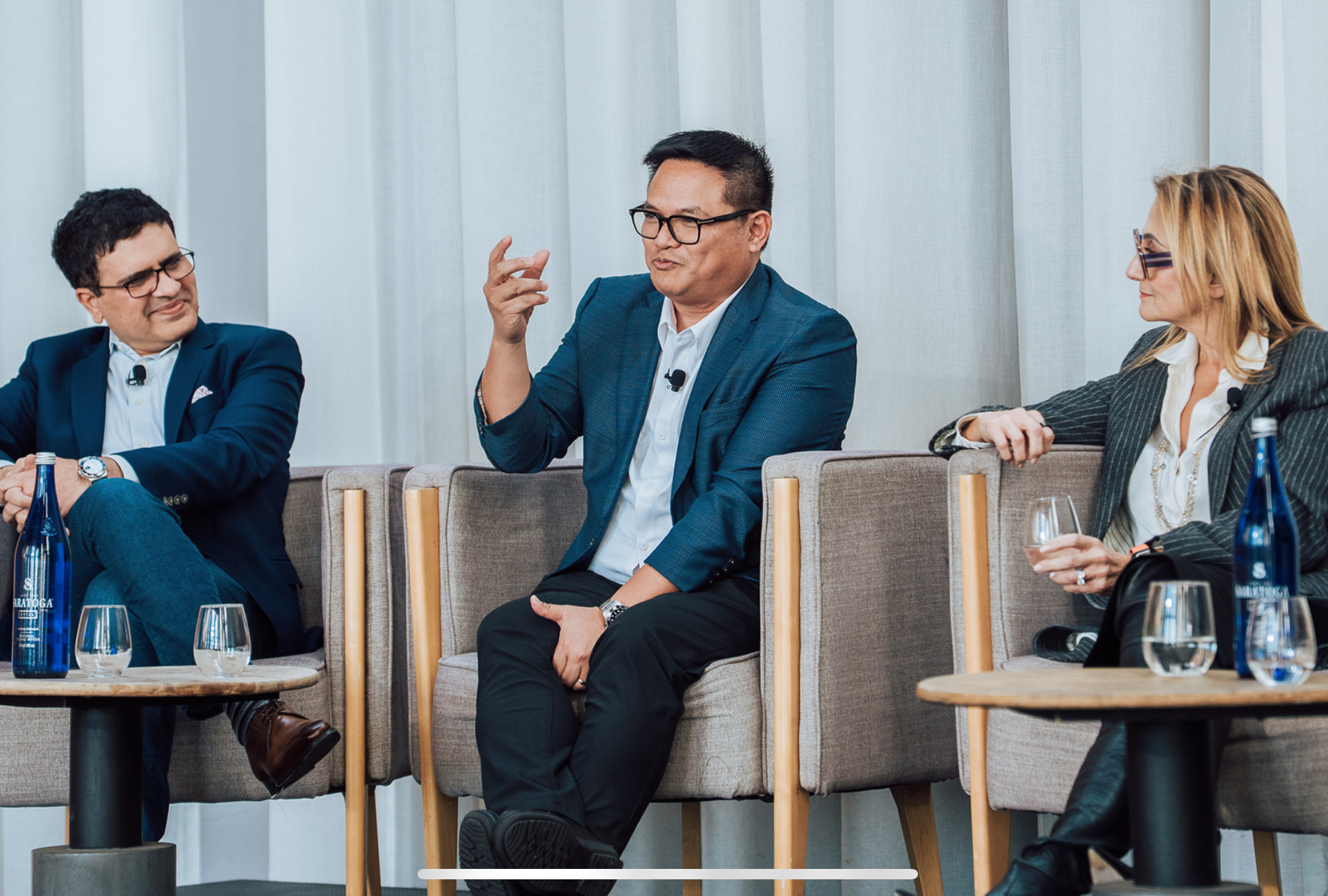
AI is no longer simply a technology agenda. It is reshaping how technology leaders show up — not as operators behind the scenes, but as educators, strategists, and catalysts for enterprise-wide change. This shift was on full display at the Metis Strategy Summit in New York, where I joined fellow CIOs for a conversation about how AI is redefining our role. What became clear is that the CIO is now expected to help the organization learn, adapt, and navigate ambiguity, all while shaping business strategy at the highest level.
Mojgan Lefebvre Chief Technology and Operations Officer of Travelers shared something that resonated deeply: the biggest barrier to AI adoption wasn’t technology, it was mindset. At Travelers, AI is no longer treated as a technology strategy; it is the business strategy. Once their leadership team fully embraced that perspective, acceleration followed. Their platform, TRAVAI, didn’t become successful because it was a tool; it became successful because leaders believed in it. She reminded us that readiness for AI begins with alignment at the top, and belief unlocks behavior.
Pawan Verma Chief Data and Information Officer of Cencora added a perspective that every CIO should internalize. He said our role now includes separating hype from truth — helping leaders distinguish between what is exciting and what is truly transformational. In his world, experimentation is encouraged, but experimentation for its own sake is not the goal. AI initiatives must tie back to clear business outcomes, measurable impact, and sustained value. His discipline around ensuring that enthusiasm never outweighs accountability was a grounding reminder that real transformation requires focus.
Listening to them, I reflected on where we are at Breakthru. I am early in my journey as CIO, but we are already building the foundation for AI — we want it to be an enabler to transformation. Early in my tenure, we held an AI summit with our executive team to build understanding, shared language, and curiosity. But AI literacy cannot stop at the C-suite. Jennifer Charters, CIO of Lincoln Financial, shared a framework introduced by Professor Ethan Mollick at Wharton: Leadership, Lab, Crowd. You begin with leadership, move into experimentation, and ultimately scale to the entire organization. That is exactly the path we are following. We started with leadership. We are now deep in the lab — testing and learning through tangible use cases. And soon, we will turn toward the crowd by launching a broader AI education program in partnership with our learning and development teams, because AI capability is only as strong as the workforce that can wield it.
Steven Norton our panel moderator closed with a personal question: what leadership muscle are you building right now? I reflected with my answer centered around purpose. In a time when AI can automate, accelerate, and optimize almost anything, purpose anchors us. Richard Leider says that purpose is not about what we do, but who we bring to what we do. That distinction matters. In the age of AI, my focus is not only on enabling transformation, but on ensuring we bring people with us. I think about my teams, my peers, my community — and my children who will inherit the world we are shaping.
AI is the most significant transformation driver of our time. And because of that, I think deeply about leadership that concerns itself not only with deploying AI, but with building the capability to educate on AI at scale in our society. Technology may accelerate progress, but leadership determines whether others are empowered to move forward with it. Our legacy will not be measured by how much AI we introduced — but by how many people we helped bring along.
Grateful to be with the global BRM community in Kansas City for World BRMConnect. I introduced PATH, a four-part framework—Purpose, Agility, Trust, Humanity—to elevate leadership in the age of AI.
P – Purpose | Lead with Purpose
A – Agility | Practice Leadership Agility
T – Trust | Make Trust Your Operating System
H – Humanity | Champion Innovation Rooted in Humanity
When people sense you are driven by PURPOSE—that what you’re doing truly matters—they lean in. Purpose inspires commitment. It unites people around a shared vision.
When they see you practice AGILITY—being flexible, adaptive, and open—they trust you can guide them through uncertainty. Agility isn’t about controlling every note; it’s about setting the rhythm, empowering others, and adjusting as the tempo shifts.
When people can count on your honesty, clarity, courage, and authenticity, trust flows. TRUST is our greatest currency in the age of AI—the safety net that allows people to explore boldly. Without it, everything falls apart.
And when people sense you value technology more than people, they disengage. But when they see you anchor innovation in HUMANITY—ethics, empathy, and fairness—they follow with confidence. Humanity keeps leadership grounded and ensures progress benefits all, not just a few.
When all four are strong, leadership will sustain meaningful change and creates lasting impact with purpose in the AI era.
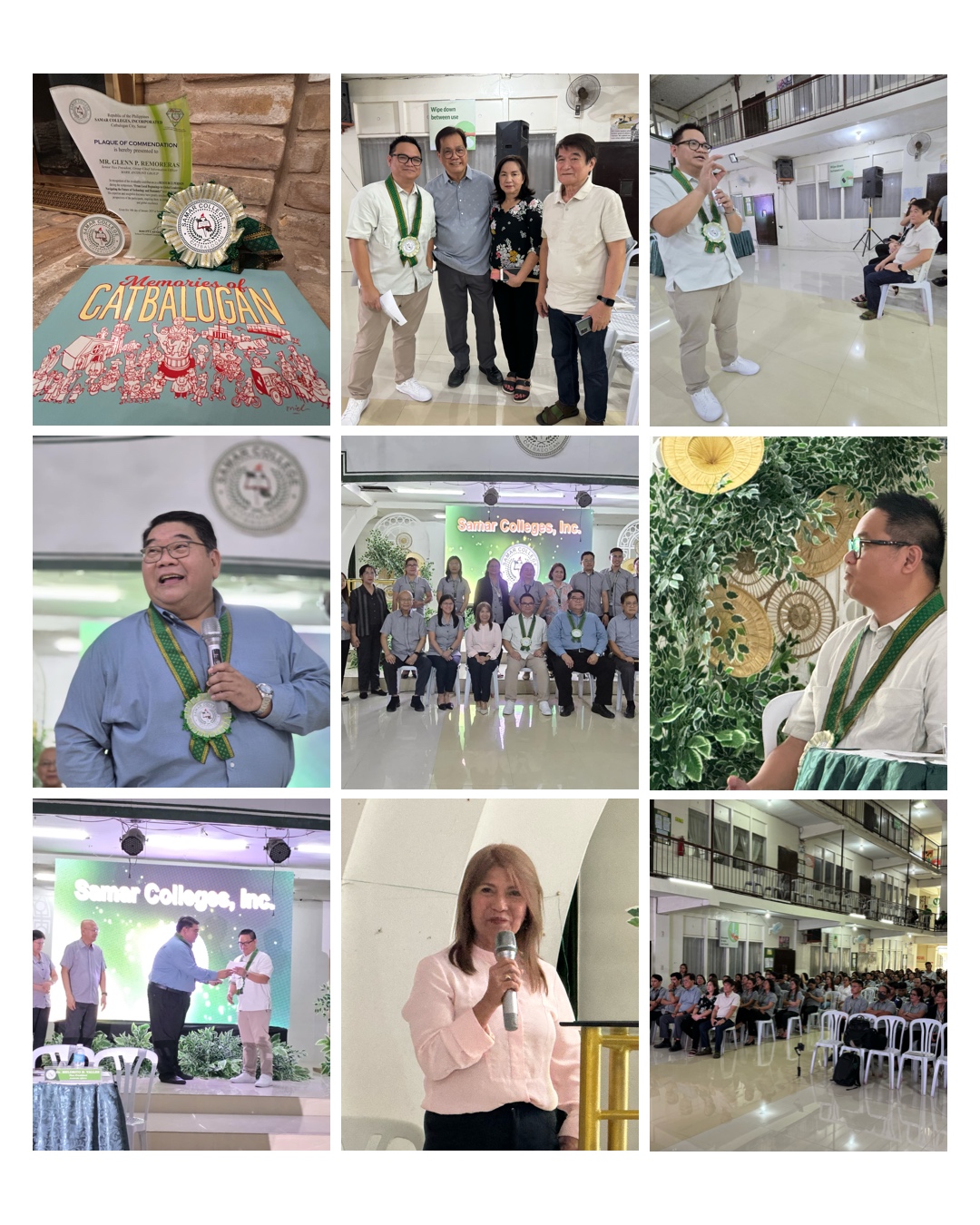
It was a privilege to speak at the Samar College symposium in my hometown of Catbalogan, Philippines, where I shared insights from my journey, perspectives on the future of work, and reflections on leadership in an era of rapid technological change. As someone who proudly traces my roots to Samar College, where I began my early education, this opportunity to give back to the community that shaped me was deeply meaningful. Below is a summary of my talk, which I hope will inspire those who dream of breaking barriers and leaving their mark on the world.
Breaking Barriers: My Journey from Samar to Leading Global Technology Transformations
Growing up in Samar taught me resilience, adaptability, and the value of community. Helping at my parents’ store instilled hard work, humility, malasakit (genuine care), and perseverance—principles that shaped my leadership style and aspirations.
My career path to becoming a global CIO was anything but straightforward. An unexpected turn led me to technology, proving that sometimes careers choose you—and those paths often bring the most fulfillment. Early in my journey, I learned the value of embracing change and stepping out of my comfort zone, whether it meant moving to a new city, taking on unfamiliar roles, or navigating uncharted technological landscapes. These steps, though challenging, defined my career.
I highlighted key moments, such as transitioning from leading local teams to managing global operations. Beyond technical expertise, success required connecting with people from diverse backgrounds—a skill rooted in the relationship-building and empathy I developed in Samar.
I emphasized that careers are not ladders but lattices. Growth isn’t just about climbing upward but also about lateral moves that broaden perspectives and skills. Flexibility and adaptability are crucial in technology, where careers rarely follow a linear path.
The Future of Work: AI, Automation, and Human Potential
I explored the exciting and sometimes daunting future of work, drawing on Gartner Maverick research. I invited the audience to envision 2045—a world shaped by Artificial Intelligence (AI), automation, and groundbreaking innovations. We discussed the rise of generative AI and its transformative impact, bringing AI to the mainstream.
The future will see remarkable advancements in biotechnology, renewable energy, and space exploration, alongside workforce changes. Routine jobs will be automated, and entirely new roles will emerge, such as “cyber-physical systems architects” and “AI ethicists.” By 2045, collaboration with AI agents, humanoid robots, and digital humans may be commonplace.
Thriving in this future requires adaptability, creativity, and emotional intelligence. While technical skills remain essential, uniquely human qualities—empathy, collaboration, and critical thinking—will set individuals apart. I encouraged students to embrace digital literacy and see AI as a partner to augment human potential, solving complex problems and amplifying their impact.
Leadership in the Age of AI: Balancing Technology and Human-Centered Leadership
Leadership in the AI era demands balancing technological innovation with a people-first approach. Effective leaders today require empathy, ethics, and a commitment to building trust. Technology should empower people, not replace them. For example, in my role as a global CIO, AI has streamlined processes and uncovered insights, enabling teams to focus on creative, higher-value work.
Humble: Embracing feedback and acknowledging others’ expertise.
Adaptable: Accepting change as constant and adjusting based on new information.
Visionary: Inspiring others with a clear, forward-thinking vision while anticipating future opportunities and challenges..
Engaged: Staying curious and actively interacting with stakeholders and trends.
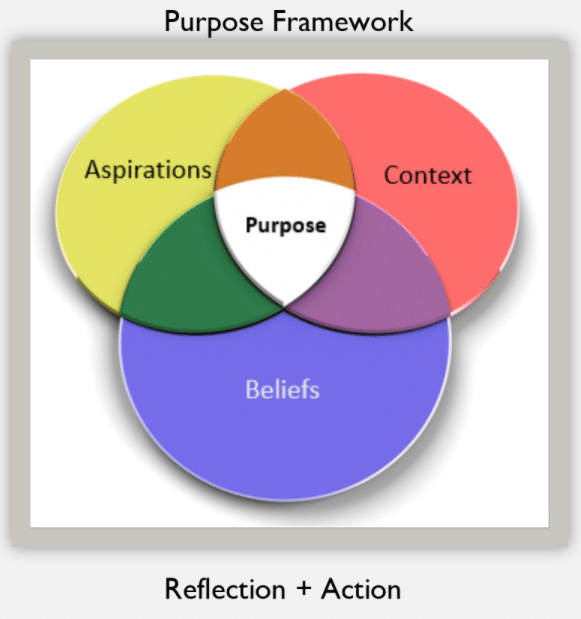
Purpose-driven leadership is increasingly vital as employees and stakeholders expect leaders to prioritize social impact, diversity, and sustainability. Inspired by frameworks like Simon Sinek’s Golden Circle and the Japanese concept of Ikigai, I shared a purpose reflection framework and urged students to discover their “why.” Leaders who understand their purpose inspire trust and create meaningful impact.
Key Takeaways and Reflections
I concluded my talk with the following key messages:
AI will revolutionize industries and redefine work and the human experience.
Your roots make you unique, grounding you in who you are and who you’re meant to be.
Purpose is the foundation of a meaningful life and career.
Thriving in the AI era requires a balance of smart and heart, blending technical expertise with human-centered values.
Discover your “why”, as understanding and leading with purpose inspires yourself and others.
Returning to Samar was a full-circle moment, reminding me that success isn’t just about individual achievements but also about giving back and inspiring others. I encouraged students to uplift their communities, no matter where their journeys take them.
Bright Future Ahead
During the Q&A, the audience’s focus on AI reflected its significance as a symbol of progress and optimism. Samar College, under the leadership of President Rhett Piczon, is well-positioned for growth, and I’m inspired by its transformation.
I hope my story encourages others to believe in their potential. The world is waiting for your ideas, talents, and leadership. As you step forward, remember: the values you learned in Samar will guide you, no matter how far you go. Thank you, Samar College, for the opportunity to connect with the next generation of leaders. Together, we can create a brighter future for our community and the world.
As AI adoption accelerates, the cost and volatility of AI investments are becoming significant challenges for organizations. Gartner estimates that GenAI costs could vary by as much as 500% to 1000%, with vendors raising prices by up to 30% as they integrate GenAI capabilities. This unpredictability is driven by factors such as data preparation, infrastructure needs, computational power, talent scarcity, token costs (price per NLP interaction), and regulatory requirements.
For those of us in mid-sized enterprises (MSE) who began exploring AI use cases a few years back, we may not yet be facing this level of cost volatility and cost spikes. While our models and applications haven’t fully scaled, our first-mover advantage lies in AI literacy and capability building. By diving in early, we engaged in hands-on, often scrappy AI projects, frequently co-innovating and co-investing with vendor partners. We built foundational machine learning models, applied large language models (LLMs) to generate human-readable results, and enabled interaction with existing models, all using platforms already familiar to our users. Successful use cases have generated financial benefits, with vendors offering additional resources to showcase our shared achievements.
My advice to MSEs:
Dive in NOW – Leverage existing platforms, data, and cloud capabilities.
Be Scrappy – Test and learn with vendor ecosystems; seek co-investment and co-innovation.
Invest in AI Literacy and Capability Building – Consider AI boot camps, AI leadership day, or AI executive retreat
Prepare to scale Enterprise-Wide – Establish governance, prioritize investment, and expand on successful use cases
Photo taken during AI Day with our vendor partners: Amazon Web Services (AWS), Salesforce, Microsoft, Softchoice, Adastra, NEORIS, Adobe, o9 Solutions and KPMG.
Architectural vision is critical when orchestrating a massive technology build and modernization initiative, especially when faced with significant technical debt. In the beginning, there was a lack of adequate information, and we were confronted with difficult technical questions, often with no easy answers.
It was time for “no regret moves.” Regardless of the situation, no regret moves are actions that carry no downside and often yield extreme value. We focused on what we could control —technology!
De-risking ERP with a Lift and Shift approach
Network Modernization with SDWAN
Cloud migration and decommissioning of our data centers
Introduction of new platforms: Data and Integration
IT Service Management with ServiceNow
Looking back, there were many anxiety-filled meetings where we had to make bold decisions and hoped for the best.
One by one, our calculated bets paid off, and as a team, we gained self-awareness and knowledge. We felt more confident, which enhanced our ability to meet challenges with creativity and proactivity. We grew as an organization ready to face our next steps from no regret moves, to bets, to big rocks!
If your engagement feels like a reactive endeavor, it might be because you are getting involved at the tail end of the strategic decision cycle.
1. The first step is to imagine what the business you serve cares about and their long-term aspirations. 2. The second step is to figure out how technology can enable them to get there. 3. The third step is to understand why they are not there yet.
Asking, “What strategic possibilities can technology create for us?” is a more powerful question than “what execution gaps do we have that can be solved by technology?”
If you can help business leaders get to where they seek to go, when they’re ready to get there, then you are removing roadblocks and creating new possibilities.
I have been CIO with Mark Anthony Group for barely three months and it’s been an amazing ride already.
My story as CIO is still being written.
In preparation to be a keynote storyteller I asked myself, how has Business Relationship Management (BRM) impacted my journey?
Well, let me tell you…
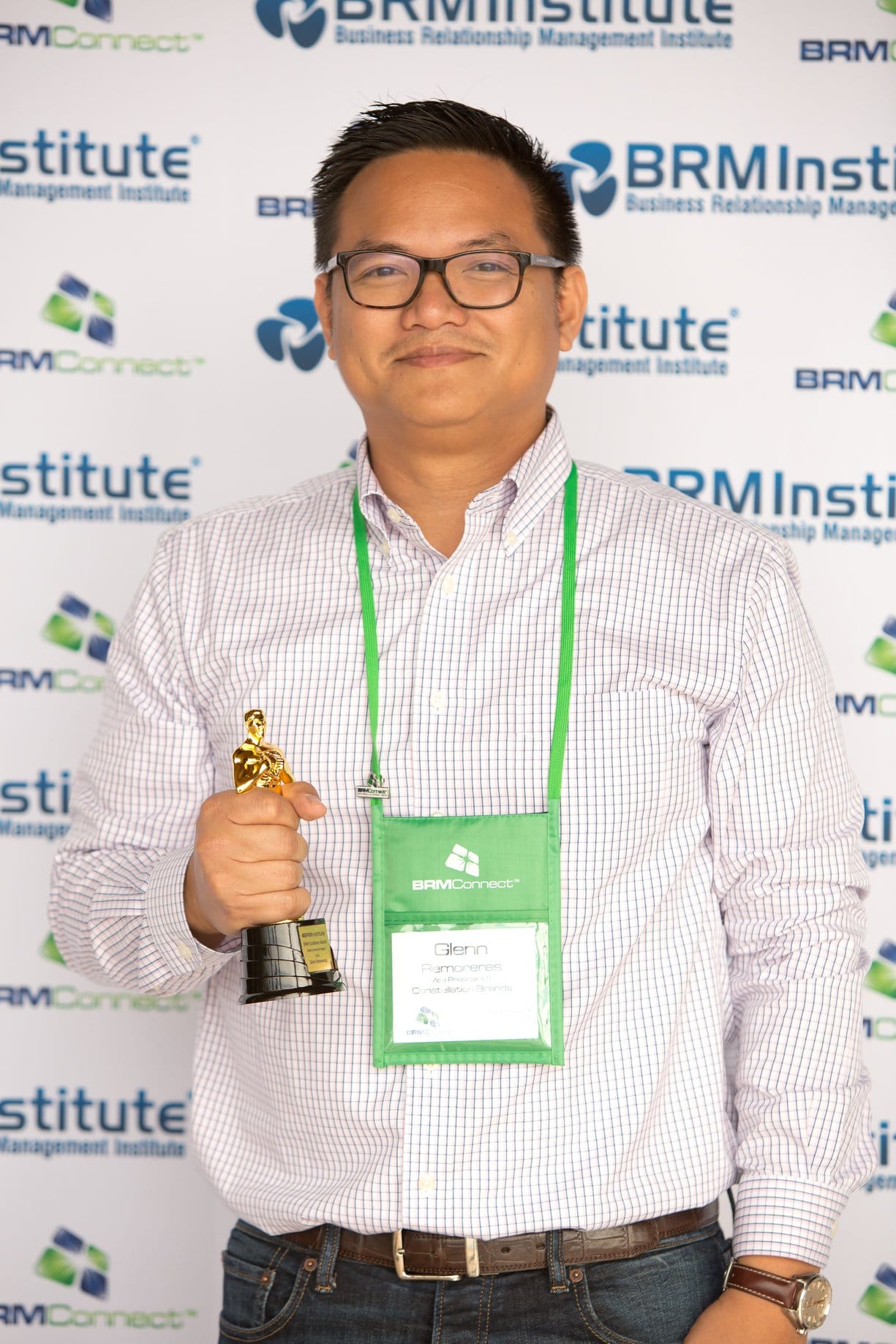
I began volunteering in 2013, the year BRM Institute was founded. It was my way of giving back and supporting the global BRM community. Little did I know, this experience would transform me as a technology professional, as an individual and as a leader. Through BRM, I found my purpose and built lasting relationships. BRM changed my mindset which ultimately strengthened my leadership capacity. Let’s dive deeper into the themes which have proven most important in shaping my story – purpose, relationship, mindset, and leadership.
Purpose
After an unusual turn of events, I ended up in a technology career and, ultimately became a CIO. However, this was not supposed to be. When I was growing up, my dream was to have a successful career in finance and accountancy working for the biggest conglomerate in my home country, the Philippines. This company is the San Miguel Beer Corporation. As a kid, that was my goal. After high school, I was accepted to one of the best finance and accountancy university programs in my country and I was ready to get started on my dream.
In 1993, my parents went to the university in Manila to enroll me. In those days, you had to physically enroll at the university and my parents were doing this for me. Soon after, I got a call from my mom. She said, “We forgot your birth certificate at home and it’s a mandatory requirement for enrollment.” Long story short, I lost my accountancy slot which was a quota program and was relegated to Information Technology (IT). I went into the program thinking I’d shift to Accountancy the following semester, but here I am in IT 27 years later.
Ironically, my younger brother is a finance manager in San Miguel today. He is very happy, but I can’t imagine doing what he does. I am happily where I’m supposed to be.
Declare Your Dreams
At BRMConnect 2018 in San Diego, I shared a framework used to find purpose which is centered around reflection and actions within three concepts: story, beliefs and aspirations.
Story – is the context of who you are. It’s your personal journey. Your story evolves as you go through life and professional experiences. Your stories shape who you are. Beliefs – is what you believe in, your ideology will give you the compass you need to remain consistent and likeable over time. It drives your behavior and mindset. Aspirations – are what you want to be, it is the idealistic view of what you want.
“Aspirations is the ability to dream about the future, while being inspired in the present to reach those dreams.”
Dr. Russell J. Quaglia
Deep reflection and determined action toward one’s story, beliefs and aspirations are when purpose-finding becomes self-sustaining and powerful. Deep reflection can sustain inspiration for your purpose but without action, it can’t sustain itself; without action, the purpose is just an inspiration.
In San Diego, I called out my aspirations and my dreams to become CIO. Visualizing your goals and desires solidifies your intention. Solid intention opens your heart and mind to the people, resources, and the help needed to realize them. There is amazing power in visualizing your intention, it is the origin of action! For me personally, discovering purpose is accomplished through reflecting and acting on your stories, beliefs and aspirations. If you get lost, do it again and again.
Relationships
Roughly 11 years ago, I started to venture into some serious blogging. At the time, I was working for CEMEX, a global building materials company, and I remember attending a townhall meeting hosted by CEMEX USA’s EVP, Ira Fialkow. After his talk, Ira came over to me and said, “Hey, I read your blog and I love it.” Ira was the boss of my boss’s boss so, you can just imagine what it was like for me. Our interaction started a mentor-mentee relationship which continues to this day.
Months later, I met Vaughan Merlyn, a sought-after management consultant online and one of the co-founders of BRM Institute. At first, we were just collaborating and engaging with each other through our respective blogs. Simple collaboration led to emailing, and to phone calls. One such call, Vaughan told me, “If you ever need anything or would like advice or talk about IT, you can call me anytime.” Through my relationship with Vaughn I found free consulting, a mentor and a friend.
Vaughan invited me to join BRM Institute in 2013 as one of the founding members. A year after, I took on a role at Constellation Brands as VP BRM. The executive recruiter discovered me through BRM Institute with CEO Aaron Barnes’ recommendation.
This year, I found myself in countless calls with many of my mentors to explore the CIO opportunity with Mark Anthony Group. There are many others I learned from in my vast relationship network: Ibrahim Jackson, Sheila Smith, Arnie Weatherall, Roy Youngman, Peter Lijnse, Aaron Monroe, Sergio Zarate, Kip Fanta. The list is seemingly endless.
This is the power and value of my BRM community – which has been so good to me – manifested in the strength of my relationships. This is an example of accessing infinite value through relationships. If I take a moment and think about the best work relationships I’ve ever had and picture them in my mind, I think about these people. In a great relationship, individuals invest in each other. They become partners, mentors, friends.
Leadership
Fortunately, before the pandemic, I was able to travel home to the Philippines to celebrate my father’s 70th birthday. Before my trip, I reached out to the head of my hometown alma mater to pitch an idea. Spending time giving back to my old high school by speaking to upcoming high school graduates was something I desired to do. I spoke in an auditorium full of graduating students for an hour, sharing steps to a purpose-driven career. When the students spontaneously sang a happy birthday song for my father when I introduced him, was my favorite part of the day.
In the past, I’ve viewed leadership mainly as an exercise of power performed by particular individuals in leadership positions. To me, those were the individuals with the leadership traits and behavior.
Maintaining a goal-oriented, driven and focused mindset, I aspired to achieve those leadership positions. I pushed myself every step of the way, which got me to a certain point. Unfortunately, I became stuck for a few years. In fact, in 2009, I strongly considered investing time and money to attend a premium MBA program thinking it was a career booster or my way up the leadership chain. I seriously looked at several programs, researched options and did my financial analysis.
I remember consulting with my mentor, Ira. He immediately commented how I could be mortgaging my future by going in that direction. He said, “Knowing you, I believe you can achieve your goals just working out your strengths.” His advice struck me like a bolt of lightning. Immediately, I realized my mindset was wrong. Ultimately, what I needed to do was to expand my network, connect and engage. One way to expand your network is to give your time, to volunteer and to mentor others. By giving back you receive so much in return; you sharpen your knowledge by learning from others and you find mentors.
My renewed resolve to focus on others and add value to them inspired me even more. It eventually increased the energy of those I partnered with and the teams I led.
• I volunteered and led various teams at BRM Institute • I doubled down on mentoring others which energized me and I learned a lot in the process • I gave back where and when I could
Look for opportunities to give your time to others and volunteer. In my experience, the return will surprise you.
Instead of an MBA, BRM became my accelerator. I learned the most important shift anyone must make to become a leader is from a soloist to a conductor; from a soloist to an orchestrator; from a soloist to magic-in-the middle. You can be a successful person on your own, but not a successful leader. I aim to be a successful leader.
Now, I see the essence of leadership in a more practical way. I see leadership as a practice rather than residing in the traits or behaviors of particular individuals. I realize the potential in driving leadership that is convergent, collaborative, collective, and compassionate.
Mindset
During my Philippine trip earlier this year, I jumped into the Ulot River, or Monkey River translated from the local dialect. So-called wooden torpedo boats powered by a 16-horsepower engine, cut through rapids at speeds of up to 160 kph. We got to a point where I could jump into the river and get swept away several hundred meters, eventually clinging to a rope which pulled me to safety. I did the jump twice!
You know the feeling when you’re determined to do something and you’re really excited about it, but you’re scared at the same time? You’re ready to act, but you keep finding excuses to delay because of fear.
Maybe it’s because you’re:
Telling yourself it might not work
Not confident about what you know
Afraid of what other people will think or say about you
Focusing on your previous failures
Every single one of these thoughts and feelings is driven by fear, or more accurately, your mindset around fear. If you are dedicated to understanding why you feel a certain way at any given time, you have the ability to shift your mindset for the better.
When I jumped into the Ulot River, I was scared. But I was also determined to jump. When I talk about breaking through fear, I don’t mean the absence of uncertainty. As a result, I’m able to (and you can, too) embrace the fear and break through it.
BRM taught me two ways to break through fear by changing your mindset.
1. Community – surround yourself with the right people 2. Language – Cultivate the right mindset
Surrounding yourself with the right people on your journey makes all the difference.
For me, it all began with a declaration in 2018 at BRMConnect, San Diego. There, I shared how I aspired to become a CIO. I believe visualizing your goals and desires solidifies your intention. Solid intention opens your heart and mind to the people, resources, and the help needed to realize them.
Having support is unparalleled, because when you feel like you can’t take that next step – when you doubt your capabilities and fear what you have to say won’t matter – my BRM community has been there in those moments to help me move forward and break through.
The language you use when you talk to yourself and others can shift how you think, feel and perform. It can be something so simple people often overlook it. For language is a lens into one’s behavior. Meaning, the words you use to communicate are a precursor to your actions. Through the process of advancing BRM capabilities and philosophies, BRM changed the way I “speak IT”. This internal shift in language usage began a mindset cultivation process which then caused my approach to life, business and leadership to change.
Relationship-Centered Organizations are Equipped to Face any Challenge
When the collective knowledge on BRM was first assembled for the first Body of Knowledge in 2013, it centered around frameworks, processes and competencies to support BRM as a role and organizational capability. Looking back, I am in awe of how much those team efforts accomplished. The effort did not end there as BRM continues to evolve with the contributions and experiences from the single, global BRM community. The great thing about this community and its leaders is its openness and boldness to evolve.
As I reflect on the topic of my keynote, “how my CIO journey began with BRM”, it resulted in a realization which eventually became the theme: Through BRM, I found my purpose and built lasting relationships. BRM changed my mindset and strengthened my leadership capacity. I discovered what propelled my journey to become a CIO is embracing and advancing BRM as a philosophy. BRM is a mindset, a value system and a purpose-driver. I came full circle with BRM philosophy.
Business and organizational challenges have intensified due to the major impact of the global pandemic. When such challenges intensify, you may need to redesign strategies, merge or dissolve businesses, find new channels for your products, or reimagine work and go-to-market tactics. These big challenges have no easy answers.
Perhaps even more difficult, the solutions to challenges like these don’t reside only in the executive suite. Solving them requires the involvement of people throughout your organization accessed by leveraging employees’ collective intelligence and capability. This can be done through strength in relationships.
The year 2020 has been full of obstacles, tragedies and challenges. As we go through these unprecedented times, we find our resilience, our connections and our relationships are the best things we have. I think about medical workers, doctors, nurses and care givers who have been helping humanity face the emerging health concerns in the last several months. What they are doing is caring for their fellow human beings at their moment of greatest vulnerability. To me, it’s powerful and inspiring.
This is the time we need more relationship-centered groups of people, be it families, teams, or organizations. Take a moment and think about the best work relationships you ever had. Picture that person or team in your mind. Think about what you accomplished together, the fun you had, and the creative sharing and mutual growth. Now, imagine the same kind of relationship existed between you and everyone in your immediate team, your partners and peers. What could you accomplish? Nothing will stop you to evolve culture, build partnerships, drive value; satisfy purpose. This is the purpose of BRM.
Take a look at the full-length recording of Glenn’s keynote presentation given during BRMConnect Virtual 2020.
“Your Why is your purpose, cause or belief that inspires you to do what you do. When you think, act and communicate starting with Why, you can inspire others.” – Simon Sinek
A couple of weeks ago, our office had a team building event at iFly. Most of us signed up to experience our first indoor skydiving and I did so with hesitation. At iFly, we had a short 30-minute instruction session and then, we put on safety gears. I made my dream of flight a reality! It was so amazing that I thought of bringing my 6-year old twin boys to experience it the following day.
It was Friday so I went to pick up my sons from school. I told them we were going to iFly so they can experience indoor skydiving. They were not interested at all and both said no emphatically. I showed them how iFly does it through a video. They saw kids flying upward the wind tunnel. I said, “Isn’t this fun?” They looked somewhat convinced but a bit frightened. They responded no again with hesitation.
At such a young age, my boys like to read and learn astronomy. They know their solar systems, galaxies and black holes. Very often, I hear them talk to each other about becoming an astronaut. They went to NASA summer camp together last year. I wanted to convince them to do iFly, so I told them that one other way astronauts train with weightlessness besides being under water is indoor skydiving. Their eyes lit up and we jumped into the car. They experienced iFly and went to tell friends about it with their hand upwards as if in flying motion.
Why didn’t I communicate with WHY (to be an astronaut) from the very beginning? Instead, like most people, I started with WHAT (indoor skydiving) and the HOW (video). Simon Sinek’s TED talk How Great Leaders Inspire Action is about the idea that most people communicate by starting with the WHAT. By explaining his Golden Circle, Simon spoke about how transcendent leaders like Martin Luther King and innovative companies like Apple begin instead with WHY.
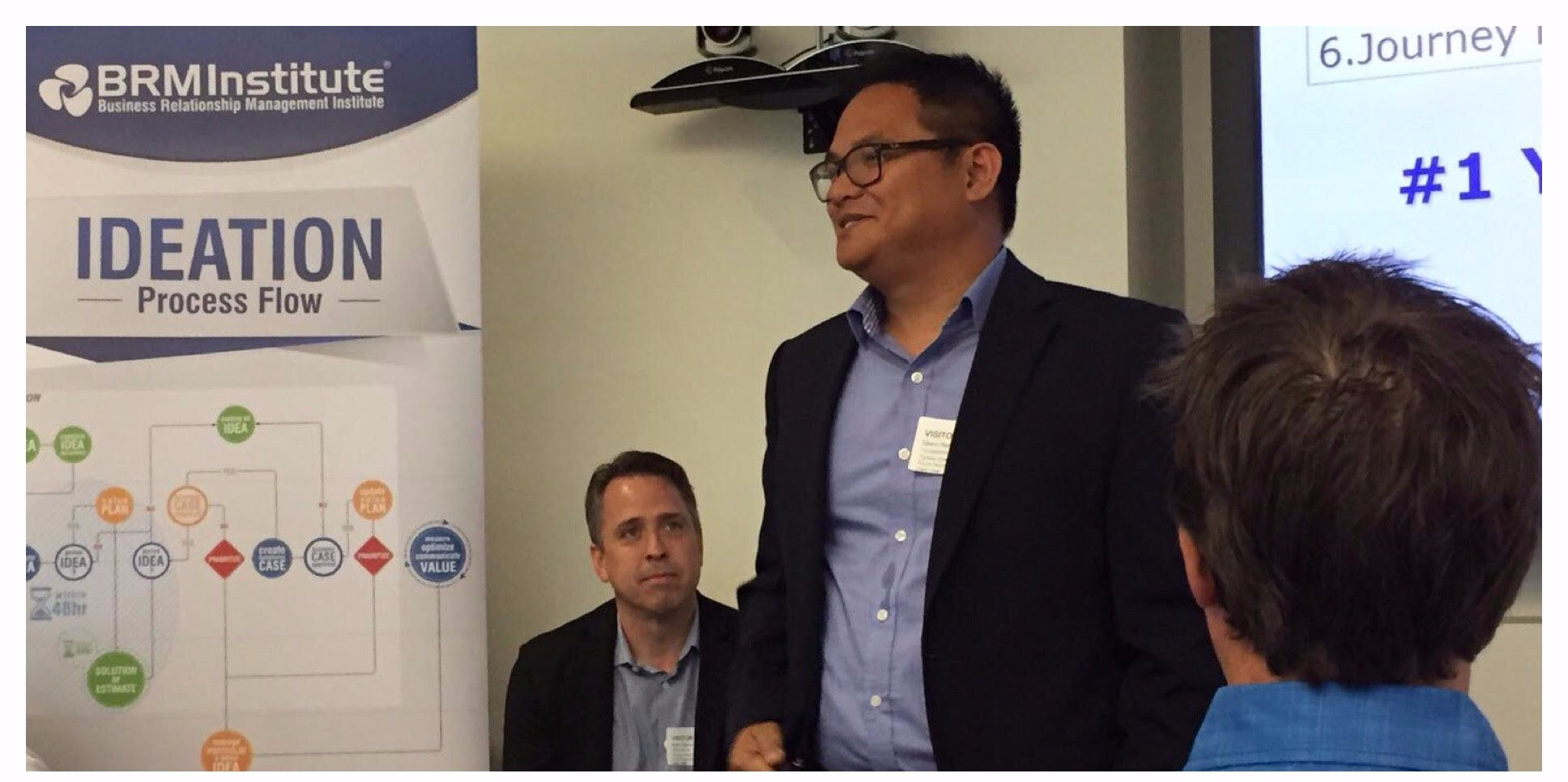
At the BRMCONNECT Forum hosted by BRM Institute at the PepsiCo headquarters in Dallas, this was my story. I was asked by Aaron Barnes, CEO and Co-Founder of the institute to tell other BRMs the story of how I formed my team and what we do. I started my storytelling by sharing the Why. The vision and purpose of my team: To Be Strategic Leaders Driving Competitive Advantage. This is a shared vision with the rest of our IT organization. In the beginning, this seemed a lofty goal. To me personally, this Why is the reason why I get up in the morning fulfilled to go to work!
We started with the Why but if we are going to be strategic partners with the business, our next challenge was the HOW. How are we going to put ourselves in the middle of business conversations and drive more strategic engagements? We turn to Business Process Management (BPM) as a means to foster business relationship. We created our Business Process Architecture (BPA) Framework and Process Assessment Methodology (PAM). We equip ourselves with an effective How.
Now when business partners come to us with a seemingly tactical request to deploy a specific application system, we have the means to ask “what business problem are you trying to solve?” and “what strategy are you enabling?” And then the invitation, let’s partner and do a Process Assessment. With three phases of PAM– Align, Discovery and Solution, we end up proposing a business initiative or technology project or both.
According to Simon Sinek every organization has a Why. “Your Why is your purpose, cause or belief that inspires you to do what you do. When you think, act and communicate starting with Why you can inspire others.” I realize there are effective use of this approach or concept in everyday — both in our personal lives and in business. Start with Why!
Use of information technology. Is it creating value? Is it improving business processes and capabilities? Or merely creating new wants? Is it important, or only urgent? What is it for? Every Business and IT engagement around business requirements revolves around these questions but managing it isn’t always easy.
First, let’s talk about IT organization’s critical role in the company’s business processes. One of the consequences of Business Process Management is a large majority of these programs are initiated in the IT organization. There are very good motives for this. One of the most common: the IT organization is responsible for providing the technology that enables business processes. Take for example, ERP (Enterprise Resource Planning) systems like SAP, Oracle, etc. This ERP solution is a suite of integrated applications that a company can use for many business processes. Most ERP systems incorporate best practices reflecting the vendor’s interpretation of the most effective way to perform each business process. Systems vary on how conveniently the customer can modify these practices. Talking about best practices, it is advisable not to over-customize because doing so will keep you from taking advantage of the expected improvements and innovations from the purchased ERP package.
How do you characterize the nature of your engagement with your business partners? Is it functional orientated? If it is, there is more tendency for having more solution-based discussion versus process- and value-based. Even worse, it could be possible that your internal customer is engaging you at the tail end of their decision cycle–when they have already determined what they want or need. There is lack of business-IT alignment and strategic partnership.
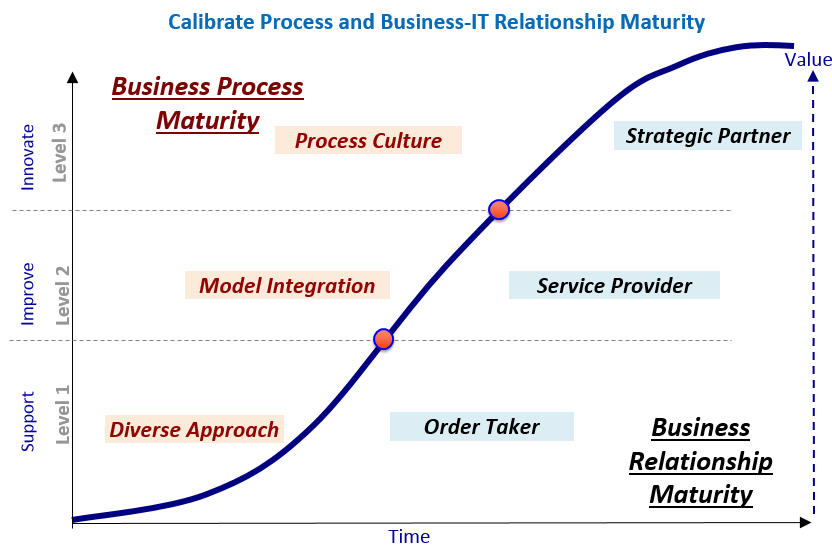
How do you then improve the level of your business relationship with the business? There are numerous paths towards that elusive business-IT strategic partnership. In this post, I will talk about Business Process Maturity as a path— so I would say – Let’s Talk Process First! This has worked for me in the past. One of the most effective ways to change the orientation and focus of business IT interactions is to start with business process. Calibrate your organization’s business process maturity and you will take along with it to a great degree IT-business relationship maturity. What you need are experienced business process managers with business relationship management competencies. Below I will walk you through these 3 stages of Business Process and Business Relationship maturity and describe what it means.
Business Process and Business Relationship Maturity
Level 1: Support
Business Process Maturity = Diverse and Business Relationship Maturity= Adhoc / Order Taker
When your organizational approach to business process is diverse, more often business-IT initiatives are managed with lack of integration. At this stage, most of the organization’s process knowledge is known only to a few individuals. For business process engagement facilitation, there is dependency on external consultancy. There is no standard process management discipline that leads to more functional orientation of IT requirements discussion. Consequently, IT as a provider organization is hardly seen as a strategic partner–at most, a service provider. In terms of business relationship maturity level, most of the time, IT is treated as an order taker. This type of business relationship is characterized by loudest in – first out tendency causing reactive course of actions. My advice is to embark on a business process maturity journey. Establish a discipline of managing business processes as the means for improving business performance outcomes and operational agility. Leverage use of technology to improve business processes.
Level 2: Improve
Business Process Maturity = Model Integration and IT-Business Relationship Maturity = Service Provider
You want to become an organization that designs processes first and then goes on to implement the technology enablers. Your organization wants to keep pace with technology and maintain a competitive advantage. Companies at this level adapt a consolidated method to design and implement business models using standard processes and tools. Process ownership ultimately improves as management breaks silos and approaches process and technology implementation equally. The common tendency is for companies to establish process governance and ownership. IT plays a key role in the process evolution of the company and starts to be seen as a service provider and some cases even a strategic partner.
Level 3: Innovate
Business Process Maturity = Process Culture and IT-Business Relationship Maturity = Strategic Partner
The final step to Process Culture Maturity occurs when innovation and change in business practices through process understanding are consistently promoted within the company. As executives passionately embrace process thinking, they are able to promote innovation more confidently when implementing new technologies. In many cases, companies with mature process culture has End-to-End orientation to process management and IT plays a key role as center of process excellence. IT starts to be regarded as trusted and strategic partner. Business–IT relationship is based on cooperation and mutual trust with shared goals to maximize value from business initiatives.
Technology will not automatically implement itself and run your organization’s processes the way you envision. IT has a unique opportunity to spearhead business process improvements in the company. Start by changing the orientation of your business interactions from functional to business process, from solutions to value. Do not shy away from this opportunity. Use business process management to create greater strategic value and by doing so advance business-IT relationship level to new heights.
For many years, IT organizations responsible for deploying technology systems to enable enterprise processes have had one goal in mind – namely, to assure business-IT alignment. Today, however, as IT capabilities become more and more embedded in business capabilities, and given the pace of technological change and the pervasive nature of IT, alignment is no longer sufficient. The goal today, therefore, is “convergence”. This has given momentum to the growing emergence of the Business Relationship Management (BRM) role, which, according to the Business Relationship Management Institute (BRMI), is about “stimulating, surfacing and shaping business demand for a provider’s products and services, ensuring that the potential business value from those products and services is captured, optimized and communicated.”
Let’s examine Business Relationship Management from two perspectives: the functional and the organizational role. The BRM function provides the framework for how the IT organization interacts with peer business functions and departments. The BRM role is made up of an elite leader or group of technology managers that assume accountability for all technology solutions and services end-to-end – whether for a business area, brand, region, channel or division, depending on organizational design and technology capabilities. This role can be facilitated by an existing Chief Information Officer (CIO) in smaller, less complex organizations. For large enterprises, you may see multiple levels of BRM — BRM Lead, BRM Manager or BRM Analyst. Each role may vary in responsibility and all are accountable for the strategic alignment with the enterprise or organization.
BRMs, on a day-to-day basis, deal with technology, people and relationships. As such, Business Relationship Management is more an art than a science, expressing the “art” via application of knowledge, interpersonal skills and creativity. How a BRM best connects to his or her business partners varies, based on the BRM, their client, the business scenario, level of previous engagement and the rapport established with each relationship. Trust through confidence is the secret to success.
BRM Processes and Frameworks should be characterized by flexibility and a high variability of actions performed within the underlying processes. Within the BRM function, there is an inherent value to that variability. The nature of relationship management is fluid, dynamic, genuine and human.
Dr. Aleksandr Zhuk, Co-Founder of the BRM Institute, sums it up: “No one has ever defined a process framework that assures success in relationships. Think of marriage.”






 #Perspectives