So where did the farmers go? What the Past Teaches Us About the AI Future

In the early 20th century, America underwent a profound transformation. The mechanization of agriculture displaced millions of farmers and farm workers, threatening the very foundations of rural life. But instead of unraveling, the nation responded with reinvention.

Communities across the country—particularly in the Midwest—launched what would become known as the High School Movement. Long before federal mandates, they built and funded public high schools as a grassroots investment in the future. The logic was simple but revolutionary: if machines were going to replace muscle, then the mind would be the new differentiator.

This movement didn’t merely respond to industrialization—it prepared people to lead through it. By focusing on broad-based education—literacy, numeracy, critical thinking—it created a workforce capable of adapting to new demands. And it worked. The High School Movement was a critical foundation of what historians now call the American Century—a period marked by global leadership in innovation, productivity, and economic power.

Much of this shift was driven by profound changes in the nature of work. In the 1800s, over 70% of the U.S. workforce were farmers. Today, that number has dropped to under 2%, thanks to tractors, irrigation systems, and precision agriculture. Manufacturing too experienced a dramatic evolution. It peaked in the 1950s, when it accounted for nearly 30% of U.S. jobs. Today, that figure is closer to 8%, as automation, robotics, and assembly lines increased output while reducing labor demands.

So where did the farmers go? From farms to factories. From factories to offices, schools, stores, hospitals, and eventually, tech companies. The mechanization of agriculture didn’t just displace—it propelled. It fueled the rise of urbanization, the expansion of industrial America, and the birth of the modern service economy.

Now, we are once again standing at the edge of a historic inflection point.

Artificial Intelligence is not just another tool—it is a general-purpose technology with the power to rewire entire industries, redefine how value is created, and reshape the relationship between people and work. Autonomous AI agents are beginning to plan, execute, and adapt tasks across domains—from software development and R&D to customer service and strategic decision-making. As they scale, so too does the need for a new kind of preparedness.

If the industrial age demanded mass literacy, the AI age demands something deeper: AI literacy.

But AI literacy isn’t just about understanding algorithms or using tools—it’s about cultivating a mindset and a set of interdisciplinary capabilities that empower people to partner with AI, not be displaced by it.


The Pillars of AI Literacy for the Modern Era

  1. Computational Thinking & Data Fluency: Individuals must understand not just how to use AI tools, but how data is collected, structured, biased, and interpreted. This enables them to guide, question, and refine AI-driven decisions rather than passively accept them.
  2. Relationship Management Leadership: In a world where AI is embedded in human systems, the ability to foster trust, lead across functions, and manage relationships becomes critical. Leaders must be fluent in the human dynamics of AI adoption—coaching teams, navigating change, and building bridges between technology and business outcomes. The future of leadership isn’t just technical—it’s relational.
  3. Prompt Engineering & Critical Use: As generative AI becomes a co-worker, the ability to frame the right questions and guide AI responses becomes a core competency—akin to the reading and writing skills of the last century.
  4. Ethics, Agency & Digital Citizenship: With AI influencing everything from legal sentencing to hiring and healthcare, we must equip people with the judgment to assess fairness, protect human agency, and demand accountability.
  5. Adaptive Learning Mindset: Because AI will evolve continuously, the next generation must be trained not just to use tools, but to continuously learn new ones. Comfort with ambiguity, curiosity, and resilience become essential.
  6. Interdisciplinary Literacy: AI now permeates every field—from law and logistics to design and education. Future readiness requires embedding AI understanding into every discipline, not siloing it within IT or data science departments.

Just as reading and writing became the gateway to opportunity in the industrial age, AI literacy is the new threshold for leadership in the age of intelligence. It is not a technical checkbox—it’s a cultural catalyst. The organizations that embrace it won’t just survive disruption; they’ll define what comes next—with intention, with integrity, and with imagination. And beyond the enterprise, AI literacy is equally vital for society at large. It empowers citizens to navigate complexity, participate meaningfully in a rapidly changing world, and ensure that technology serves the common good. This is not only how we build better companies—it’s how we build a more equitable, informed, and human-centered future.

AI Literacy: Choosing Wisdom Over the Frenzy

As artificial intelligence advances faster than most organizations can adapt, a critical question emerges:

Are we engineering a culture of wisdom—or a frenzy?

This isn’t just a philosophical question. It’s a strategic imperative for every organization navigating the future of work.

Today’s AI systems can generate massive volumes of content, automate complex decisions, and shape narratives in real time. But in our rush to adopt these tools, we often skip a critical step: ensuring our teams—our people—understand what’s under the hood.

The result? Organizations that are technologically advanced but intellectually fragile, where decisions are accelerated but not grounded in understanding.

Why AI Literacy Matters Now

AI literacy isn’t about turning every employee into a data scientist. It’s about empowering your workforce to ask better questions, understand how AI tools work (and fail), and make decisions aligned with your organization’s mission and values.

It’s the difference between:

  • Generating tons of content (noise) vs. exploring customer sentiment with nuance
  • Automating blindly vs. applying ethical, human judgment
  • Following outputs vs. augmenting with AI and challenging AI with context and critical thinking

The Cost of Illiteracy

Without AI literacy, organizations fall into the trap of frenzy and hype. Quick outputs are celebrated. Shallow insights are mistaken for depth. Use cases multiply but often fail to scale. And AI becomes a black box of risk.

Worse, employees may feel displaced instead of empowered, unsure how to contribute in a workplace increasingly shaped by tools they don’t fully understand.

Building a Culture of Wisdom

Investing in AI literacy is an investment in resilience and long-term thinking. It means:

  • Creating space for education, experimentation, and critical dialogue
  • Equipping teams to interrogate bias, interpret results, and understand limitations
  • Elevating leaders who connect AI use to strategic goals—not just short-term wins

It’s not just about doing things faster with AI—it’s about helping your people do things better.

Final Thought

AI will shape the future of every business. But the real differentiator won’t be who has the most advanced model—it will be who has the most AI-literate culture.

Because in a world of accelerating technology, wisdom will be your greatest competitive advantage.

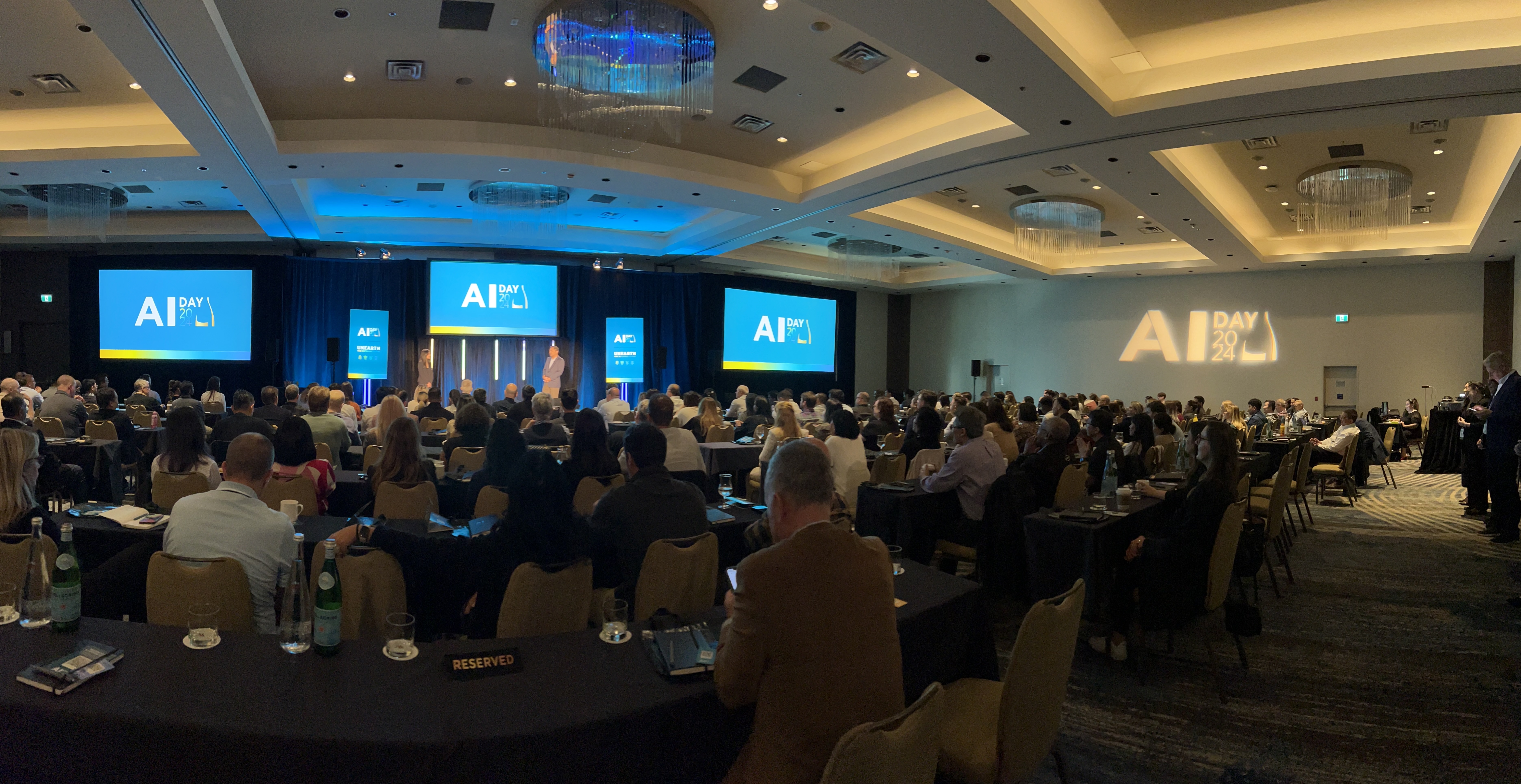
Mark Anthony Group AI Day, Vancouver 2024

Inspiring the Next Generation: Lessons from Samar, Philippines to the Global Stage

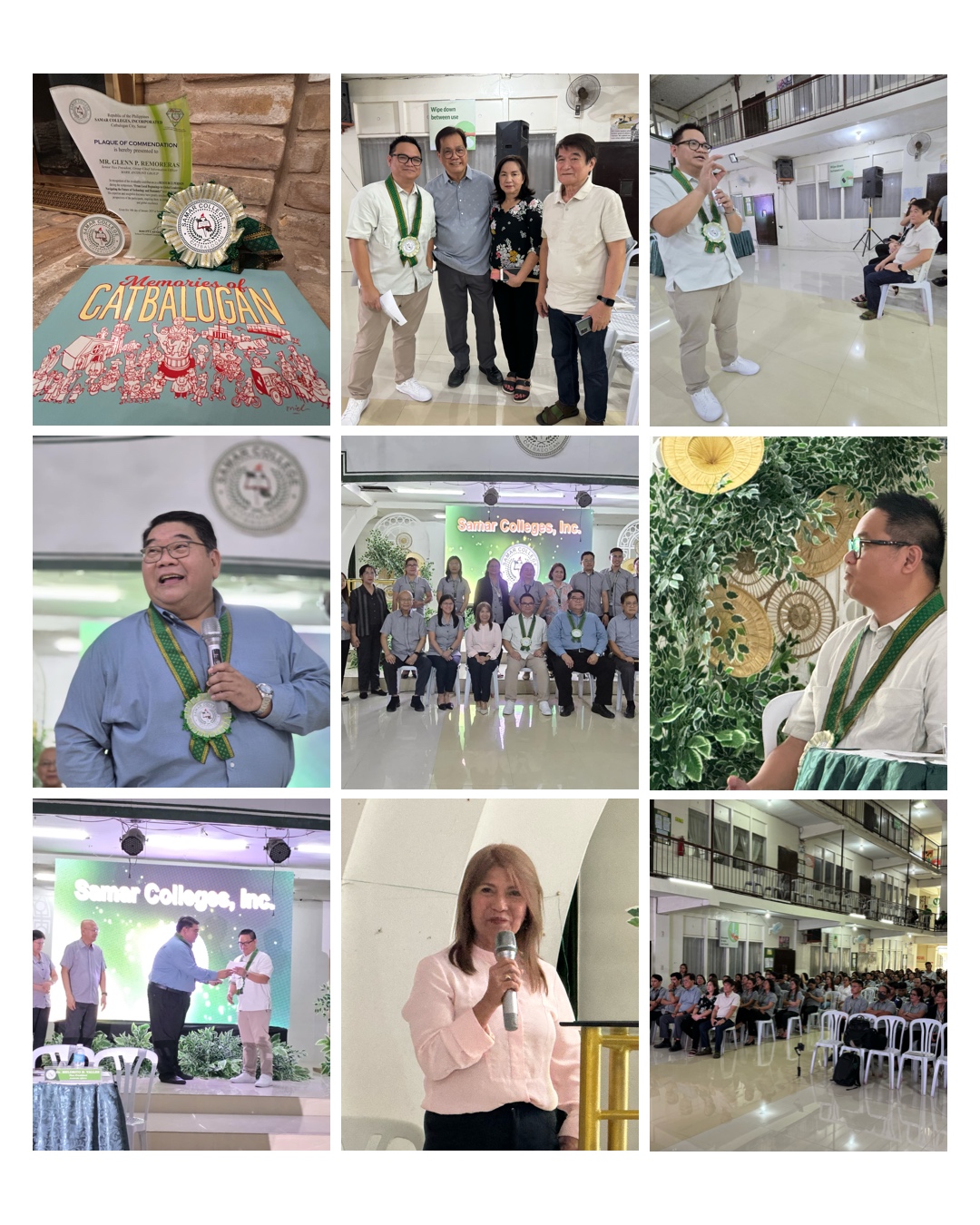
It was a privilege to speak at the Samar College symposium in my hometown of Catbalogan, Philippines, where I shared insights from my journey, perspectives on the future of work, and reflections on leadership in an era of rapid technological change. As someone who proudly traces my roots to Samar College, where I began my early education, this opportunity to give back to the community that shaped me was deeply meaningful. Below is a summary of my talk, which I hope will inspire those who dream of breaking barriers and leaving their mark on the world.


Breaking Barriers: My Journey from Samar to Leading Global Technology Transformations

Growing up in Samar taught me resilience, adaptability, and the value of community. Helping at my parents’ store instilled hard work, humility, malasakit (genuine care), and perseverance—principles that shaped my leadership style and aspirations.

My career path to becoming a global CIO was anything but straightforward. An unexpected turn led me to technology, proving that sometimes careers choose you—and those paths often bring the most fulfillment. Early in my journey, I learned the value of embracing change and stepping out of my comfort zone, whether it meant moving to a new city, taking on unfamiliar roles, or navigating uncharted technological landscapes. These steps, though challenging, defined my career.

I highlighted key moments, such as transitioning from leading local teams to managing global operations. Beyond technical expertise, success required connecting with people from diverse backgrounds—a skill rooted in the relationship-building and empathy I developed in Samar.

I emphasized that careers are not ladders but lattices. Growth isn’t just about climbing upward but also about lateral moves that broaden perspectives and skills. Flexibility and adaptability are crucial in technology, where careers rarely follow a linear path.


The Future of Work: AI, Automation, and Human Potential

I explored the exciting and sometimes daunting future of work, drawing on Gartner Maverick research. I invited the audience to envision 2045—a world shaped by Artificial Intelligence (AI), automation, and groundbreaking innovations. We discussed the rise of generative AI and its transformative impact, bringing AI to the mainstream.

The future will see remarkable advancements in biotechnology, renewable energy, and space exploration, alongside workforce changes. Routine jobs will be automated, and entirely new roles will emerge, such as “cyber-physical systems architects” and “AI ethicists.” By 2045, collaboration with AI agents, humanoid robots, and digital humans may be commonplace.

Thriving in this future requires adaptability, creativity, and emotional intelligence. While technical skills remain essential, uniquely human qualities—empathy, collaboration, and critical thinking—will set individuals apart. I encouraged students to embrace digital literacy and see AI as a partner to augment human potential, solving complex problems and amplifying their impact.


Leadership in the Age of AI: Balancing Technology and Human-Centered Leadership

Leadership in the AI era demands balancing technological innovation with a people-first approach. Effective leaders today require empathy, ethics, and a commitment to building trust. Technology should empower people, not replace them. For example, in my role as a global CIO, AI has streamlined processes and uncovered insights, enabling teams to focus on creative, higher-value work.

I discussed future-ready leadership behaviors critical for the AI era:

  • Humble: Embracing feedback and acknowledging others’ expertise.
  • Adaptable: Accepting change as constant and adjusting based on new information.
  • Visionary: Inspiring others with a clear, forward-thinking vision while anticipating future opportunities and challenges..
  • Engaged: Staying curious and actively interacting with stakeholders and trends.

Purpose-driven leadership is increasingly vital as employees and stakeholders expect leaders to prioritize social impact, diversity, and sustainability. Inspired by frameworks like Simon Sinek’s Golden Circle and the Japanese concept of Ikigai, I shared a purpose reflection framework and urged students to discover their “why.” Leaders who understand their purpose inspire trust and create meaningful impact.


Key Takeaways and Reflections

I concluded my talk with the following key messages:

  • AI will revolutionize industries and redefine work and the human experience.
  • Your roots make you unique, grounding you in who you are and who you’re meant to be.
  • Purpose is the foundation of a meaningful life and career.
  • Thriving in the AI era requires a balance of smart and heart, blending technical expertise with human-centered values.
  • Discover your “why”, as understanding and leading with purpose inspires yourself and others.

Returning to Samar was a full-circle moment, reminding me that success isn’t just about individual achievements but also about giving back and inspiring others. I encouraged students to uplift their communities, no matter where their journeys take them.


Bright Future Ahead

During the Q&A, the audience’s focus on AI reflected its significance as a symbol of progress and optimism. Samar College, under the leadership of President Rhett Piczon, is well-positioned for growth, and I’m inspired by its transformation.

I hope my story encourages others to believe in their potential. The world is waiting for your ideas, talents, and leadership. As you step forward, remember: the values you learned in Samar will guide you, no matter how far you go. Thank you, Samar College, for the opportunity to connect with the next generation of leaders. Together, we can create a brighter future for our community and the world.