CIOs as Change Agents and Educators

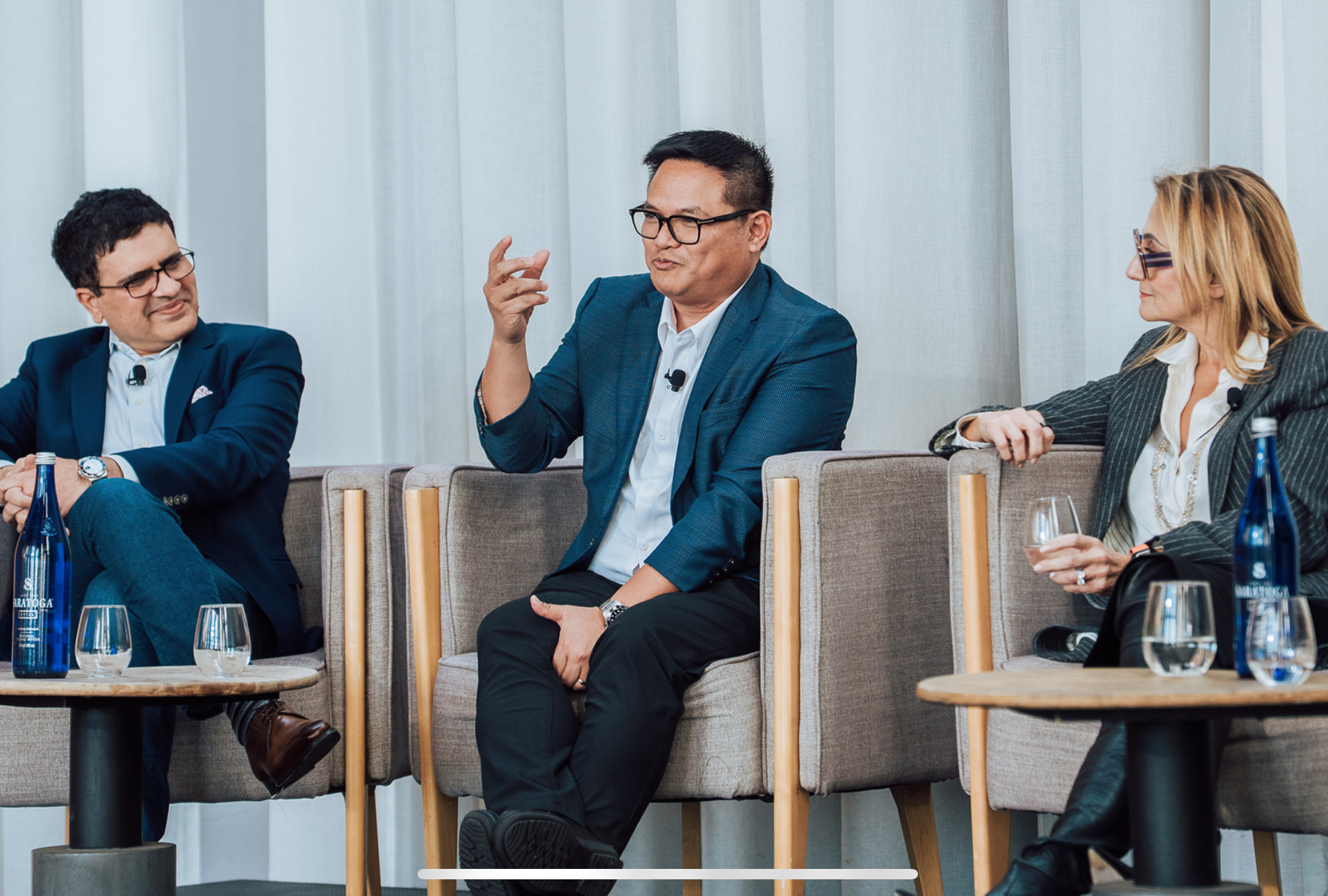
AI is no longer simply a technology agenda. It is reshaping how technology leaders show up — not as operators behind the scenes, but as educators, strategists, and catalysts for enterprise-wide change. This shift was on full display at the Metis Strategy Summit in New York, where I joined fellow CIOs for a conversation about how AI is redefining our role. What became clear is that the CIO is now expected to help the organization learn, adapt, and navigate ambiguity, all while shaping business strategy at the highest level.

Mojgan Lefebvre Chief Technology and Operations Officer of Travelers shared something that resonated deeply: the biggest barrier to AI adoption wasn’t technology, it was mindset. At Travelers, AI is no longer treated as a technology strategy; it is the business strategy. Once their leadership team fully embraced that perspective, acceleration followed. Their platform, TRAVAI, didn’t become successful because it was a tool; it became successful because leaders believed in it. She reminded us that readiness for AI begins with alignment at the top, and belief unlocks behavior.

Pawan Verma Chief Data and Information Officer of Cencora added a perspective that every CIO should internalize. He said our role now includes separating hype from truth — helping leaders distinguish between what is exciting and what is truly transformational. In his world, experimentation is encouraged, but experimentation for its own sake is not the goal. AI initiatives must tie back to clear business outcomes, measurable impact, and sustained value. His discipline around ensuring that enthusiasm never outweighs accountability was a grounding reminder that real transformation requires focus.

Listening to them, I reflected on where we are at Breakthru. I am early in my journey as CIO, but we are already building the foundation for AI — we want it to be an enabler to transformation. Early in my tenure, we held an AI summit with our executive team to build understanding, shared language, and curiosity. But AI literacy cannot stop at the C-suite. Jennifer Charters, CIO of Lincoln Financial, shared a framework introduced by Professor Ethan Mollick at Wharton: Leadership, Lab, Crowd. You begin with leadership, move into experimentation, and ultimately scale to the entire organization. That is exactly the path we are following. We started with leadership. We are now deep in the lab — testing and learning through tangible use cases. And soon, we will turn toward the crowd by launching a broader AI education program in partnership with our learning and development teams, because AI capability is only as strong as the workforce that can wield it.

Steven Norton our panel moderator closed with a personal question: what leadership muscle are you building right now? I reflected with my answer centered around purpose. In a time when AI can automate, accelerate, and optimize almost anything, purpose anchors us. Richard Leider says that purpose is not about what we do, but who we bring to what we do. That distinction matters. In the age of AI, my focus is not only on enabling transformation, but on ensuring we bring people with us. I think about my teams, my peers, my community — and my children who will inherit the world we are shaping.

AI is the most significant transformation driver of our time. And because of that, I think deeply about leadership that concerns itself not only with deploying AI, but with building the capability to educate on AI at scale in our society. Technology may accelerate progress, but leadership determines whether others are empowered to move forward with it. Our legacy will not be measured by how much AI we introduced — but by how many people we helped bring along.
Designing for the Future: Building Technology Architecture for the Age of AI

Across industries, leaders are facing a perfect storm: softening markets, mounting technology debt, and unprecedented pressure to scale with AI. Gartner estimates that by 2027, more than 70% of enterprises will adopt AI in at least one business domain, yet fewer than half will achieve measurable business outcomes without modernizing their foundations.

For many organizations, the reality is stark: technology landscapes remain fragmented, low in data maturity, and limited in scalability. This creates barriers to growth, stifles innovation, and leaves gaps in automation and security.

The Opportunity

Yet, moments of pressure also create opportunity. We are at a true inflection point—a convergence of technology advancement, business need, and the acceleration of AI.

For CIOs and business leaders, this moment calls for a deliberate shift: building integrated, intelligent, and scalable enterprise architecture.

The AI Flywheel

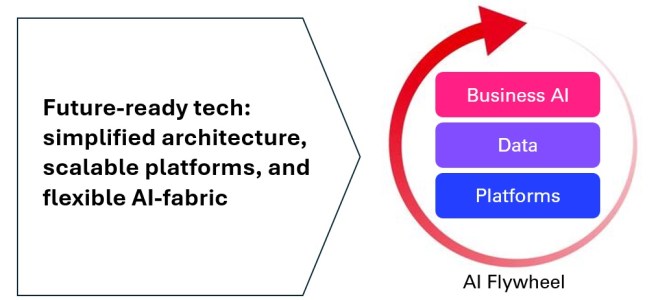
Traditional enterprise architecture often emphasizes layers, roadmaps, and governance. While these are essential, they can feel cumbersome in today’s world of constant change. The AI Flywheel reframes architecture as a dynamic, reinforcing system—where applications, data, and AI continuously accelerate one another.

Instead of a top-down blueprint, the flywheel emphasizes motion, momentum, and compounding value. A powerful way to think about this transformation is through the lens of the AI Flywheel.

  • At the base are applications (Apps)—the systems and platforms that run the business, from ERP to CRM, Supply Chain and Human Capital systems. These generate the transactions and interactions that fuel the enterprise.
  • At the center is data—the connective tissue that transforms raw transactions into insights. When properly governed, integrated, and matured, data becomes the engine of enterprise intelligence.
  • At the top sits Business AI—the layer that turns applications and data beyond predictive models and task automation, agentic AI systems reason, plan, and act with a degree of autonomy.

As the flywheel turns, each layer reinforces the others: modern applications create higher-quality data, which in turn powers more advanced AI use cases. Those AI insights then feed back into the apps, driving efficiency, better decisions, and continuous innovation.

While the AI Flywheel offers a powerful framework, it’s important to recognize that the layers themselves—applications, data, and AI—are still evolving rapidly. AI architectures, in particular, are far from settled, with breakthroughs in agentic systems, reasoning models, and orchestration frameworks emerging almost monthly. This uncertainty makes it critical for enterprise architecture to remain modular and flexible, allowing organizations to adapt as the AI stack matures. By designing for adaptability rather than permanence, enterprises ensure they can integrate new capabilities, swap out components, and scale with the technology’s trajectory—without being locked into outdated choices.

When designed intentionally, the AI Flywheel creates a self-reinforcing cycle of optionality, growth and capability.

From Fragmented to Future-Ready

This shift mirrors what many industries are grappling with:

  • From fragmented → to integrated
  • From reactive → to intelligent
  • From rigid → to scalable

According to McKinsey, companies that modernize their tech foundations before scaling AI achieve 30–50% faster adoption rates and significantly higher returns on digital investments. The implication is clear: AI maturity is only possible on modern foundations.

One of the key learnings from transformation programs is that this work requires co-leadership between IT and the business. Enterprise architecture is not just an IT blueprint—it is a business design challenge. When both sides co-create the future, organizations move faster, align stronger, and unlock more value. For leaders, the critical questions to ask are:

  • How can we architect the AI layer effectively on top of the enterprise stack?
  • What lessons can we draw from modernization journeys in other industries?
  • How do we balance speed of innovation with long-term resilience?

We stand at a crossroads where business necessity and technological possibility converge. The organizations that act now—investing in integrated, intelligent, and scalable technology—will be the ones best positioned to thrive in the age of AI. The call to action is clear: be future-ready by design—and set the AI Flywheel in motion.

So where did the farmers go? What the Past Teaches Us About the AI Future

In the early 20th century, America underwent a profound transformation. The mechanization of agriculture displaced millions of farmers and farm workers, threatening the very foundations of rural life. But instead of unraveling, the nation responded with reinvention.

Communities across the country—particularly in the Midwest—launched what would become known as the High School Movement. Long before federal mandates, they built and funded public high schools as a grassroots investment in the future. The logic was simple but revolutionary: if machines were going to replace muscle, then the mind would be the new differentiator.

This movement didn’t merely respond to industrialization—it prepared people to lead through it. By focusing on broad-based education—literacy, numeracy, critical thinking—it created a workforce capable of adapting to new demands. And it worked. The High School Movement was a critical foundation of what historians now call the American Century—a period marked by global leadership in innovation, productivity, and economic power.

Much of this shift was driven by profound changes in the nature of work. In the 1800s, over 70% of the U.S. workforce were farmers. Today, that number has dropped to under 2%, thanks to tractors, irrigation systems, and precision agriculture. Manufacturing too experienced a dramatic evolution. It peaked in the 1950s, when it accounted for nearly 30% of U.S. jobs. Today, that figure is closer to 8%, as automation, robotics, and assembly lines increased output while reducing labor demands.

So where did the farmers go? From farms to factories. From factories to offices, schools, stores, hospitals, and eventually, tech companies. The mechanization of agriculture didn’t just displace—it propelled. It fueled the rise of urbanization, the expansion of industrial America, and the birth of the modern service economy.

Now, we are once again standing at the edge of a historic inflection point.

Artificial Intelligence is not just another tool—it is a general-purpose technology with the power to rewire entire industries, redefine how value is created, and reshape the relationship between people and work. Autonomous AI agents are beginning to plan, execute, and adapt tasks across domains—from software development and R&D to customer service and strategic decision-making. As they scale, so too does the need for a new kind of preparedness.

If the industrial age demanded mass literacy, the AI age demands something deeper: AI literacy.

But AI literacy isn’t just about understanding algorithms or using tools—it’s about cultivating a mindset and a set of interdisciplinary capabilities that empower people to partner with AI, not be displaced by it.


The Pillars of AI Literacy for the Modern Era

  1. Computational Thinking & Data Fluency: Individuals must understand not just how to use AI tools, but how data is collected, structured, biased, and interpreted. This enables them to guide, question, and refine AI-driven decisions rather than passively accept them.
  2. Relationship Management Leadership: In a world where AI is embedded in human systems, the ability to foster trust, lead across functions, and manage relationships becomes critical. Leaders must be fluent in the human dynamics of AI adoption—coaching teams, navigating change, and building bridges between technology and business outcomes. The future of leadership isn’t just technical—it’s relational.
  3. Prompt Engineering & Critical Use: As generative AI becomes a co-worker, the ability to frame the right questions and guide AI responses becomes a core competency—akin to the reading and writing skills of the last century.
  4. Ethics, Agency & Digital Citizenship: With AI influencing everything from legal sentencing to hiring and healthcare, we must equip people with the judgment to assess fairness, protect human agency, and demand accountability.
  5. Adaptive Learning Mindset: Because AI will evolve continuously, the next generation must be trained not just to use tools, but to continuously learn new ones. Comfort with ambiguity, curiosity, and resilience become essential.
  6. Interdisciplinary Literacy: AI now permeates every field—from law and logistics to design and education. Future readiness requires embedding AI understanding into every discipline, not siloing it within IT or data science departments.

Just as reading and writing became the gateway to opportunity in the industrial age, AI literacy is the new threshold for leadership in the age of intelligence. It is not a technical checkbox—it’s a cultural catalyst. The organizations that embrace it won’t just survive disruption; they’ll define what comes next—with intention, with integrity, and with imagination. And beyond the enterprise, AI literacy is equally vital for society at large. It empowers citizens to navigate complexity, participate meaningfully in a rapidly changing world, and ensure that technology serves the common good. This is not only how we build better companies—it’s how we build a more equitable, informed, and human-centered future.

SAP Sapphire 2025 Reflection: The Suite Strikes Back: SAP’s Strategic Bet on Unified Platforms

After more than five years, I had the opportunity to attend SAP Sapphire this week in Orlando. Coming back to this event—especially as our organization embarks on our own S/4HANA program—was both grounding and forward-looking. It reminded me how much the enterprise technology landscape has evolved, and how some foundational ideas are now coming full circle.

In the early 2000s, SAP thrived by convincing enterprises to adopt a unified suite—the SAP Business Suite—over fragmented, siloed systems. That strategy worked. Standardized processes, enterprise-wide data, and tight integration delivered measurable business value. CEMEX, the global building materials company where I spent 15 years leading SAP implementations, was an early beneficiary of this approach.

But as cloud and data integration technologies matured and modular architecture principles took hold, enterprises shifted toward best-of-breed stacks—choosing specialized solutions that delivered depth and agility in specific domains.

Fast forward to 2025: SAP is making a bold attempt to flip the script again—this time driven by the imperative to enable enterprise-wide AI.

SAP executives, led by CEO Christian Klein, told IT and business leaders attending this year’s SAP Sapphire event that by tapping into SAP’s “flywheel” combination of the broadest suite of enterprise apps, context-aware data, and world-class Business AI, they can conquer uncertainty.1

This year’s Sapphire centered around SAP’s renewed strategy of “Best-of-Breed as a Suite.” Powered by an enhanced cloud ERP offering and underpinned by generative AI and semantic data models, SAP is positioning its platform as the most viable foundation for AI at scale. The rationale is clear: AI thrives on context, and context requires clean, connected, and harmonized data—something fragmented tools often fail to deliver.

Christian Klein’s keynote highlighted this shift, along with key announcements around Joule (SAP’s AI copilot), new verticalized application packages, and continued investment in the SAP Business Technology Platform (BTP). SAP is no longer just modernizing its suite—it’s reimagining it to be smarter, modular, and cloud-native.

Notably, the acquisitions of Signavio and LeanIX are becoming more strategically integrated, giving SAP a business process and architecture knowledge base that supports AI-powered micro-transformations. This reflects a shift from monolithic implementations to intelligent, data-informed process optimization at scale.

Still, one critical question remains: Can any vendor truly deliver both “best of breed as a suite” without significant compromise?

Today’s enterprise buyers are used to domain specific best-in-class capabilities—Salesforce for CRM, Coupa for procurement, o9 for Integrated Business Planning, Workday for HR, Snowflake for business data-lake house. The bar is high. SAP of course dominates the ERP landscape, having “SAP customers represent 40% of global economy”. SAP and others must prove they can not only promise seamless integration, but deliver comparable (or superior) functionality across domains—with acceptable trade-offs.

The pressure is on SAP to show that its vision is more than cohesive—it must be compelling both at the edge and at the core.

For organizations like ours in a consumer packaged and distribution businesses, understanding the direction of major platform players is critical to architecting a future-ready enterprise. I believe data will be the differentiator—and our architecture decisions must support an AI-powered future. SAP’s platform-centric strategy resonates with that belief, but success will depend on execution.

Final thought: The platform wars are heating up again—but this time, the battleground is AI enablement and the data fabric that powers it. SAP has made its move. Others are on the same accelerated solutions evolution journey. Let’s see who leads. Let’s see who wins.

1-https://news.sap.com/2025/05/sap-sapphire-companies-facing-big-challenges-we-are-on-your-side/

AI Literacy: Choosing Wisdom Over the Frenzy

As artificial intelligence advances faster than most organizations can adapt, a critical question emerges:

Are we engineering a culture of wisdom—or a frenzy?

This isn’t just a philosophical question. It’s a strategic imperative for every organization navigating the future of work.

Today’s AI systems can generate massive volumes of content, automate complex decisions, and shape narratives in real time. But in our rush to adopt these tools, we often skip a critical step: ensuring our teams—our people—understand what’s under the hood.

The result? Organizations that are technologically advanced but intellectually fragile, where decisions are accelerated but not grounded in understanding.

Why AI Literacy Matters Now

AI literacy isn’t about turning every employee into a data scientist. It’s about empowering your workforce to ask better questions, understand how AI tools work (and fail), and make decisions aligned with your organization’s mission and values.

It’s the difference between:

  • Generating tons of content (noise) vs. exploring customer sentiment with nuance
  • Automating blindly vs. applying ethical, human judgment
  • Following outputs vs. augmenting with AI and challenging AI with context and critical thinking

The Cost of Illiteracy

Without AI literacy, organizations fall into the trap of frenzy and hype. Quick outputs are celebrated. Shallow insights are mistaken for depth. Use cases multiply but often fail to scale. And AI becomes a black box of risk.

Worse, employees may feel displaced instead of empowered, unsure how to contribute in a workplace increasingly shaped by tools they don’t fully understand.

Building a Culture of Wisdom

Investing in AI literacy is an investment in resilience and long-term thinking. It means:

  • Creating space for education, experimentation, and critical dialogue
  • Equipping teams to interrogate bias, interpret results, and understand limitations
  • Elevating leaders who connect AI use to strategic goals—not just short-term wins

It’s not just about doing things faster with AI—it’s about helping your people do things better.

Final Thought

AI will shape the future of every business. But the real differentiator won’t be who has the most advanced model—it will be who has the most AI-literate culture.

Because in a world of accelerating technology, wisdom will be your greatest competitive advantage.

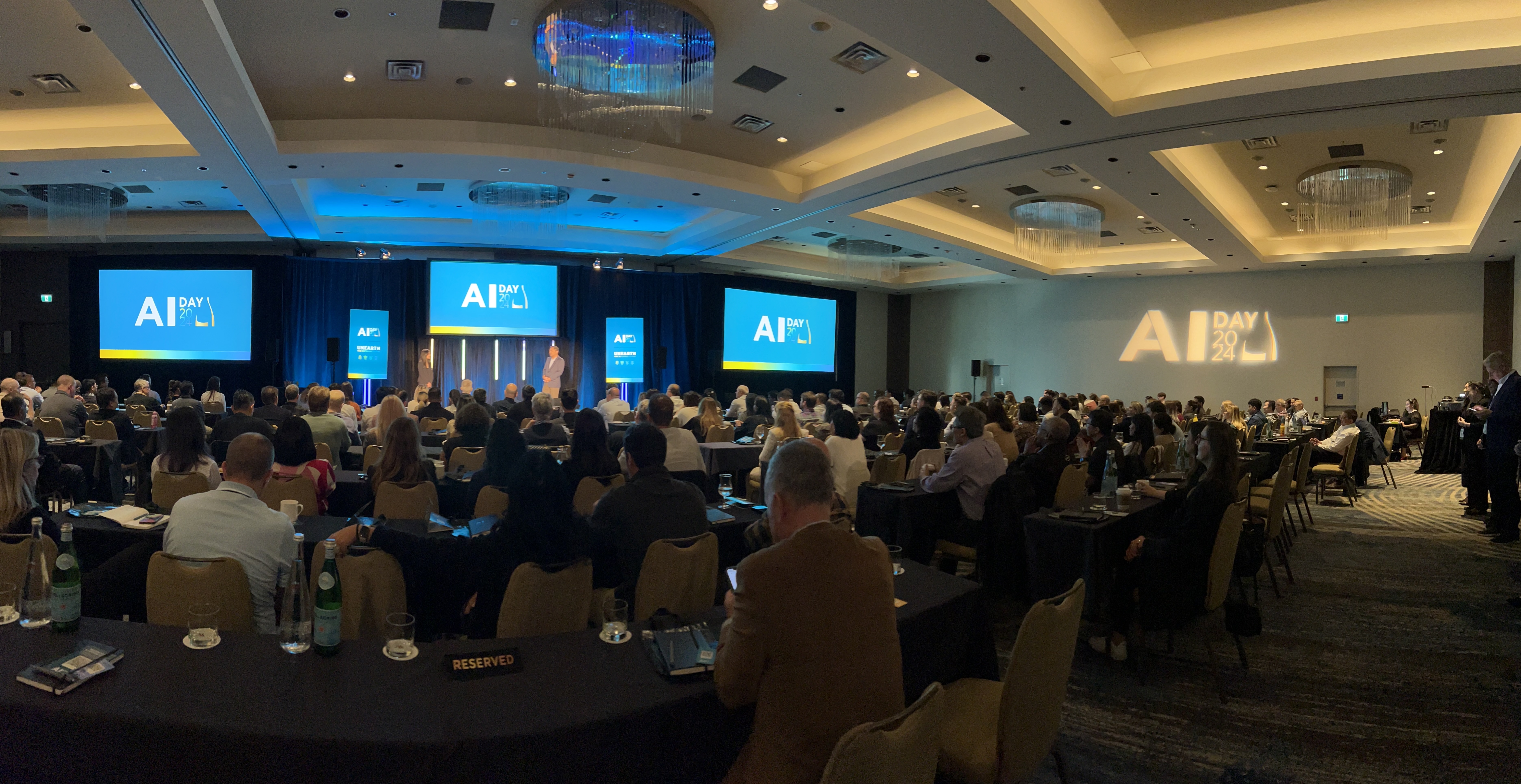
Mark Anthony Group AI Day, Vancouver 2024

DeepSeek’s Breakthrough: Sparking a New Era in Competitive AI Development

Recent developments surrounding DeepSeek on Monday felt like Nov 30, 2022, all over again—when ChatGPT broke into the mainstream in a big way. This time, however, it’s a Chinese AI startup that has grabbed the spotlight with far more compute-efficient AI models. 💡 The impact on the tech and financial sectors has been massive, largely because “DeepSeek just blew up the AI industry’s narrative that it needs more money and power” to dominate the space.

📉 Corporate World Reaction: One bad day in the stock market doesn’t signal the apocalypse, but it certainly turned heads. For the broader corporate world, this could be great news—it shows that state-of-the-art AI can be developed with far less money and resources. U.S. tech giants are now scrambling their engineers to learn lessons from DeepSeek’s success that they can apply to their own initiatives.

⚡ Efficiency Over Power & Superior Compute: DeepSeek’s breakthrough demonstrates that maximizing software-driven resource optimization can work as an alternative to relying on the most powerful (and expensive) hardware/GPUs. This is not only more cost-effective but also a welcome shift for the environment. 🌱

🌍 A Global Opportunity: DeepSeek’s success could spark a more competitive AI landscape, fostering the development of technologies that are impactful for the rest of the world. It’s an exciting moment that challenges assumptions and opens new doors for innovation. 🚀

—————————

For those just catching up on the news, here are the key headlines:

📉 Market Disruption: The launch of DeepSeek’s AI assistant led to a substantial sell-off in tech stocks, with the Nasdaq Composite dropping 3.1%. Nvidia’s shares fell 17%, resulting in a loss of nearly $600 billion in market value.

⚡ Efficient AI Model: DeepSeek’s latest R1 model, released on Jan. 20, was built with just $6 million in raw computing power and inferior AI chips, a fraction of the money and resources spent by firms like OpenAI and Alphabet Inc.’s Google.

🚀 Industry Reactions: OpenAI’s CEO, Sam Altman, acknowledged DeepSeek’s advancements and announced plans to accelerate product releases to maintain competitiveness.

🌍 Global Impact: The emergence of DeepSeek has prompted discussions about the global AI landscape, with some experts viewing it as a “Sputnik moment” that could redefine international competition in artificial intelligence.

Inspiring the Next Generation: Lessons from Samar, Philippines to the Global Stage

It was a privilege to speak at the Samar College symposium in my hometown of Catbalogan, Philippines, where I shared insights from my journey, perspectives on the future of work, and reflections on leadership in an era of rapid technological change. As someone who proudly traces my roots to Samar College, where I began my early education, this opportunity to give back to the community that shaped me was deeply meaningful. Below is a summary of my talk, which I hope will inspire those who dream of breaking barriers and leaving their mark on the world.


Breaking Barriers: My Journey from Samar to Leading Global Technology Transformations

Growing up in Samar taught me resilience, adaptability, and the value of community. Helping at my parents’ store instilled hard work, humility, malasakit (genuine care), and perseverance—principles that shaped my leadership style and aspirations.

My career path to becoming a global CIO was anything but straightforward. An unexpected turn led me to technology, proving that sometimes careers choose you—and those paths often bring the most fulfillment. Early in my journey, I learned the value of embracing change and stepping out of my comfort zone, whether it meant moving to a new city, taking on unfamiliar roles, or navigating uncharted technological landscapes. These steps, though challenging, defined my career.

I highlighted key moments, such as transitioning from leading local teams to managing global operations. Beyond technical expertise, success required connecting with people from diverse backgrounds—a skill rooted in the relationship-building and empathy I developed in Samar.

I emphasized that careers are not ladders but lattices. Growth isn’t just about climbing upward but also about lateral moves that broaden perspectives and skills. Flexibility and adaptability are crucial in technology, where careers rarely follow a linear path.


The Future of Work: AI, Automation, and Human Potential

I explored the exciting and sometimes daunting future of work, drawing on Gartner Maverick research. I invited the audience to envision 2045—a world shaped by Artificial Intelligence (AI), automation, and groundbreaking innovations. We discussed the rise of generative AI and its transformative impact, bringing AI to the mainstream.

The future will see remarkable advancements in biotechnology, renewable energy, and space exploration, alongside workforce changes. Routine jobs will be automated, and entirely new roles will emerge, such as “cyber-physical systems architects” and “AI ethicists.” By 2045, collaboration with AI agents, humanoid robots, and digital humans may be commonplace.

Thriving in this future requires adaptability, creativity, and emotional intelligence. While technical skills remain essential, uniquely human qualities—empathy, collaboration, and critical thinking—will set individuals apart. I encouraged students to embrace digital literacy and see AI as a partner to augment human potential, solving complex problems and amplifying their impact.


Leadership in the Age of AI: Balancing Technology and Human-Centered Leadership

Leadership in the AI era demands balancing technological innovation with a people-first approach. Effective leaders today require empathy, ethics, and a commitment to building trust. Technology should empower people, not replace them. For example, in my role as a global CIO, AI has streamlined processes and uncovered insights, enabling teams to focus on creative, higher-value work.

I discussed future-ready leadership behaviors critical for the AI era:

  • Humble: Embracing feedback and acknowledging others’ expertise.
  • Adaptable: Accepting change as constant and adjusting based on new information.
  • Visionary: Inspiring others with a clear, forward-thinking vision while anticipating future opportunities and challenges..
  • Engaged: Staying curious and actively interacting with stakeholders and trends.

Purpose-driven leadership is increasingly vital as employees and stakeholders expect leaders to prioritize social impact, diversity, and sustainability. Inspired by frameworks like Simon Sinek’s Golden Circle and the Japanese concept of Ikigai, I shared a purpose reflection framework and urged students to discover their “why.” Leaders who understand their purpose inspire trust and create meaningful impact.


Key Takeaways and Reflections

I concluded my talk with the following key messages:

  • AI will revolutionize industries and redefine work and the human experience.
  • Your roots make you unique, grounding you in who you are and who you’re meant to be.
  • Purpose is the foundation of a meaningful life and career.
  • Thriving in the AI era requires a balance of smart and heart, blending technical expertise with human-centered values.
  • Discover your “why”, as understanding and leading with purpose inspires yourself and others.

Returning to Samar was a full-circle moment, reminding me that success isn’t just about individual achievements but also about giving back and inspiring others. I encouraged students to uplift their communities, no matter where their journeys take them.


Bright Future Ahead

During the Q&A, the audience’s focus on AI reflected its significance as a symbol of progress and optimism. Samar College, under the leadership of President Rhett Piczon, is well-positioned for growth, and I’m inspired by its transformation.

I hope my story encourages others to believe in their potential. The world is waiting for your ideas, talents, and leadership. As you step forward, remember: the values you learned in Samar will guide you, no matter how far you go. Thank you, Samar College, for the opportunity to connect with the next generation of leaders. Together, we can create a brighter future for our community and the world.

Reskilling for the AI Era: Thriving Amid Disruption

“AI will be the most transformative technology of the 21st century. It will affect every industry and aspect of our lives.”Jensen Huang, CEO of NVIDIA

As 2025 draws near, employees are grappling with anxiety-inducing challenges on multiple fronts, with AI disruption being a prominent concern. The approach of a new year often brings reflection on what lies ahead, and for the third consecutive year, anxiety about AI’s disruptive potential feels even more pronounced. Yet, many have embraced a futurist mindset, envisioning a world where, by 2045, “50% of the population will have robots for household chores, avatars will gain real human status, and the average adult will have 12 hours of free time per day, up from 5 hours today,” according to Gartner Maverick research. Preparing for this future demands a shift in mindset—one that embraces new opportunities—and it all begins with reskilling.

The Reskilling Imperative

Today, the need for reskilling is paramount as a growing majority of workers recognize the disruptions AI advancements are bringing to their fields. Many are eager to reskill to stay competitive. For those of us in technical fields, this is not the first time we’ve faced the need to adapt. However, the pace and scale of today’s changes—and the resulting magnitude of disruption—are unprecedented. In the coming years, millions of workers will need to reskill to prepare for the complex societal and industrial transformations ahead. Major organizations like BCG, Infosys, Vodafone, CVS, SAP, and others are heavily investing in reskilling initiatives to navigate these changes effectively.

My Reskilling Journey

As someone who has worked in technology for over 25 years, I’ve witnessed firsthand the necessity of reskilling to keep up with leaps in technology. When I studied computer science in the early 1990s, I learned assembly language programming, COBOL, and VAX computing architectures. By the time I graduated, object-oriented programming was in full swing, and the internet was transforming businesses in unprecedented ways.

Interestingly, almost none of the coding languages I learned in college applied directly to the real world. Shortly after graduating, I taught myself FoxPro, Visual Basic, SAP’s ABAP, .NET, and more.

Digital Natives and the Next Generation

What I quickly realized was that while much of what I learned in school became “obsolete,” my education gave me something far more valuable: the ability to understand computers, architectures, and their implications for business. This foundation enabled me to continually evolve and reskill throughout my career. My computer science background didn’t just make me tech-savvy; it equipped me with the mindset to adapt to technological leaps over the years.

By the time my twin boys were six, I introduced them to object-oriented programming using MIT’s Scratch. They soon discovered the code behind the objects and, by age 12, taught themselves languages like Lua (Roblox Studio) and attended camps for C++ and JavaScript. They even administer virtual servers for their friend groups to host games in Minecraft and Roblox!

While digital natives like them have a head start in terms of comfort with technology, I found they still needed encouragement to embrace AI and understand its importance. Growing up in a digital world provides familiarity, but reskilling to stay ahead of disruptive trends requires a deliberate mindset and proactive effort.

The Role of Companies in Reskilling

Reskilling is not just an individual challenge; it is also a critical priority for organizations. Companies must recognize that their competitiveness in the AI-driven economy depends on the skills of their workforce. I’ve been fortunate to be part of a company like Mark Anthony Group, which invests in AI literacy through initiatives like use case development, AI masterclasses, and AI Day events. We also partner with vendors who are on similar journeys to jointly develop AI capabilities.

Here are some ways companies can support reskilling:

  1. Invest in Training Programs: Organizations should offer tailored training initiatives, from basic AI literacy courses to advanced machine learning certifications. Partnering with platforms like Coursera, Udemy, or universities can make these resources widely accessible.
  2. Encourage Lifelong Learning: Cultivate a culture where continuous learning is celebrated and supported. Offer incentives like tuition reimbursements or paid time off for skill development.
  3. Provide Hands-On Opportunities: Employees need real-world projects to practice new skills. Companies should integrate AI and emerging technologies into workflows and encourage cross-functional collaboration.
  4. Lead with Empathy: Change can be intimidating. Organizations must ensure employees feel supported during transitions and clearly communicate the long-term benefits of reskilling.

Advice for Employees

Staying competitive in the age of AI requires taking ownership of your learning journey. Here are some tips for making the most of reskilling opportunities:

  1. Stay Curious and Open-Minded: Embrace change as inevitable. Cultivate curiosity about new technologies and their potential to enhance your work.
  2. Leverage Company Resources: Take full advantage of training programs, workshops, and certifications offered by your employer. Show initiative by seeking opportunities to apply new skills.
  3. Invest in Self-Learning: Use online platforms like LinkedIn Learning, Khan Academy, or Codecademy to learn independently. Many high-quality resources are free or affordable.
  4. Collaborate and Network: Work with colleagues knowledgeable in new technologies or join communities focused on AI and reskilling to exchange ideas and experiences.
  5. Focus on Transferable Skills: Skills like problem-solving, critical thinking, and adaptability are timeless. Strengthen these alongside technical skills to ensure long-term career resilience.

Reskilling is more than a necessity in the AI-driven era—it is an opportunity to grow, innovate, and thrive. Companies and employees must work together to navigate these changes effectively. Organizations can empower their workforce with the right tools and resources, while employees must embrace the chance to evolve and future-proof their careers.

As I reflect on my reskilling journey, I see that adaptability, curiosity, and a willingness to learn are the keys to success in times of disruption. Let us approach this era of change with optimism and a readiness to unlock its potential.

AI Adoption in Mid-Sized Enterprises: Building on First-Mover Advantages

As AI adoption accelerates, the cost and volatility of AI investments are becoming significant challenges for organizations. Gartner estimates that GenAI costs could vary by as much as 500% to 1000%, with vendors raising prices by up to 30% as they integrate GenAI capabilities. This unpredictability is driven by factors such as data preparation, infrastructure needs, computational power, talent scarcity, token costs (price per NLP interaction), and regulatory requirements.

For those of us in mid-sized enterprises (MSE) who began exploring AI use cases a few years back, we may not yet be facing this level of cost volatility and cost spikes. While our models and applications haven’t fully scaled, our first-mover advantage lies in AI literacy and capability building. By diving in early, we engaged in hands-on, often scrappy AI projects, frequently co-innovating and co-investing with vendor partners. We built foundational machine learning models, applied large language models (LLMs) to generate human-readable results, and enabled interaction with existing models, all using platforms already familiar to our users. Successful use cases have generated financial benefits, with vendors offering additional resources to showcase our shared achievements.

My advice to MSEs:

  • Dive in NOW – Leverage existing platforms, data, and cloud capabilities.
  • Be Scrappy – Test and learn with vendor ecosystems; seek co-investment and co-innovation.
  • Invest in AI Literacy and Capability Building – Consider AI boot camps, AI leadership day, or AI executive retreat
  • Prepare to scale Enterprise-Wide – Establish governance, prioritize investment, and expand on successful use cases

Photo taken during AI Day with our vendor partners: Amazon Web Services (AWS), Salesforce, Microsoft, Softchoice, Adastra, NEORIS, Adobe, o9 Solutions and KPMG.

The Power of Career Lattices

In 2007, I was nearing the end of my post-merger integration assignment in Germany when the Head of EMEA IT asked me to return to the Philippines for a temporary role: Interim Regional Director of IT Asia for six months. The Head of IT Asia was heading to Australia for a long-term assignment, and I was asked to fill the gap.

As is often the case with these types of assignments, one of two things usually happens: 1) you complete the assignment and return to your previous role, or 2) the assignment becomes permanent, leading to the career progression you’ve been aiming for. I was hoping for the second option, thinking about my career ladder and wanting to move upward.

My six-month assignment went well, and as it ended, I was eagerly looking for my next step. What came next, however, wasn’t what I had envisioned as the next rung on my ladder. I was offered a position in Mexico as a Process Analyst/Consultant at the company’s corporate headquarters. At that time, it didn’t feel like the upward career move I was hoping for.

But then, my mentor-manager gave me some advice that changed my perspective. He said, “Think of where you are now as the minor leagues. We’re bringing you to the majors here at corporate. You might start on the bench, but you’ll be in the big leagues.” That advice convinced me to take a leap of faith.

That move to Mexico was a pivotal moment—it eventually led me to the U.S., into a new industry in consumer packaged goods, and ultimately, to becoming a Chief Information Officer.

I learned one important lesson: careers aren’t ladders—they’re lattices. Sometimes the most valuable experiences come from stepping sideways, not upwards. The journey is not just about climbing up; it’s about moving across, learning, and growing in all directions. What happens when that vertical path isn’t what you want? When your skills or interests shift? The truth is, most careers, especially in technology, are far from linear. We need flexibility, the opportunity to move laterally, to take on different challenges, and to develop new perspectives. That’s the lattice!

In a world that’s evolving as quickly as ours—especially with advancements like AI—the most successful leaders will be those who embrace the lattice approach, blend technical expertise with leadership, and commit to lifelong learning.