Climate Change— is your IT Department going Green to help the environment?

I had the opportunity to meet with some good friends and colleagues while vacationing in the Philippines last month. A colleague of mine, Roland Vera Cruz, who leads Alternative Fuel projects in CEMEX Philippines, encouraged me to write about Green IT Initiatives. We talked extensively about his enthusiasm for energy efficiency and green initiatives. Is your IT department going green? Desktops, laptops, printers and all other IT equipment account for 9 percent of all energy consumed by businesses. Did you know that a typical computer (CPU and Monitor) sends 1,000 pounds of CO2 into the atmosphere every year? To put that into perspective, 20 computers will equal CO2 emission of a midsize car.  There are a lot of opportunity areas for IT to contribute in Green initiatives, starting with improving energy efficiency of the IT infrastructure. 

Based on a McKinsey report, 60 percent of global executives view climate change as important to consider within their companies’ overall strategy and nearly 70 percent see it as an important consideration in managing corporate reputation and brands. No wonder there is a lot of buzz about green strategy. I hope this translates to the importance company leaders place on the environment and not merely a gimmick for corporate image building. 

Climate Change 

In nearly all the places I have been this past 5 years, I have personally experienced serious evidences of the shifting global climate. While in Germany during the winter of 2005, I remember Germans being anxious about a particularly unusual winter. The temperature wasn’t going down like previous years. They worried that insects that normally perish during the long winter chill will survive and propagate, impacting ecological balance. Another example is the great flood in Manila just last year — I talked about it in one of my articles. The rainfall was unprecedented and some low-lying areas were reclaimed by growing lakes. Lastly, just arriving in Florida this month, I was greeted by an unusual winter chill (which turned out to be record low temperatures across the state and, in some areas, it even snowed in sunny Florida). It troubled farmers that the famous Florida orange crops might be freezing. The signs are obvious everywhere. What can we do to help in each of our industries? 

Challenge for IT 

CIOs and IT managers in many multinational companies now face growing pressures to become more sensitive to their companies’ energy consumption and environmental impact. It is evident with the rising trend. More major companies are implementing comprehensive plans for green IT practices and technologies. According to the new study by Forrester Research Inc., about 28 percent of companies are into Green IT initiatives. That’s up from 20 percent in April of 2008. 

One of the primary ways to pursue IT Green initiatives is through energy efficiency. The challenge for IT innovators and industry leaders is to continue to come up with ways to support the constant need for increasing computing performance without increasing power consumption.  I think a thorough understanding of IT energy consumption and operations is the groundwork of this initiative. From this foundation, IT leaders can work out strategies to help them improve IT efficiency, address emissions and reduce energy costs. Results of these initiatives must be measured against business goals. Many organizations have demonstrated that significant return on investment can be achieved from pursuing green initiatives through energy savings.

IT can also take advantage of business process initiatives. Some business process projects can be Green initiatives if some specific objectives are integrated into the overall vision— whether the goal is reducing the company’s carbon footprint, decreasing overall transportation and distribution costs, finding alternative fuels, improving operational efficiency and optimizing supply chain.

The following are questions that IT leaders must consider in their quest for Green initiatives: 

  • Are we looking for ways to improve IT operations and generate more computing performance without increasing power consumption? 
  • Are we looking to assist the business in transforming processes so as to reduce environmental impact for operations end-to-end? 
  • Do we have a strategy to educate our employees, contractors and partners about means to contribute to green initiatives and help the environment?

These questions summarize the challenges for IT managers to develop IT practices, policies and technologies that are both good for the planet and good for business. Going green is really about using IT and industry best practices to create more efficient processes which benefit both the company and the environment.

Business Process Outsourcing Lifestyle in the Philippines

I’m home! I thought it would be appropriate to write about the Philippines while I’m in town. It’s been 2 years since my last trip here. A family occasion gave me the opportunity to visit home this close to Christmas. I surely miss the vibrant colors, vitality and noise of the streets filled with jeepneys. I miss the company of friends and family. I am currently at a local coffee shop right in the heart of Metropolitan Manila’s business district – Makati. Like so many others, I come here mainly to connect to the internet and the coffee is just secondary. 

I am part of a Shared Services organization based in Florida. Due to a scheduling conflict, I am tasked to work during the first two weeks of December even though I am in a different time zone (13-hour difference).  Indeed, technology has broken the barriers to work and collaboration. Something that – decades ago – one can hardly imagine doing. I work nights (usually until 1am) to catch-up with the US Eastern Time zone. 

It is not as if I am the only one working the night shift in Metro Manila and in many major cities in the Philippines. I am comforted by the fact that I work at the same time as thousands of service agents and consultants providing services to the US and Europe. In Makati, it is pretty common to see heavily lighted high rise buildings at night. After all, the Philippines is one of the main centers of business process outsourcing (BPO) and shared services in the world.

The Philippine BPO industry provides a wide portfolio of services that not only include traditional voice and IT services but also higher value services such as finance, IT programming, engineering, medical transcription and architectural services. 

Business Process Outsourcing 

According to Tas, J. & Sunder, S. in a journal entitled Financial Services Business Process Outsourcing published in 2004. 

“Business process outsourcing (BPO) is a form of outsourcing that involves the contracting of the operations and responsibilities of a specific business functions (or processes) to a third-party service provider. Originally, this was associated with manufacturing firms, such as Coca Cola that outsourced large segments of its supply chain.”

BPO can be categorized into two types—front office and back office outsourcing. Front office outsourcing is typically related to customer services and contact center services while Back office usually refers to support and administrative functions such as human resources, finance and accounting. 

Based on service location there are two types of BPO—Nearshore and Offshore outsourcing. For example, relative to United States, BPO service providers in Mexico can be considered a nearshore outsourcing as compared to BPO services provided to US companies from Asia Pacific countries, like the Philippines. 

Why Philippines is a First-rate BPO location 

Amid the global economic crisis, the BPO industries in the country have remained strong in 2009. Industry experts in the Philippines expect 35% growth this year. According to the Business Process Association of the Philippines (BPAP), the biggest organization of outsourcing providers in the Philippines, the outsourcing industry will earn about $12 billion to $13 billion and employ close to 900,000 people in 2010. 

The Philippines has remained one of the most ideal locations for companies who outsource business processes and services. Filipinos are known to be highly skilled, hardworking, dedicated and loyal. There is a known Filipino trait called “malasakit” (in local Filipno language) that means genuine concern and care. Filipinos are known to exhibit this quality in the workplace. Skills and hardworking attitudes guarantee strong performance and productivity, while on the other hand, dedication and loyalty translates to better talent retention, less training costs and experienced service personnel. The Philippines is also considered as the location of choice due to its less expensive operational and labor costs, as well as having an English-speaking workforce (the result of English being the main medium of instruction in schools and universities in all educational levels). The Philippines, with the help of the Government and private sectors, has also developed a competitive infrastructure in terms of telecommunications, information and technology. 

UK body proclaims the Philippines as World’s Best BPO destination for the 2nd time. The Philippines has won the 2009 Offshoring Destination of the Year category at the 4th National Outsourcing Association (NOA) Awards held October 15 at Park Plaza Riverbank in London. The Philippines bested Egypt, Malaysia, Russia and Sri Lanka among others. This is the second time that the country bagged the prestigious award category. The first time was in 2007. This was reported in a press release by BPAP last October 2009. 

BPO Lifestyle 

A lot of top multinational companies have service centers in the Philippines—Caltex, Citibank, HSBC, Procter and Gamble, Deutsche Bank and Dell, to name a few. It’s common for an individual to have at least one close family member who works in BPOs and services centers. It’s just that so many Filipinos nowadays work in BPO-related industries across the Philippines. My new sister-in-law, for instance, works in HSBC service center and my brother used to work there too— it’s where they met. This goes to show that indeed, business process outsourcing, offshore call and service centers are now part of Filipino lifestyle of service. We are known for our service— not just in BPO industries but in many industries— not just in the Philippines but around the world.

Image of Makati Skyline courtesy of Wikimedia.org

Project Management Discipline – Key Component of Any Business Process Initiative

The project that I am currently involved in has been very successful. Unfortunately, I can’t give you many details about it, except that the team is tasked to implement a new business model. It involves blueprinting the new model, construction, organizational transformation and implementation in a multinational company. We are not even finished with the project yet but the business return on investments has been unprecedented. In projects as big as this, you can talk about many success factors. The common clichés are senior management support, adequate change management, good business model design and construction, excellent resources, etc. However, I would like to single out one success factor that has inspired me to write this article—project management discipline.

Project management has been practiced since early civilization.  It began with engineering projects and it was in the early 1950s that companies started systematically applying project management principles and tools in complex business projects. It could be the oldest trick in the book.  But it is still a key element to any business integration initiative. 

Steve Small is a colleague of mine. He manages Project Management processes. I would like to quote him about his views on project management.

“I look at Project Management as the force that provides the structure, framework, and guidance for all the participants, activities and deliverables; however, the ultimate success factor for any project is the strength of the team you have in place. I know it is a cliché but it is really all about the people!”  

 Let’s analyze Steve’s quote and from it, derive key points of project management concepts. 

Structure, Framework and Guidance 

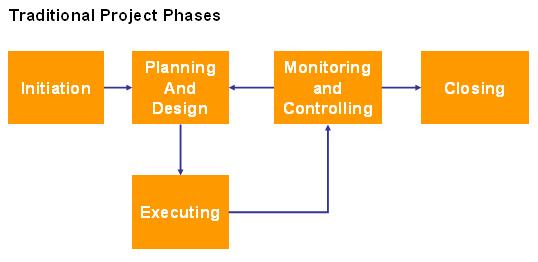
Let’s start with structure and framework. There are many project management frameworks and methodologies out there but there is a common theme in all of them. They all contain the traditional sequence of steps. They are typically comprised of the following stages: Initiation, Planning, Execution, Monitoring and Completion. These steps tell you what you have to do – how to manage your projects from start to finish. It describes every step in the project life cycle, so you know exactly which tasks to complete, when and how. Whether you’re an experienced project manager or a novice, it guides you in administering the project.  

Activities and Deliverables 

When it comes to explaining activities and deliverables, the PRINCE2 diagram and approach is my favorite. Why? It is because the framework provides the life cycle based on the project processes with clearly defined inputs and outputs. 

  • Starting up a project Inputs: Project Mandate; Outputs: Project manager and project management team appointment, business case and project brief
  • Initiating a project Inputs: Project brief, business case and approach; Outputs: Project plan, refined business case, project controls, project initiation documents
  • Directing a projectInputs: Project plan, project controls; Outputs: Authorized initiation and stages, day to day project management and controlling.
  • Controlling – Inputs: Status reports, alarms, issues and risks; Outputs: Issue resolution, reviewed project stage output, issue escalation.
  • Managing stage boundariesInputs: Project stage progress; Outputs: Planned next stage, updated project plan (if necessary), updated business case (if necessary) and Stage end reporting.
  • Closing a project Inputs: Overall project results / output; Outputs: Project decommissioned and project evaluation reviews.

People and Other Resources 

Resources are essential to carry out the project task set forth by the project mandate. They can be people, equipment, facilities and financial. When you lack a project resource, it becomes a constraint that might affect the completion of the tasks. Resources need to be managed and balanced through project management so these are adequate in any given time to complete project activities. Normally, resource assignment considers how each task is prioritized. Resource scheduling, availability and optimization are considered key to successful project management. 

I spent a good portion of my work experience in projects. I had the privilege to work with people from different nationalities, cultures, backgrounds and process areas. I like participating in projects because it gives me an ever changing set of opportunities and challenges. As they say, no two projects are the same. It is mainly because of the temporary nature of a project — having a defined start and end date. It is a complete contrast to business-as-usual operations, where individuals and groups have predefined, usually repetitive tasks and goals to achieve value. 

To be continued…

In my succeeding post, we will discuss program management. Viewing program management as just administration of a collection of projects is a mistake. Program management is more than that. It is more involved with the firm’s over-all Process Culture. Vaughan Merlyn has written extensively about this topic in his blog IT Organization Circa 2017. Let’s see what we can draw up from his ideas and discuss it in the next article.

Peter Drucker Centennial – his wisdom and perspectives

Peter Drucker (November 19, 1909–November 11, 2005) was a writer, management consultant, and self-described “social ecologist.” The Harvard Business Review honors Drucker’s contributions with a spread in its current November edition. The issue has a lot of interesting and insightful articles about the continuing relevance of his perspectives and wisdom in today’s turbulent times. 

Drucker’s Influence in Asia 

AsiaI remember my professor in the Asian Institute of Management who talked passionately about Peter Drucker’s perspective in business and management. Managers in Asia have described Drucker influence as essential in making their business successful and helping countries develop. Drucker frequently travelled to Asia, particularly Japan, throughout his life. He has profound influence there, not only as a management consultant to companies such as Toyota and retail giant Masatoshi Ito but also as a consultant to governments such as Japan, South Korea and China. 

Many influential and revolutionary ideas have run through Drucker’s career and writings. He preached about decentralization, simplification, impact of knowledge workers, management by objectives, customer service, corporate compensation, need for community, organizational business processes among others. I have chosen two out of Drucker’s many ideas to discuss: 

1. The Purpose of a Company Is to Create a Customer 

A company’s primary responsibility is to serve its customers. Profit is not the primary goal, but rather an essential condition for the company’s continued existence. There is only one valid definition of business purpose: to create a customer.”  – Peter Drucker

Profits come when customers continue to buy your products and services. That is the reason why Drucker’s perspective always pointed out the importance of putting customers first. A.G. Lafley, chairman of P&G board of directors, always sought out Drucker’s advice during his tenure as CEO of the company. He attributes their corporate principle to Drucker’s customer service principle that the consumer – not the CEO – is boss. P&G have made it their purpose to touch more consumers and improve more of each consumer’s life. By putting customers first, according to Lafley, they have nearly doubled the number served, from 2 billion to 3.8 billion; doubled sales and tripled P&G profits. 

2. Essential Condition for the Company’s Continued Existence 

“The need for planned abandonment – businesses have a natural human tendency to cling to “yesterday’s successes” rather than seeing when they are no longer useful.”  – Peter Drucker

Many companies focus on placing as many products and services as possible in the market and reap as much profits as possible. Their center of attention lies in what they have achieved in the past and what they are maximizing in the present. According Zhang Ruimin, CEO of the Haier Group based in China, sole focus on generating profits today could not ensure his company’s survival tomorrow. Early on, Haier’s profits were dwarfed by its competitors in China while Haier focused on quality. They could not compete with companies offering the same products in the market. But when supply-demand balance changed in China, according to Ruimin, lots of companies lost customers and went bankrupt overnight while Haier strengthened its position in the market. This is one of Drucker’s key principles – the assumptions on which the organization has been built and is being run no longer fits reality. Zhang Ruimin takes this to heart as a constant warning.  He wrote, “All decisions I make must be consistent with the ever-changing external environment. If they aren’t, the consequences may not emerge right away, but once the danger show up, it will be too late.” 

HBR Cover November 2009To read more about Peter Drucker’s perspectives and find out how his wisdom can help your company navigate these turbulent times, take a hold of the current November edition of Harvard Business Review with the headline: The Drucker Centennial – What Would Peter Do?

Photo courtesy of Harvard Business Review.

When Meetings Are Bad for the Company

I had a colleague in Germany who once told me, “If I didn’t have to go to a lot of these meetings, I’d enjoy my work more.” We probably had a lot of meetings – maybe too much – with them.

Internal discussion, status meetings, presentations, weekly update, checkpoints —you name it; they are all types of internal collaboration, otherwise called meetings. Internal collaboration is almost generally viewed as good for a company. Leaders regularly challenge us to collaborate, to talk to different departments, and chat with counterparts in different business units and work together in cross-unit teams. Where do we end up? Typically, swamped by information overload, spending more than 50% of our time in meetings and spending 20% preparing for it. Contrary to popular opinion, you indeed can have too much of a good thing. 

MeetingI am not saying meetings are bad.  Not at all.  It is a time-tested tool for communication and assistance for employees in aligning activities to desired goals. It is vital for projects and operations. In leading a team or department, I hold meetings periodically (and sometimes more than necessary). It is essential to functioning teams. There is simply no substitute for a good meeting. Meetings, working with teams and collaborating across organizational boundaries can create tremendous value. 

However, conventional wisdom rests on the false assumption that the more employees meet and collaborate, the better off the organization will be. The fact is, too many meetings can easily undermine productivity and performance. 

Knowing when (and when not) to meet 

There is an existing rule of thumb for this; I certainly don’t want to reinvent the wheel. Let me cite what effectivemeetings.com has to say on this subject. I got this from the article, Six Tips for more Effective Meetings. You will be surprised with tip number one: Don’t meet!.  

Avoid a meeting if the same information could be covered in a memo, e-mail or brief report. One of the keys to having more effective meetings is differentiating between the need for one-way information dissemination and two-way information sharing. To disseminate information you can use a variety of other communication media, such as sending an e-mail or posting the information on your company’s intranet. If you want to be certain you have delivered the right message, you can schedule a meeting to simply answer questions about the information you have sent. By remembering to ask yourself, “Is a meeting the best way to handle this?” you’ll cut down on wasted meeting time and restore your group’s belief that the meetings they attend are necessary. “

What’s a good meeting? 

You know when you’re attending one. There is a good reason to meet in the first place. The purpose, agenda and timeframe are clear. The participants are prepared and there is some degree of skilled facilitation. It is important to have someone who can keep participants focused on the goal in mind and can navigate issues so that the meeting can be effective. In good meetings you always leave with clear action items. 

Managers who emphasize the benefits of meeting are right. But they should temper those that do it excessively. It is a mistake to underestimate the equivalent time and cost the company spends in meetings. We should approach holding meetings as a group value-creating endeavor. Although getting together to collaborate is imperative to a working environment, the challenge is not to cultivate more and more meetings. Rather, it’s to develop the right meetings so we can achieve objectives and goals otherwise not possible when we work alone.

Photo courtesy of Ivy Remoreras Photography.

Innovation During a Recession

Innovation is bringing creative ideas to life. It occurs in the organizational context when individuals and teams work to spark new product development, to implement new technology and even to transform the organization. Innovation is always linked to performance and growth through incremental improvements in efficiency, productivity, quality and services. On the other hand, it is also associated with radical improvement like inventions, new products and radical changes in the business model. It is a balance of incremental improvements and radical innovations that keep the company competitive in a changing world.

NY StocksWe are on the brink of important change in the world— and it is economic in nature. We have seen massive job cuts, company bankruptcies, budget reductions, etc. We are in a period of profit-focused cost cutting. Innovation may be a low priority for many companies in this period of recession but I think it is a big mistake. Innovation ought to be a crucial element in a firm’s recession strategy. It will allow them to do more with less and to generate profit by exploiting existing resources.

Two kinds of Innovation that are especially valuable in a recession:

Internal and External Collaboration

Greater internal collaboration– between departments and business units, as well as external collaboration– with customers and suppliers, are essential if companies are to stay healthy during the recession. For example, internal collaboration could result to a Cross Selling strategy that could increase sales to the existing captured market while lowering cost of selling.  Collaboration can be a channel for transfer of best practices between operating units. Internal Collaboration can also result to inter-business-unit product innovation by creating new products and services from existing knowledge, technologies, products and brands.  External collaboration, specifically with key entities of your supply chain network — from suppliers to customer, is vital to staying in business during a recession. The big challenge to firms is to reduce cost while maintaining service levels. Businesses need to have open communication with suppliers and customers alike and ensure a more effective and efficient supply chain.

It is also important for firms to use new technology and cheaper options for collaboration. Leveraging Web 2.0 in the enterprise can be one option. Let me give you a clearer example. It is critical for companies to understand how customers reassess priorities, reallocate funds, switch brands and redefine value of products and services. Web 2.0 platforms can be both a source of information and a channel to facilitate this kind of collaboration in a cost effective way.

Leveraging Shared Services

If it’s all about cost reduction and economies of scale, it’s probably the best time to implement Shared Services. In these demanding times, companies are challenging themselves to discover business processes and business models that will open undiscovered synergies. Shared Services could be the answer to companies keenly looking for convergence and streamlining of an organization’s functions.

Shared Services has to ensure that they deliver the services required of them as effectively and efficiently as possible. In a recession, this convergence enables the appreciation of economies of scale within the function and can enable multi-function collaboration where there is the potential to create more synergies. A word of caution though, a Shared Services implementation involves a large scale cultural and process transformation; it must come with a well-planned organizational transformation and change management strategy.

In a nutshell

Shared Services has been around for years and companies have always strived to collaborate — internally and externally. I think the emphasis this time should be precision, timing, and bringing the best ideas forward. Forward looking and innovation-focused companies are seeing the light at the end of the tunnel. I strongly believe that this is the best time for innovation, for breakthrough value and for paradigm shifts. This is the best time to position your company ahead of the pack when the economy regains momentum again.

Web 2.0 + Application in Business = Enterprise 2.0

People as the platformIn the world of Information Technology, many buzz words and phrases are created everyday. It’s hard to keep up. It’s not only because too many of these words are thrown at us everyday but also because their definitions often change rapidly. One of these phrases is Web 2.0 – which I talked about in my previous article.  Now, let me throw you another one of those technology buzz words – Enterprise 2.0. 

The term Enterprise 2.0 was coined in the spring of 2006 by Andrew McAfee. As an Associate Professor of Harvard Business School, he studies the ways that IT affects businesses. His research efforts are focused on investigating how IT changes the way companies perform, organize themselves and compete. Andrew McAfee defines Enterprise 2.0 as the use of emergent social software platforms within companies, or between companies and their partners or customers. It is quite simply the application of many of the Web 2.0 ideas to the enterprise.

AIIM, a non-profit organization that provides education and research, takes this further. According to AIIM, Enterprise 2.0 is a system of web-based technologies that provide rapid and agile collaboration, information sharing, emergence and integration capabilities in the extended enterprise. 

Enterprise 2.0 Adoption 

Until now, many firms have yet to recognize the potential advantages Web 2.0 could bring to the business. Traditional command and control management is directly opposed to the distributed and collaborative style advocated in Enterprise 2.0 and there are always a set of rules that discourage change. For this reason, adoption of Enterprise 2.0 tools is happening from the bottom up. Enterprise 2.0 is being brought up gradually by ordinary users. It is uncommon to see adoptions and initiatives – such as establishing a corporate-wide blog or wiki – spearheaded by top management. More often, blogs are started by individuals and small groups in one department as an independent initiative. In some cases, these blogs, social media sites and microblogs succeed and evolve as key components of the corporate internal and external communications arsenal. 

Few companies right now are pioneering the use of Web 2.0 platform. One of then them is Sun Microsystems. Sun uses Open Source and Enterprise Social Software to build a YouTube-style portal for social learning. They have implemented a learning environment called Sun Learning Exchange (SLX) to provide training programs to employees and contractors in more than 50 countries. The entire solution was built for $60,000. One week after launch, there were more than 3000 unique visitors and hundreds of unique content were uploaded. The viral rollout strategy proved to be a success and allowed Sun to create more value with less investment in training. 

UniversalIn my article last month, I talked about how Universal Studios used Web 2.0 platform to announce the opening of the Wizarding World of Harry Potter project. They invited seven avid Harry Potter fans to a top secret webcast and informed them about the plans for the new theme park. By word of mouth, these seven people told thousands through emails, internet forums and blogs. Eventually, mainstream media picked up the buzz and wrote about it in magazines, news, and TV reports. In a few days, the news reached millions of people. Universal was able to reach its global audience by first reaching out to a select group of fans through the Internet. They were able to save thousands and perhaps millions in advertising costs. 

Enterprise 2.0 Challenges 

It is understandable that in spite of the current momentum, Enterprise 2.0 is experiencing strong resistance from business managers. I think the challenge is two-pronged: cultural and structural. There will always be cultural challenges when you are trying to make people work, collaborate and organize in a different way. Companies are so used to the traditional management and coordination style that it’s hard to imagine a quick transition. On the other hand, the Enterprise 2.0 model and its supporting structure also need to strengthen. Experts argue that it’s hard to implement something that has no commonly accepted business model and runs in an immature services landscape. Application management, support, security, ownership and identity are also common challenges being confronted by early implementers. 

To be continued… 

We already discussed about Web 2.0 and Enterprise 2.0 in two separate articles. We’ve laid out the groundwork. In my next post, we will further explore these topics and talk about how to incorporate cutting-edge Web 2.0 services within the enterprise networks, create internal social networks, blogs, wikis and manage Enterprise 2.0 security and compliance.

Manila Flood Disaster Update – Social Media as Channel for Disaster Coordination

I won’t have my usual article this week. I want to use my free time following updates about the flooding in Manila, which happens to be my home country’s capital. The widespread flooding was due to tropical typhoon Ondoy (international codename Ketsana) that brought record-breaking rainfall. The most affected region of the Philippines is the Greater Manila area which has a population of around 20 million people. A state of national calamity has been declared over 27 provinces in 7 regions.

According to PAGASA (Philippine Atmospheric, Geophysical and Astronomical Services Administration), the average rainfall in Manila during September is about 390 millimeters.  But last Saturday, according to the Philippine Inquirer, the typhoon poured 340 millimeters of rain in a period of six hours. This is more rain than 2005’s Hurricane Katrina in New Orleans. The six-hour flood surged across Manila and submerged houses, swept away thousands of cars and turned main thoroughfares into raging rivers. It forced residents to seek refuge on rooftops where some waited for more than 24 hours.

Rising Death Toll

According to Philippine Star, the typhoon left the country yesterday, leaving behind a trail of 95 people dead, 29 missing. According to the NDCC (Philippine National Disaster Coordinating Council), the number of affected people across Luzon has swelled to more than 300,000 people. This agency also reports that the partial total number of evacuees has reached nearly 60,000 people in 118 evacuation centers.  The Philippine government expects those numbers to rise.

Social media as channel for disaster coordination

twitter2I followed updates regarding the flooding from Facebook, where friends and groups posted up-to-date photos and news of what was happening on the ground. Many of those sites turned into assistance centers and channels that ask for and provide support for rescue and relief efforts. Through social media, I saw the resilience of the Filipino people in the face of adversity — showing once again our strong Bayanihan spirit.

I am also overwhelmed by the support of famous people in twitter like Aston Kutcher, Josh Groban, Demi Moore and Paulo Coelho. They have helped rally support for flood victims in Manila. These celebrity twitters have huge followings—Aston has 3.7 million followers online. Below are retweets from their sites.

  • @joshgroban RT The situation in the Philippines is becoming very dire. this is a good way to start helping. http://www.redcross.org.ph/
  • @mrskutcher: typhoon victims in Philippines in need of food/clothng. Call the American Red Cross to help. 18004357669 @aplusk RT
  • @RedCross: U have mobilized 4 Philippines flooding in a big way. Philippine Red Cross is on the ground. http://www.ifrc.org/
  • @paulocoelho @philredcross I already made my donation by bank order. Ur link does not have online donations. Paypal is not an option. Open online link

I have started my own donation drive here in the US starting with my friends. We will be sending voluntary donations through CEMEX Philippines Foundation. This can assist poor families in the evacuation centers who lost their homes and belongings. If you want to help also, please let me know. Our assistance, however small, goes a long way in my country; a dollar can buy half a kilo of rice and some canned goods that can feed a family a single meal while $20 could feed a family for a week.

Thank you for taking time to read this article. I will continue to post updates and news about the aftermath of the flooding and relief efforts of different concerned groups.

“New Internet Version” is All About Participation

Just by reading this article in this weblog, you become an official user of Web 2.0.  If you have a Facebook account, keep track of 200 or more friends, tweet at least once a day, have a professional LinkedIn account and rely on Wikipedia for the definition of things – you are an active user of Web 2.0. Congratulations! You are officially part of “generation Web 2.0 plus”! It might surprise you to know that although you might be hearing about Web 2.0 for the first time, you have actually been active users of it for quite some time.   

Comparing Web 1.0 vs Web 2.0

I think the best way to explain what Web 2.0 is to compare it to Web 1.0 which is its earlier version. Web 1.0 is a general reference to the World Wide Web before the developments of advance internet collaborative applications. This was during the period when the internet was dominated by companies who maintained heavy and static sites for promotion and marketing. At that time, it was difficult to maintain personal websites. Many attributed the dot-com-bubble in 2001 as the turning point of the internet. 

Web 1.0 and Web 2.0Basically, what happened was a change in paradigm. This was due to two main factors: people and technology. With people, I refer to us.  Yes — you and me. We who make up the critical mass of internet users who use the internet as a platform for simple, light-weight services that leverage interactions for communication and collaboration. Additionally, advancement in technology enabled these platforms, network and services. The attached illustration contrasts the differences between Web 1.0 and Web 2.0. Look at the boxes closely and try to imagine how the internet has evolved from the time you started going online until now.
Web 2.0 is the portion of the Internet that is being developed continuously and interactively by participating Internet users. It is commonly associated with web development and web design that facilitates interactive information sharing, interoperability, user-centered design. Web 2.0 is a catch-all term used to illustrate a variety of developments on the web and a perceived shift in the way the web is utilized. This has been characterized as the evolution of web use from passive consumption of content to more active participation, creation and sharing – to what is sometimes called the read/write web. 

Example of Web 2.0 Tools

Web 2.0 is a platform that enables the user to comment, tag, modify, improve and rank. The most well-known examples of this technology are found in sites like YouTube, Amazon, and Google where user ratings make it easier for other users to find what they are looking for. Social media tools like Facebook and Blogs allow users to write stories and stay connected with friends. Twitter opened up the world of sharing short thoughts. And Wikipedia is powered by users who provide and keep content up-to-date and accurate. 

Personally, I am particularly attracted to the aspects of communication and free online expression of ideas. That’s the reason why I invest time writing articles. A few years ago, it would have been extremely difficult for me to find a medium to express my ideas.  Web 2.0 tools have reduced barriers to the publication and distribution of information. 

In its most basic form, Web 2.0 is about participation. It is about communication and collaboration. It has indeed change the way of life of this generation and it is still evolving! 

Enterprise 2.0 – A Peek into my next Post 

Many of the Web 2.0 platforms began as customer-facing sites designed for marketing and communications until people looked for ways to apply these ideas to the enterprise. You might have noticed already that blogs, social media and microblogs have evolved as key components of the corporate internal and external communications arsenal. This use of the Web 2.0 paradigm and technologies in business is now widely known as Enterprise 2.0. On my succeeding posts, I will elaborate on this further and provide business practical applications of Enterprise 2.0.

Keep it Simple- Build a Little, Benefit a Lot

Typically, big companies invest one percent to four percent of revenue in IT. This investment is usually spent on integrated business model implementations, continuous innovations, and day-to-day IT operations. There must be a way to assess and take full advantage on the return of these investments; otherwise, IT organizations cannot move from being cost centers to value centers. Optimizing the value of IT is a top priority in today’s tough economy. Companies rush to reduce IT operating cost and IT capital expenditures mainly because of falling revenue sources. 

Many companies are so focused on evolution in order to always be steps ahead of competitors. They, at times, push themselves hard through IT implementations and afterwards, fail to take advantage of the benefits. They resort to old habits, making change process difficult to achieve. 

Keep it simpleOnce you implement new systems and processes, you need to aggressively drive value creation from it. Peter Weill, in his book IT Savvy wrote, “The firms that are best at this start driving value early. If you start driving value early as you take the first small steps towards building it, you will reduce the disruptions of major transformation. The goal should be—build a little, benefit a lot; build some more, benefit some more; and so on.” 1 In other words, keep it simple! Now is probably the best time to resort to this time-tested principle where investment is placed only on IT solutions that are cost effective and that deliver better value and greater performance for the business. Below are just some key initiatives that can help organizations maximize value of IT in a company. 

Define Clear Strategic Vision 

The first step is to have clarity of strategic vision for each of your IT portfolios. Executive managers in Steering Committees have the responsibility to clearly define the main business objectives of projects and portfolio of projects. They are the ultimate architects for the organizational transformation that will happen. The objectives that they define will guide IT project leaders in their decision making and will help them prioritize business requirements. 

Maximize ERP systems 

Most big firms implement a digitized platform anchored on a major piece of purchased enterprise resource planning software such as SAP and Oracle. Implementation should be kept within the standard configuration as much as possible. This is a difficult challenge though. Of course, some business requirements cannot be addressed by standard functionalities. They will have to be developed or coded to change standard functionalities of the application to suit business needs. The challenge is to keep the balance between benefits and costs of these developments. Keeping solution within the platform configuration standards will reduce consulting cost, configuration and development effort. In the long run it will reduce cost of IT operation and application support. Additionally, companies can leverage on continuous evolution of those ERP platforms whenever new releases and versions become available. They can change to the new version without lengthy and costly upgrade process. 

IT Infrastructure Consolidation 

Data center consolidation is a major focus of many organizations today. According to Computer Economics, in 2008, 76% of organizations had some level of activity in the area of data center consolidation.  It is one of the most essential ways to lower the cost of IT operations. Bigger data centers are simply more cost-effective on a per unit basis. Therefore, for many organizations, consolidating multiple data centers into a single facility should be a primary strategy for cutting cost. Additionally, this consolidation effort can also result to mitigating risk and improving service levels. Concentrating computing resources into one or a small number of physical locations can boost the productivity of IT assets and personnel. It will also simplify IT operations management. Most organizations will realize quantifiable returns from such efforts. 

1 Weill, Peter. IT Savvy: What Top Executives Must Know to Go from Pain to Gain. 2009.

 Simple Processes