Three Reasons Why You Need a Project Management Office (PMO)

A lot of technology and application specialists who used to spearhead management of IT projects from beginning to end see project managers as competition. This becomes a source of disempowerment – the single biggest hurdle, in terms of organizational transformation in IT – when IT leaders start to introduce a Project Management Office (PMO) group. My point of view is completely the opposite. If there are enough project management resources, I would rather have PMO support all my projects. Here are the top three reasons why IT needs a PMO group: 

Bring More Bang for Your Buck 

A number of IT professionals are seeing increased budget and head-count reductions as more large business decision-makers turn to cost-cutting measures. Because of this, projects are watched very intimately by IT leaders – reining in projects more closely than ever. This challenge has lead IT to turn to project management offices (PMOs) as an approach to boost IT efficiency, optimize cost, and deliver projects on time and in full. We have to bear in mind, however, that establishing a PMO team is not a short term strategy for lowering costs. Numerous studies have indicated that the longer companies have been operating PMO, the better the results in terms of accomplishing project goals.

Standardize Project Management Practices 

For large corporations, scores of projects happen at the same time and more often, it is just too hard for the CIO to keep track of them. This is where PMO provides its biggest contribution to IT. PMO introduces economies of repetition in the execution of projects and makes it easier for the CIO to track progress and results. It is the job of the project management office to make sure that the projects follow the established project management standards. The PMO group is responsible for defining and maintaining the standards of processes related to project management. It is the source of documentation, guidance and metrics on the practice of project management and execution.

Facilitate IT Portfolio Management 

The implementation of a PMO group is a stepping stone to IT portfolio management. I have reiterated this several times but I think it is important to note that progression from project management to portfolio management is intertwined with the maturity of the IT organization. If the organization doesn’t have a strong project management discipline and Project Management Office, it is difficult to even imagine how IT portfolio management can be achieved. PMO should have a staff of program managers who can manage multiple projects that are related – such as infrastructure technologies, desktop applications, processes, business model implementation and so on – and allocate investments and resources accordingly. IT Portfolio Management is focused on investments and business results as compared to the focal point of Project Management which is project deliverables. This will bring IT (and the business) double bang for its buck!

Someone who has experienced working with an effective project management office surely can give more than measly three reasons – but to me the three that I have just mentioned are the most essential. There is no uniform recipe to success when establishing a Project Management Office (PMO). PMO is not a quick-fix solution only created to deliver immediate savings. It is an important component of the organizational maturity of an IT organization. It is important that the PMO structure is closely aligned to the team’s culture. A final note:  Projects exist in virtually all areas of the company – the  PMO practice can also be implemented there. In some companies, IT’s project management office provides support and internal consulting to other departments.

Follow Glenn Remoreras on Twitter.

Promise, Practice, People and Performance- Four Key Components of IT Branding (Branding IT Organizations Part 4)

IT branding is the process of building and improving the IT brand identity. This identity is shared by employees and groups that control the way they interact with each other, with stakeholders and with internal customers. It is a powerful tool in transforming the IT group into people who perform calculated, yet seemingly spontaneous, service delivery in the best interests of its internal customers. 

This is part four of my series on IT branding. We have covered several perspectives on IT branding in the first three articles of this series. Part 1 talked about branding in general and how IT branding is linked to the Process Culture Maturity. In part two, the concept of IT branding was defined and how it was related to IT team culture. Part three talked about high quality IT service delivery as the best brand identity. 

This post will delve more into the subject of IT branding, understand its key components and examine how it shapes the IT organization. The four key components of the IT brand, the four Ps — Promise, Practice, People and Performance, will be defined. These can be seen in the diagram below: 

Promise 

One establishes the IT brand by building trust in a promise about what the company does, what it stands for, what its vision is, and what added business value it can provide the internal customers and stakeholders. This is represented through the established IT vision and mission statement, customer value proposition and service offers. This promise must be developed by IT top management and its sponsors through extensive analysis of internal and external environment, interviews, and research. The Promise component of the IT branding process is achieved through vital scoping, visioning and strategic planning.   

Practice 

After writing the organization’s promise, the next step is to build the engine that will enable service delivery. This is the IT Practice – comprised of IT operating model, mode of service delivery and various other methodologies. It ensures that IT teams achieve optimum results and performance. It will define the discipline in which IT systems, operations, projects and evolution will be managed. However, this discipline should not be constrained to a particular use of a vendor’s product; rather, it should focus on providing a framework to structure IT related activities and the interaction of IT personnel with business customers and users. 

People 

The most important element of the IT brand is the People component. Everyone in IT must be in sync. For new team members, this is achieved through an adequate on-boarding process. For existing employees, ongoing organizational development and engagement initiatives will work. Communication is critical in this aspect. Top management must fully engage employees. It starts by communicating the Promise (IT mission and vision, strategy) and Practice (IT operating model and methodologies).  Each team member must know his role and value in the overall service delivery system. It is important to note that the internal perception of the IT brand are affected by the IT team members’ behavior, and that one must therefore shape the IT team culture in ways that encourage IT brand-committed actions on the part of all IT employees. 

Performance 

As discussed in part three of my articles on IT branding—what is central to IT branding is the relentless pursuit of quality IT services. Organizations build its IT brand by living up to its promise. IT teams strengthen its IT brand by relentlessly improving its IT brand promise. The surest way to do this is improving performance. IT managers must define key performance indicators to monitor performance against objectives. Measuring the success of IT branding initiatives is challenging; however, it is essential that every effort be made to measure results versus targets set forth. 

A Final Note: 

One’s perception of the IT service is often reduced to a phone conversation with a helpdesk service agent. IT branding depends on each and every individual working in the IT organization—the “People”—from the top, the CIO to middle IT managers then to the frontline helpdesk service agents. It is important that all IT personnel are in sync because the service brand is all about them. It is strengthened by the established “Promise” and “Practices” that enables IT organization to deliver with high “Performance”.

Facets of High Quality IT Services (Branding IT Organization Part 3)

In Part 1 of this series I talked about branding in general and how IT branding is linked to the Process Culture maturity of an IT organization. In Part 2, I listed the different rewards IT organizations can derive directly or indirectly from having a strong IT brand. I also defined the concept of IT Brand Identity and IT Branding. 

  • IT Brand Identity marks the tangible representation of your IT brand. This representation can be in different forms – your mission and vision, your service offers, culture and style.
  • IT Branding is the process of building and improving IT brand identity.  This identity or culture is shared by employees and groups that control the way you interact with each other and with stakeholders outside of t he company.  

I derived the idea of associating quality of IT service delivery and IT branding from the opinion shared to me by William Gearhart. Bill is the VP of Information Technology of the organization I work with. Bill’s comment was as follows: 

“Critical to the success of any company or its branding is the business model and the success of delivering it hourly, daily, weekly, etc. You can brand any identity but it is the delivery and focus of the team that moves you up the ladder of respect within an organization.” 

Bill goes on to say: 

“I believe you establish the partnership and respect, apply your brand and then focus on assuring your service delivery and processes move forward with the organization(s) you are supporting and enabling.” 

The relentless pursuit of high quality IT services is central to IT branding. It is the factory that creates meaningful stories in the hearts and minds of our internal customers. These stories ultimately shape the perception of your internal customers – thus, strengthening your IT brand identity. High quality IT service is the best IT brand identity. For a service organization like IT, the surest way to create trust is consistency in the delivery of services. 

Facets of Quality in IT Services 

Quality is the best problem solver. IT organizations that consciously pursue quality in all its services take a proactive approach in problem management. This pursuit guides IT organizations on which problems to solve first and which opportunity to seize. Problem management practices are essential in this effort. First of all, problem management should be proactive. It should be focused on studying trends in order to reduce recurring issues and ensure long-term solutions by addressing root causes. Reducing IT incidents directly helps in improving customer or end-user experience in using IT services.   

Quality is the best customer relationship. High quality in IT services is the silent salesman. Consistency in IT service delivery will create good perceptions and a positive experience for internal customers. I think that a high level of quality enables IT to function as a business partner of its customers. Somehow it is the same as selling a product in the market. No matter how much you spend in advertising and promotions, if the product is questionable and does not have good quality, it will be difficult to sell. It is important for IT to focus on delivering high quality products and services right the first time. This is done through effective change management and high quality implementations. 

Quality is your best identity. IT branding and quality of IT services delivery are two sides of the same coin, in that high quality IT services creates a good IT brand identity. The level of quality in your company’s IT services determines how your organization is perceived by your partners and internal customers. It is important for IT managers to understand that the organization establishes its brand by building trust. The best way to create trust is consistency in providing high quality services.   

A Final Note: 

One can define quality in many different ways depending on the point of view. However, quality in the perspective of a service organization such as IT is defined entirely by the customers. The customers’ perception is reality. Quality is based on the customer’s assessment of his or her entire customer experience which is the consolidated evaluation of the organization’s different touch points. Again, I believe that the persistent pursuit of high quality IT services is central to IT branding. High quality IT service is the best IT brand identity. For a service organization like IT, the surest way to create trust is consistency in the delivery of services.

Photo courtesy of  www.zebratranslations.co.uk

Business Lessons from My Wii Fit Plus Experience

I have gained some extra pounds since the beginning of this year and this has hurt my right ankle a bit. For the past 3 months, I have been planning but failing to have a continuous physical regimen that will bring my body to a comfortable weight …until I found my new buddy – my Wii Fit Plus! It has been more than a week of Wii Fit training and I have not missed a day of fun workout. I definitely feel much better now. There is no hidden secret why Wii Fit has been so effective. What keep me coming back are the daily body tests that allows me to monitor my progress as compared to the goal that I set. The Wii Fit performance dashboards are amazing control measures! 

If performance measures are so effective in driving personal results, how does it relate to business? This is what this article is about — my reflections on the business of my Wii Fit Plus experience. 

Set Your Goals and Charting Progress 

When I first played Wii Fit Plus, I was asked to set a goal for myself concerning my Body Mass Index (BMI). So I set where I’d like to end up — including the timeframe. Goals and graphs appear on the calendar so it’s easy to visually see my progress towards my goal. Another fun thing was receiving feedback from my personal Wii trainer – giving me pointers and encouraging me towards meeting my goals. 

In business, this can be likened to the combination of your strategic objectives setting and performance management system. Normally, you start the year off with a planning session. This is the time when you lay out your strategic plans and goals. Once you have those strategic plans, they are translated to tactical objectives and then into operational goals. Most organizations have multiple business units, divisions and departments, each with their own responsibilities, processes and applications. Those tactical and operational goals trickle downward to individual employees. As you can imagine, in such a complex organization, the question is: How can you monitor and measure your progress towards the organization’s business goals? How do you encourage each department to continue working towards meeting those goals? 

Business Intelligence and Performance Dashboards 

Wii Fit Plus provided simple graphs detailing my progress with my BMI, weight, Wii Fit Age and Fit Credits, as well as a calendar to monitor my training and goals. I was able to compare the calendar and graphs with my wife’s on the same Wii Fit Plus game, so both of us got involved. 

In my opinion, the graphs represent the Business Intelligence (BI) and Performance Dashboard. The BI and Performance Dashboards are part of the company’s performance management system and is also the organization’s magnifying glass. It is composed of anything from daily operational reports to weekly tactical analysis and a single-screen cockpit that provides Key Performance Indicators (KPIs) of the business. Business Intelligence and Performance Dashboards allow the business to: 

  • Monitor – supervise key processes using key performance indicators that prompt alerts when potential deviation and problems arises.
  • Evaluate – analyze the possible causes of the problem by exploring relevant and timely information from different levels and multiple perspectives.
  • Manage – direct organization and processes to improve decision, optimize performance, refine strategy and steer the business in the right direction. 

The best way that executives can drive their business today is through an interactive dashboard that contains both historic and forward looking measures. Using performance dashboards, executives can view and analyze information about business results and the activities they manage. For middle managers, it will help them view departmental business metrics at a glance and drill down quickly to smaller segments of actionable information. 

Business Intelligence and Performance Dashboards are powerful agents of change. They help business reach their goals. This is much like how my Wii Plus charts has helped me achieve my personal targets!

Photo courtesy of Wii Fit Plus and SAP Business Suite.

IT Team Culture and Branding (Branding IT Organization Part II)

Branding IT Organization Part I talked about branding in general and how IT branding is linked to the Process Culture maturity of an IT organization. This time, I will further define the concept of IT branding and how it relates to team culture. Jose Rivas, a colleague of mine, posted this as a comment in my last article:


“Branding is something that everyone in IT does every day– it is how the user community perceives you. I believe that branding is a reflection of the culture that drives the IT organization, or any other group for that matter. Purposely branding IT takes a lot of thought and effort. It requires a clear vision, effective communications within as well as outside IT, strong executive sponsorship and a well-motivated organization.” 

I couldn’t agree more with this opinion of Jose Rivas on IT branding as a reflection of the team’s culture. Branding has a lot to do with human perspective and the forces that are created in social and organizational interactions. It has a lot to do with your group’s identity and culture.

IT Brand Identity and IT Branding

IT Brand Identity marks the tangible representation of your IT brand. This representation can be in different forms – your mission and vision, your service offers, culture and style. It is what you stand for. IT brand identify is the set of values that exists in your customers and employees’ mind as a result of interaction and associations with your IT organization.

IT Branding is the process of building and improving IT brand identity.  This identity or culture is shared by employees and groups that control the way you interact with each other and with stakeholders outside of t he company. It is the value you create that gets reinforced every time your internal customers interact with anyone in your team and any facet of your service.

Improving your IT brand: Why bother?

Below are just some of the rewards IT organizations can derive directly or indirectly from having a strong IT brand.

  • IT will run more efficient operations because they align all decisions with the mission, vision and values that underpin their promise.
  • Internal customers (business) are willing to invest more in IT because they believe it will deliver outstanding benefits.
  • Quality of IT services concretes internal customer loyalty.
  • Business supports IT projects because they know that IT creates value in the company.  
  • It is easier for IT to communicate new service offers.
  • IT will find it easier to attract and retain good employees because applicants believe in the quality of the workplace based on the advance knowledge of the caliber of the brand.
  • IT will increase its value and management support

The bottom line for IT managers and employees is that if they do not become conscious of the team culture in which they are embedded – those cultures will control them. This process is complex and multifaceted. Every IT team must learn how to become a team. They have to find their identity and use it to their advantage. 

Photo courtesy of advanceweb.com.

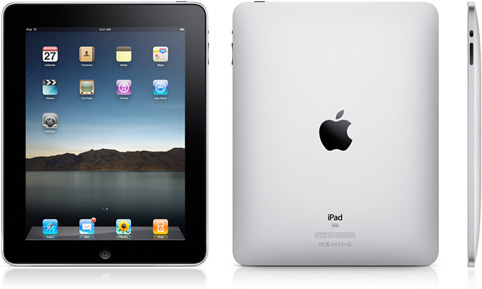
Will iPad Change How We Use Computers Tomorrow?

When I posted a link to an article about Apple’s new iPad on my Facebook page, the first comment I got was from my Mexican friend, Armando Rangel. He commented, “Esta bonito el ipodtote.” When a Mexican adds “-ote” or “tote” to a word it usually means the superlative or a bigger version of the root word. What Armando meant was that the new iPad is a bigger version of the iPod/iPhone. I think, in essence, that my friend is right.

The iPad is ready to run nearly all the 150,000 applications (or apps, for short) that have been created for the iPhone over the past two years. I am sure thousands more apps have been developed now for iPad. Isn’t it great? I mean if you love your iPhone, surely you’ll love this iPad too!

“(The) iPad will change the way you use computers, read books and watch TV- as long as you’re willing to do it the Steve Jobs way.”  – Daniel Lyons, Newsweek April 2010 Issue

Apple’s new iPad

So what’s the buzz about the recently released iPad?  

  • Keyboard – iPad is a type of portable device without the external keyboard.  For example, laptops have external keyboards.  Similar to the iPhone, it has a touch screen.  So imagine having a keyboard on the screen but you can’t feel the keys.
  • Price – The price of an iPad depends on the memory storage capacity. It ranges from $499 to $829.
  • Media – Most of what you will do with the iPad is what you are already doing with your iPhone. If you are reading books using your iPhone, don’t you get eye strain? iPad is designed for common media – books, websites and videos, etc.
  • Versus Kindle – iPad so much better than Kindle with it comes to look and feel and sleek page-flicking animations. If you like reading in the beach and poolside, you might consider keeping your Kindle. The black and white e-ink stands out nicely when you are reading in the sun.
  • Office – As I mentioned earlier, the iPad will support the same apps you currently use with your iPhone. Apple has also developed apps for Office that can create presentations, documents and spreadsheets.
  • Simplicity – If you know someone who is not ready to use a complicated computer (probably because they are beginners in using computers), maybe an iPad is a good start. The iPad is easier to use.
  • Versus your computer – For most people, the question is: will the iPad replace laptop and personal computers?  It depends on what you use your computer for. If you use your computer for work – such as creating things (for example, documents and designs) and run enterprise applications, then forget it.

I am sure that just like me, you have seen all the reviews and commercials about the iPad. However, there are some things you need to know about this new product before you decide to buy it. Check out this article from CNN if you want to learn more about Apple’s iPad: “Before you buy: 12 things to know about the iPad”.

Apple’s Innovation

Shortly after Steve Job’s first presentation about the new iPad last January, Roberto Verganti wrote about Apple’s innovation process in his article, “Apple’s Secret? It Tells Us What We Should Love”. He wrote, “The iPad Apple has not provided an answer to market needs. It has made a proposal about what could fit us and what we could love. It’s now up to us to answer whether we agree.”

Steve Jobs is a master of creating a signature customer experience. He steered Apple to deliver products that create new “meaning” to customers. This is the reason why Apple is not afraid to propose radical innovations. They are convinced that the product they create is the one that we should love. This is not like user-centered innovation where what you carry out mostly is what the consumers or market demand. This is perfect for incremental innovation, not for Apple. Steve Jobs is persistently creating innovative products that have changed our ideas about how things should work. Will the iPad change how we use computers tomorrow? Your guess is as good as mine.

Photo courtesy of Apple.com

Branding IT Organizations

Recently, I was involved with the redesign of a newsletter for our organization. I have always believed that communication is an integral part of any service organization – including IT. What we communicate is our story and our promise. This creates a perception to our internal customer about who we are and what we are about. At first glance, IT organizations and branding seem to be mutually exclusive.  However, I disagree. 

Branding in General

First, let’s talk about branding in general. Many professionals confuse the term “branding” as synonymous to “advertising”, “communications”, and “marketing”. They use it interchangeably. This confusion is costing companies a lot of money. Companies that market their products or services without first establishing their brand identities are not likely to achieve their objectives. Branding is about the customer’s perception of your product. It is the image of your products and services in relation to your organization.

Now how about branding in an IT perspective? This goes in line with the general concept of branding. IT branding is finding and knowing your IT organization’s identity. In many small- to medium-sized companies, internal customers only interact with IT when they have computer and IT application issues. This shapes their understanding and perception of the kind of IT organization they have. Branding for these IT organizations is getting their users to think that they are the sole solution to their IT-related problems. Once your IT is perceived as “only”, there is no place else to call.

How to Grow your IT Brand

The IT organization’s brand grows as the company expands. The IT organization’s brand evolves as the enterprise matures through the different levels of Process Culture maturity. Take time to revisit the article that I posted last year on Process Culture. As your organization’s Process Culture evolves and IT takes on a more important role, your IT brand grows with it. The IT organization’s identity is linked to this Process Culture maturity. 

Just like the most popular ones in the market today—Apple, Coke, Marlboro, Google, the business has to strive to grow and improve its IT organization’s brand. It is important that the IT organization must have a good understanding of the internal customer segments in order to position its services appropriately. In small IT organizations, this means positioning support so as to solve more IT computer issues and improve internal customer service. In more mature organizations, IT can position services to create more business value. IT branding will help your organization become the partner of choice internally.

I like the article Russ Aebig wrote about branding for IT organizations, entitled “Attraction of Identity”. He started with some very good questions and I am sharing it here because I want to end this article with the same questions: “As an organization, who are you? What is your internal and external story? If you cannot crisply define yourself in a few words you likely have a problem on your hands.”

Photo courtesy of ignitionblog.

Imagine How Social Media Can Transform Your Company Part II – Enterprise 2.0 Implementation Challenges

This is the second part of my series on how Social Media can transform your company. In Part 1, I talked about the benefits of Enterprise 2.0 to a company. I cited three key benefits: 

  • Improved Collaboration – One of the defining principles of Enterprise 2.0 is collaboration. Groups of people and even virtual teams with members from different geographic locations and organizational levels can work together.
  • Information Discoverability – One of the key advantages of Enterprise 2.0 is knowledge sharing, retention and discoverability. Imagine how much corporate knowledge and information are held by only a handful of employees in your company.
  • Enhanced Customer Experience through Social CRM Social CRM evolved from the need to create new customer relationships through the social media channel—relationship that is built on trust. This means actively participating in social media forums.

Governance Model for Risk Mitigation

To mitigate risk the first thing that companies should establish in an Enterprise 2.0 initiative is the governance strategy. Some companies, for example, encourage its employees to participate in mainstream social media. They support employees who write blogs internally and externally; however, they have to follow a set code of conduct. A common component of these policies is the “don’t tell secrets policy”. Companies want to safeguard proprietary and confidential information. Go to Social Media Governance Database if you want to see free examples of Social Media Policies from almost 100 companies. Let me share with you one of the most interesting social media policy that I have read online—the Social Media Policy of Intel. Over time, Intel created a comprehensive set of social media policies. These guidelines are now available in over 35 languages designed to help everyone use social media in a respectful and responsible way.

Cultural Change a Serious Challenge to Enterprise 2.0 Adoption

There are existing solutions in the market (such as blogs, wikis) that can be easily installed and applied to foster collaboration.  So some might think it is easy to implement Enterprise 2.0.  If that’s what you are thinking, you are wrong. I think implementing Enterprise 2.0 has little to do with technology. The most important component is adoption and cultural change. When I say culture, I refer to the way of work, values, behavior, etc. that altogether constitute the unique style of the company. There should be a strong strategic principle that guides the organization through an incremental adoption approach to ensure chances of success. It can’t be forced. There are no shortcuts.

Support from Users is Critical 

Here is a key question: how important is top management support in Enterprise 2.0 adoption? Like any other initiative, senior management support is critical. But more than that, an Enterprise 2.0 adoption needs support from all levels of the organization. Yes you need management support; however, to be really successful, companies need to focus on the benefits of the users first and then the value creation for the company next. You can’t convince an employee to change the way he works just because it will benefit the company. You have to convince employees that this will make their job easier. This approach is important. It will fuel faster adoption from the grassroots. 

Importance of Training in the Adoption Process

I would like to end this post about Enterprise 2.0 implementation with emphasis on the importance of training. Like any other project that includes implementing technology and process, training is a critical success factor.  By just having Enterprise 2.0 tools and social media policies do not necessarily mean an organization’s employees will understand them or use them in how they perform daily work. It is the training combined with a clear social media policy that will provide a structure for employees to increase their participation. With that in place, a comfort level evolves between employee participation and management’s concerns.

Image courtesy of sniki.org.

Imagine How Social Media Can Transform Your Company

If you have been following my blog since last year, I am sure you have read about these two related topics—Web 2.0 and Enterprise 2.0. In the first one entitled, “New Internet Version” is All About Participation, I tried to explain Web 2.0 by comparing it to Web 1.0 or earlier version of the Internet. Web 1.0 is a general reference to the World Wide Web before the developments of advanced internet collaborative applications. The article about Enterprise 2.0 entitled, Web 2.0 + Application to Business = Enterprise 2.0, posted last October 2009 described what Enterprise 2.0 is and the challenges of adopting the model in the business setting. This post will take the discussion about Enterprise 2.0 even further.

Imagine This…

There are over 800 million users of social media sites in the Internet. Between Facebook and Twitter alone there are close to 600 million unique user accounts. Chances are you are one of them and you have several friends in your network. Now imagine this

  • Imagine having an “internal Facebook” in your company’s intranet.
  • Imagine your co-worker inviting you to become a collaborator. (similar idea as becoming friends in a common social networking sites)
  • Imagine becoming a fan of a project or initiative in your company that makes you a virtual member.
  • Imagine posting a blog about a marketing idea that creates a huge impact elsewhere in the company’s global operations because it matches the need of that country’s market segment.
  • Imagine being able to engage your customers in social networking sites and being able to provide value and gain value from that interaction. 

Are you still with me? I used to just imagine these things too. Now I have seen and read about companies adopting Enterprise 2.0 early. It is quickly becoming a reality. There are significant benefits but as well as serious adoption challenges. 

What Benefits does Enterprise 2.0 bring your company? 

Improve Collaboration – One of the defining principles of Enterprise 2.0 is collaboration. Groups of people and even virtual teams with members from different geographic locations and organizational levels can work together in a project. Enterprise 2.0 tools are designed to change the way we collaborate with our extended network. It is designed to provide less structure, simple mechanics, and allows users to lead the way. This approach requires employees to communicate, to share, to interact and to generate contents and value output. 

Information Discoverability – If collaboration did not convince you about the value of Enterprise 2.0 maybe this one will. One of the key advantages of Enterprise 2.0 is knowledge sharing, retention and discoverability. Imagine how much corporate knowledge and information are held by a few employees in your company. How much information is stored in servers and shared drives? How many manuals are printed, book-bound and stored in filing cabinets? How much information and knowledge is amassed in emails? Sharing and finding information is one of the defining characteristics of Enterprises 2.0. If information and knowledge cannot be found, it is useless. There is no value. It is best to visualize this advantage by thinking about Wikipedia. If you have your own internal Wikipedia that houses your company’s process manuals it will be easier to find up-to-date and useful information. In this case you don’t need to get your own copy of the manual; you will have access to master versions that are kept updated by the entire community of experts and users. 

Enhance Customer Experience through Social CRM – Successfully maintaining a meaningful and sustained relationship with customers has become an integral component of a company’s commercial strategy. If close to a billion users worldwide participate in social media—the chances of finding your customers in that channel is high. Social CRM evolved from the need to create new customer relationships through the social media channel—relationship that is built on trust. This means actively participating in social media forums. Enterprise 2.0 enables this connection between the managers and operators of the business and their customers.    

Enterprise 2.0 Implementation Challenges 

It will be interesting to see how the governance model will evolve as more and more companies are adopting Enterprise 2.0. When deployed Enterprise 2.0 fundamentally changes the dynamics behind how people work together as well as how they share and find information. Implementation strategy should account for the cultural change that needs to happen.

Risk management in Enterprise 2.0 is a serious challenge. The first thing adopters do during an implementation is to establish a policy for the types of information that can be disclosed. There is always risk (as in any other initiatives) but what I think is important is that managers study and understand the risk versus the reward.   

Governance, cultural change and risk management are some of the serious challenges that Enterprise 2.0 has to overcome to gain momentum. This will be discussed in more detail in my next article.

Connecting to Customers through Social CRM

Connecting to current and potential customers is one of the biggest challenges facing businesses today. Significant resources are invested in creating and improving customer experiences. Even at this time of economic uncertainties, it’s hard to find a business that is not actively pursuing customer service improvements. The competition is stronger than ever as the economy begins to show signs of recovery. Initiatives related to customer relationship management (CRM) are embraced by many companies as a critical component to their overall business strategy. Organizations continue to spend heavily on CRM — $11 billion annually starting 2010 according to Forrester. 

Customer Relationship Management (CRM) has evolved through the years. It started in the early 90s out of the need to store customer information. Today, through the fast development of social media, a new CRM dimension is starting to gain ground—social CRM or SCRM. Social CRM is the process of monitoring, engaging in and managing conversations and relationships with existing and prospective customers and influencers across the Internet, social networks, and digital channels. This article aims to differentiate between traditional CRM and Social CRM. 

Traditional CRM 

I think in order to understand what Social CRM is, we first have to understand traditional CRM. The strong suit of traditional CRM has been the following— enhanced customer analytics, improved operational effectiveness and improved coordination between areas that provides customer service delivery. 

CRM developed out of the need to store customer information. It started with businesses trying to build databases of customer contacts and converting filing cabinets full of customer files into easily accessible databases. Many organizations today are capturing terabytes of information about customers: interactions, cases, interests, demographics, responses to marketing efforts, and buying cycles. The key challenge for most businesses is how to capitalize on this information.

Traditional CRM applications provide necessary flexibility to implement and automate front-end processes. It is focused on operational efficiency and improving collaboration. Forrester, for instance, identifies 6 key processes that comprise the common CRM Processes Framework.  They are— Marketing, eCommerce, Direct Sales, Indirect Sales, Service and Field Services. Companies looking to implement these processes would turn to CRM.  There are many solution providers out there that cover the complete package. SAP, Oracle, Salesforce and Microsoft are among the biggest providers of CRM solutions. Traditional CRM ensures that the proper activities and tasks will be performed by the appropriate people, in the correct sequences.

What is Social CRM (SCRM)?

According to Brent Leary, an SCRM expert who authored Brent’s Social CRM Blog, “Social CRM is growing out of a completely different need – the need to attract the attention of those using the Internet to find answers to business challenges they are trying to overcome.” The way I see it, Social CRM extends beyond traditional CRM by focusing on people and not on processes. Processes and information are covered by traditional CRM. Social CRM centers on meaningful engagement—it focuses on content and conversation.

Social CRM evolved from the need to create new customer relationships built on trust. This means actively participating in social media forums with your customers by:

  • Interacting with customers through wikis and blogs
  • Enabling customers to critique your products
  • Encouraging customers to share ideas
  • Creating platforms in partnership with customers that improve the company’s value proposition

To illustrate capabilities of Social CRM, I think it’s best to explore one of the leading providers of SCRM solution today—Lithium. Lithium provides SCRM solutions to build enterprise communities on-demand including forums, blogs, ideas, and a Social CRM platform. Barnes and Noble and Best Buy are two companies that implement SCRM. If you click on the links associated with these companies, it will bring you to their respective community pages. You will see that both companies are using the platform in different ways. Barnes and Noble uses it as a platform to recommend and discuss books while Best Buy collaborates with their customers to talk about electronic products and solve technical issues. You are welcome to participate in those forums as a customer or a potential customer of Best Buy and Barnes and Noble.

Social CRM adds a whole new dimension to customer relationship management but it does not replace the latter. I see it as a much needed complement to traditional areas of CRM. In today’s competitive business environment, you’ll have to go beyond CRM to create new relationships based on conversations and trust. Be reminded that the end goals are the same— customer attainment, retention and profitability.

Photos courtesy of Best Buy and Barnes and Noble.

Follow Glenn Remoreras on Twitter.